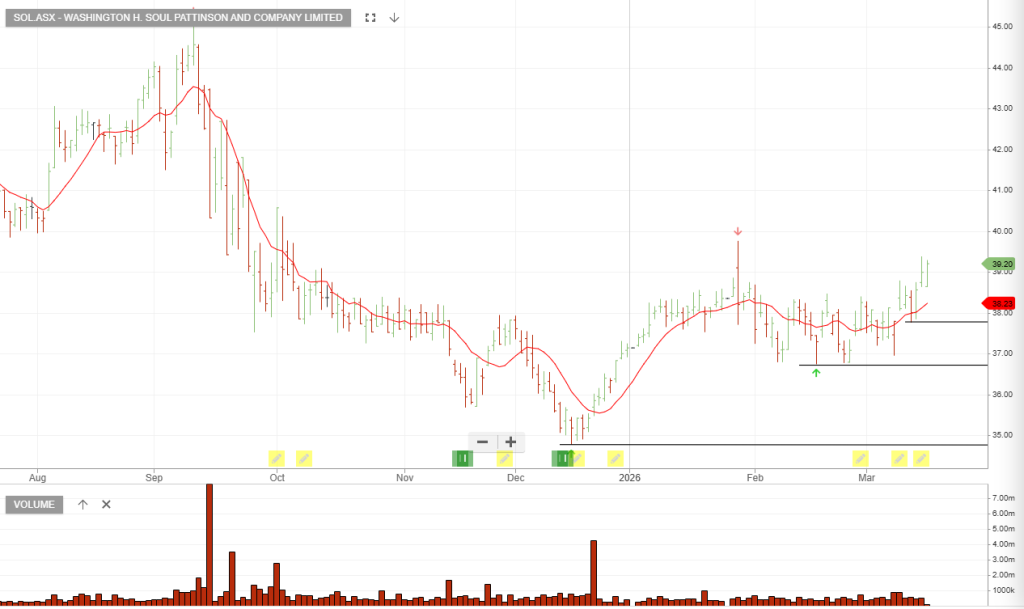
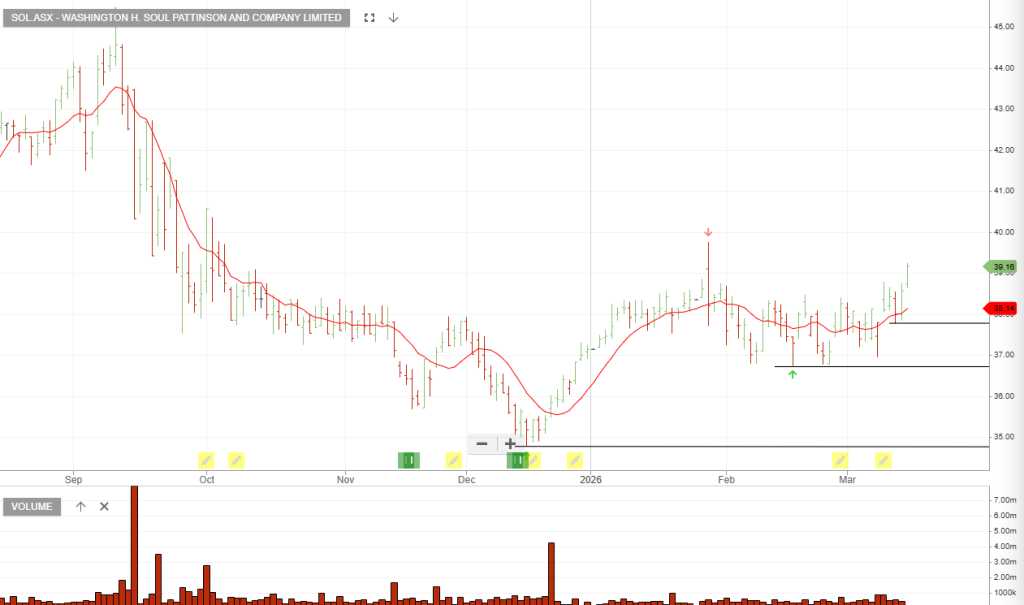
Brickworks Merger: In late 2025/early 2026, SOL simplified its corporate structure by merging with Brickworks (BKW) to eliminate a complex 56-year cross-shareholding arrangement. This was a massive $14 billion deal aimed at increasing transparency and unlocking value in their property and private capital portfolios.
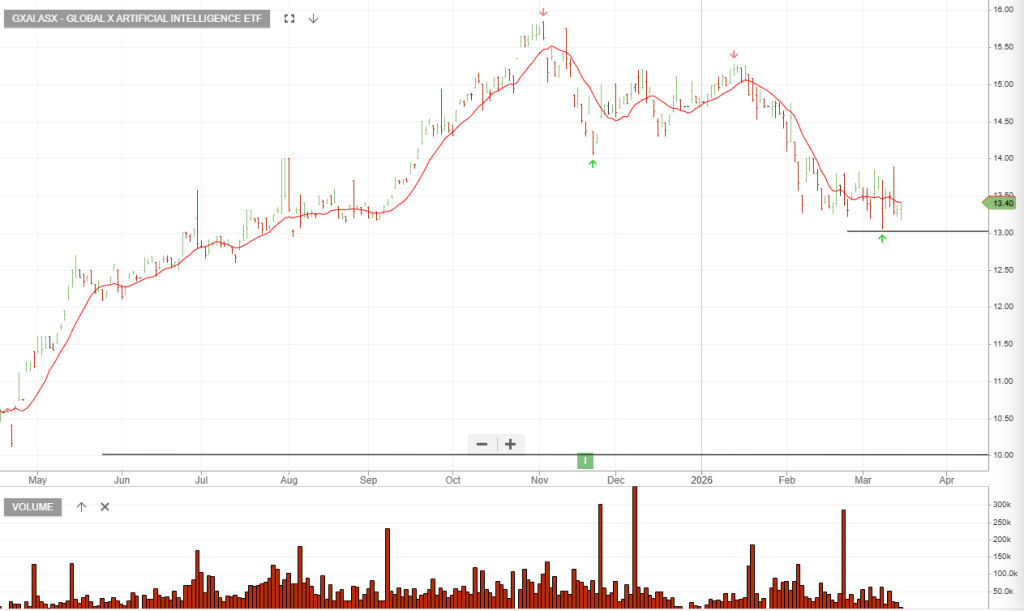
The Global X Artificial Intelligence ETF (ASX: GXAI) tracks the Indxx Artificial Intelligence & Big Data Index. It invests in companies involved in the development and utilization of AI, as well as those providing the hardware (semiconductors) and infrastructure (big data) that power these technologies.
As of early March 2026, the fund’s top holdings represent a mix of global semiconductor leaders, software providers, and major tech platforms.
Brickworks Merger: In late 2025/early 2026, SOL simplified its corporate structure by merging with Brickworks (BKW) to eliminate a complex 56-year cross-shareholding arrangement. This was a massive $14 billion deal aimed at increasing transparency and unlocking value in their property and private capital portfolios.
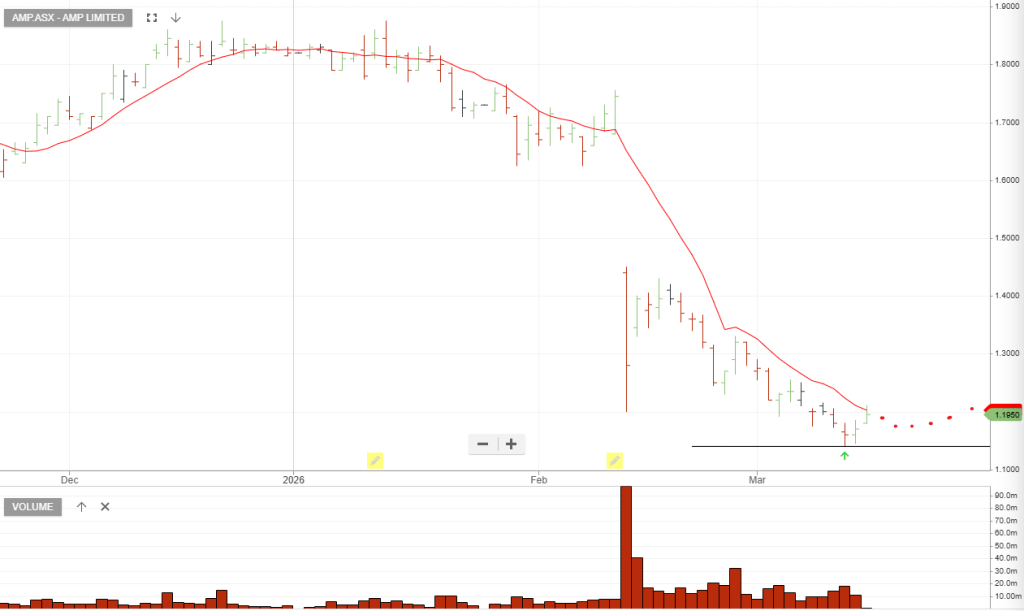
(ASX:AMP) Buy on the break above the 10-day average.
Watch the $1.20 Resistance: The stock needs to close and hold above $1.20 to confirm that this isn’t just a “dead cat bounce.”
Stop Loss Placement: If you enter now, a stop loss below the recent low of $1.14 would be a standard technical protection.
Key Date: Keep March 30 marked on your calendar for the CEO handover, as any initial comments from Blair Vernon will likely dictate the next major trend.
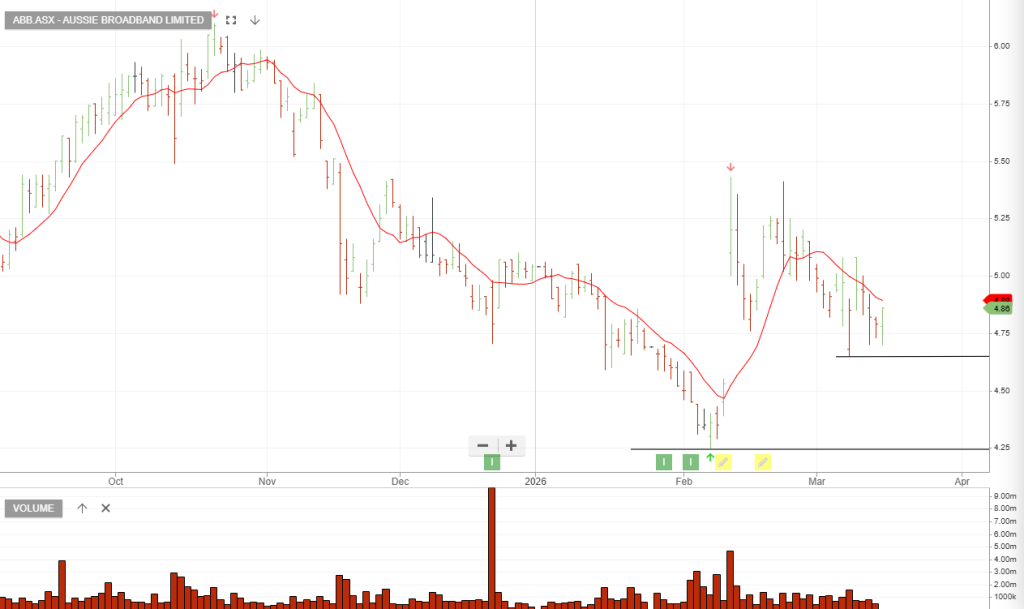
ABB is transitioning from a pure residential NBN reseller to a diversified infrastructure-owning telco with significant exposure to higher-margin business and wholesale segments. The high P/E ratio indicates that the market is pricing in substantial growth from the recent AGL and Nexgen integrations. The key risk remains the competitive pricing environment of the NBN and the successful migration of newly acquired customer bases.
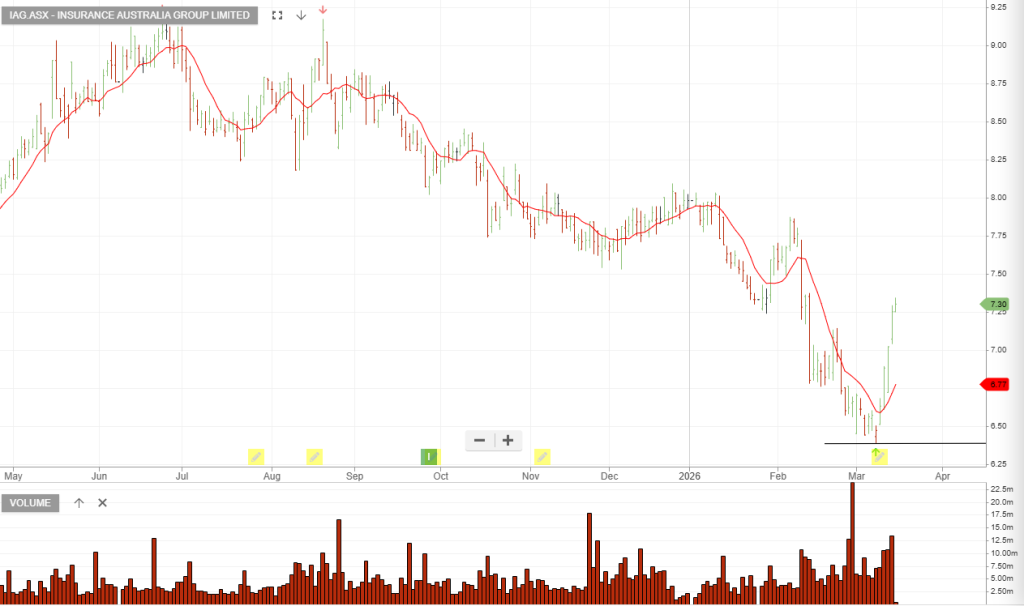
Increased buying activity in IAG.ASX over the last 10 days (approx. March 5 – March 15, 2026) is driven by a combination of corporate capital management, dividend timing, and a market reassessment of the insurance sector’s valuation.
### 1. Active $200M Share Buy-Back The most direct cause of increased buying is IAG’s ongoing on-market share buy-back.
Volume: Daily ASX notifications show consistent repurchasing. As of March 16, IAG reported more than 1.7 million shares had been bought back in the recent period.
Impact: This provides a steady baseline of “forced” buying volume, supporting the share price and reducing the total supply of shares.
### 2. Interim Dividend Payment IAG paid its 12.0 cents per share interim dividend on March 13, 2026.
Reinvestment: Many institutional and retail investors automatically reinvest dividends back into the stock, particularly through Dividend Reinvestment Plans (DRP), which creates a concentrated spike in buying demand around the payment date.
Yield Attraction: At current levels, the dividend yield remains a key draw for income-focused investors looking for “defensive” financial exposure.
### 3. Rebound from “AI Sell-off” (Mean Reversion) In early March, insurance stocks (including IAG, SUN, and QBE) faced selling pressure due to fears that AI would disrupt traditional underwriting and compress margins.
Overreaction: Over the last 10 days, market sentiment has shifted to the view that this sell-off was overdone. Analysts have highlighted that IAG was trading at a ~12% discount to its fair value (est. $8.23 vs current $7.25).
Recovery: The stock has rallied 10.35% in the last 7 days, climbing from a low of $6.39 to approximately $7.25.
### 4. Positive FY26 Guidance Upgrades Confidence has been bolstered by IAG’s structural growth following its RACQI acquisition.
Profitability: Management expects a reported insurance profit of $1.55 billion – $1.75 billion, signaling that premium increases are successfully offsetting claims inflation and weather-related costs.
Growth: The company recently upgraded its FY26 Gross Written Premium (GWP) growth target to approximately 10%.
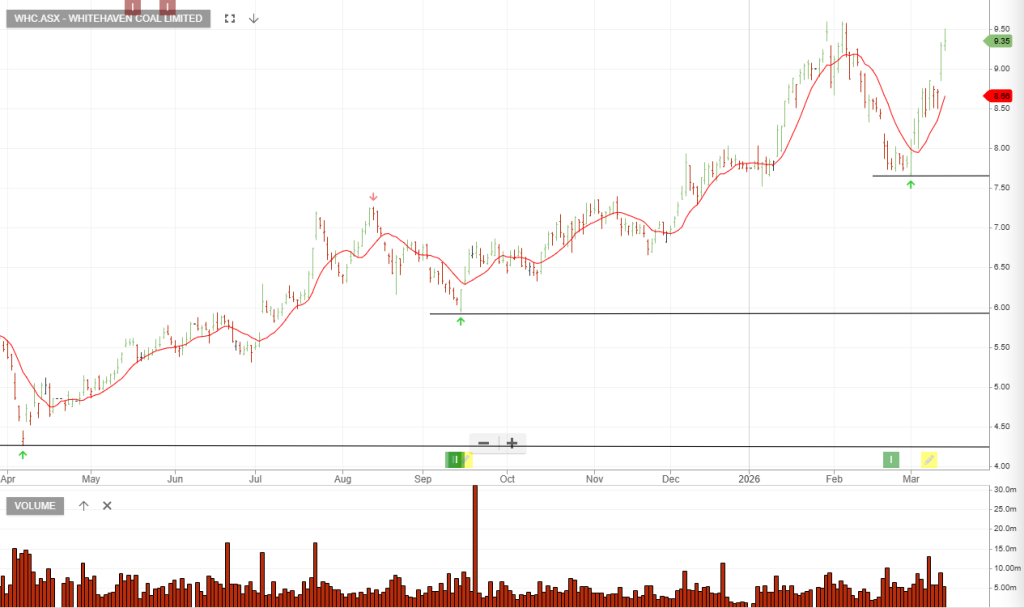
As an investor looking at Whitehaven Coal (WHC.ASX) in March 2026, here are the critical updates and fundamental metrics you should know following the recent H1 FY26 results and significant credit rating news.
### 1. Key Catalysts & Recent News
Credit Rating Milestone (March 12, 2026): Whitehaven recently secured investment-grade credit ratings from all three major agencies (S&P: BB+, Fitch: BB+, Moody’s: Ba1), with a stable outlook. This is a major turning point that allows the company to refinance its $1.1 billion acquisition facility on much more favorable terms, potentially saving $30–$40 million in annual interest costs.
Capital Management: An interim fully franked dividend of 4.0 cents per share was paid today (March 13, 2026). Additionally, the company has launched a new $32 million share buy-back program through June 2026, signaling management’s view that the stock remains undervalued.
Asset Integration: The integration of the Daunia and Blackwater metallurgical coal mines (acquired from BHP) is progressing well, diversifying Whitehaven’s revenue toward higher-margin steelmaking coal.
### 2. Fundamental Valuation Metrics Whitehaven currently appears undervalued relative to its historical averages and industry peers:
P/E Ratio: ~11.0x – 12.4x (Industry average is closer to 20x).
EV/EBITDA: ~5.4x (Significant discount to the industry median of ~8.2x).
Price to Book (P/B): ~1.34x.
Intrinsic Value: Analysts estimate a DCF fair value between $11.30 and $14.45, implying potential upside from the current price (~$9.05).
### 3. H1 FY26 Earnings Recap (Feb 19, 2026)
Revenue: $2.5 billion (Down from $3.4B in H1 FY25 due to lower year-on-year prices).
Underlying EBITDA: $446 million.
Statutory Profit: $69 million (Impacted by non-recurring items; underlying loss was $19M).
Production: Managed ROM production was solid at 20 million tonnes, with costs controlled at ~A$135/tonne.
### 4. Market & Sector Outlook
Coal Prices: Global thermal coal prices have surged roughly 25% year-to-date (Newcastle benchmark ~$135/t) due to energy supply disruptions in the Middle East and “fuel switching” from gas to coal in Europe and Asia.
Analyst Sentiment: The consensus remains a “Hold” among 14 major analysts. While some brokers (like JPMorgan) remain cautious with “Sell” ratings, others see the credit upgrade and metallurgical coal exposure as strong long-term drivers.
### Summary for Investors Whitehaven is currently at an operational and financial inflection point. The transition to a “metallurgical-heavy” producer and the recent credit boost provide a safety net against thermal coal price volatility. However, long-term ESG-related selling pressure and decarbonization trends remain the primary structural risks.
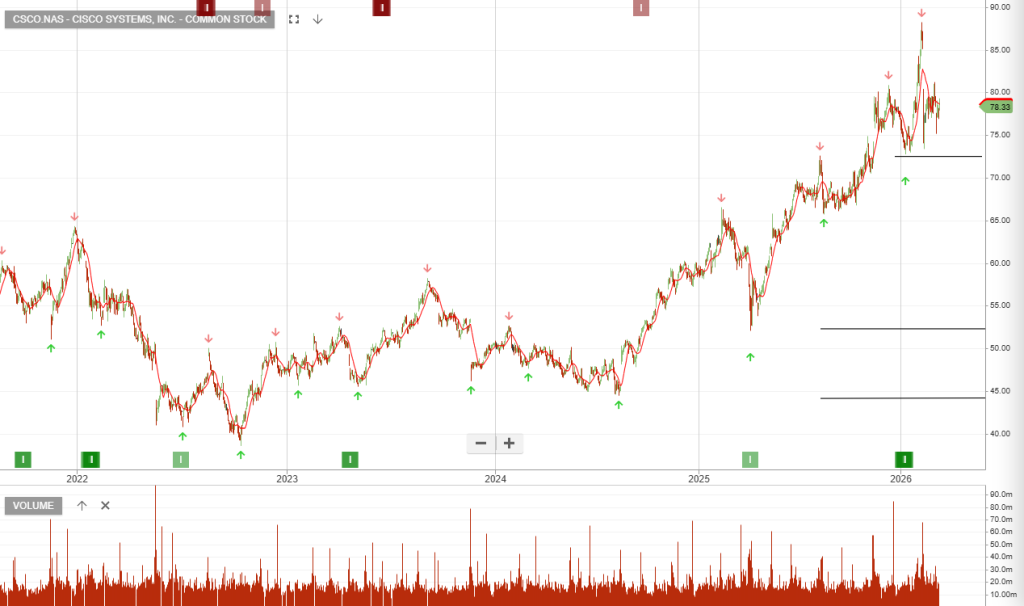
Cisco Systems, Inc. – Common recently reported strong results for its second fiscal quarter (ended January 2024, reported Feb 2026):
Earnings Beat: Reported record revenue of $15.3 billion (+10% YoY) and non-GAAP EPS of $1.04, exceeding analyst expectations.
Guidance: For the full fiscal year 2026, Cisco raised its revenue outlook to $61.2B–$61.7B.
As of March 2026, Cisco (CSCO) is undergoing a major transition from a traditional hardware-focused networking company into an AI-infrastructure and cybersecurity powerhouse.
Here are the key takeaways you should know:
### 1. Recent Financial Performance (Q2 FY2026) Cisco recently reported strong results for its second fiscal quarter (ended January 2024, reported Feb 2026):
Earnings Beat: Reported record revenue of $15.3 billion (+10% YoY) and non-GAAP EPS of $1.04, exceeding analyst expectations.
Market Reaction: Despite the beat, the stock saw a ~9% post-earnings dip (trading around $75–$78) as investors weighed short-term margin pressures against long-term AI growth.
Guidance: For the full fiscal year 2026, Cisco raised its revenue outlook to $61.2B–$61.7B.
### 2. The AI Growth Engine AI is currently the most significant driver for Cisco.
AI Orders: The company took $2.1 billion in AI infrastructure orders from hyperscalers (like Amazon, Google, Meta) in Q2 alone.
Raised Targets: Cisco now expects total AI orders to exceed $5 billion for FY2026.
New Silicon: They recently unveiled the Silicon One G300 chip, designed specifically for massive AI clusters, positioning them as a direct competitor to Broadcom in the high-end networking space.
### 3. Strategic Shift: Cybersecurity & Splunk Cisco is aggressively moving toward a software-subscription model to reduce “lumpy” hardware revenue.
Splunk Integration: Following its $28 billion acquisition, Splunk is being deeply integrated. Security is now viewed as a “native function” of the network rather than an add-on.
Recurring Revenue: Annual Recurring Revenue (ARR) has reached $31.4 billion, with software and services now making up a significant portion of the business.
Backlog (RPO): Cisco has a massive backlog of $43.4 billion in Remaining Performance Obligations, providing high visibility for future revenue.
### 4. Valuation and Dividends For income-focused investors, Cisco remains a “Dividend Aristocrat” in the making:
Dividend: Recently increased to $0.42 per quarter (approx. 2.2% yield).
Capital Returns: The company returned $3 billion to shareholders last quarter ($1.6B dividends, $1.4B buybacks) and still has $10.8 billion authorized for further buybacks.
P/E Ratio: Currently trades at a forward P/E of roughly 25x–27x, which is slightly below the sector median, leading many analysts to view it as undervalued relative to its AI growth potential.
### 5. Analyst Outlook
Consensus: Most analysts hold a “Moderate Buy” rating.
Price Targets: Average targets range between $89 and $96, suggesting a potential upside of 15% to 24% from current levels.
Key Risks: Watch for margin pressure from rising component costs (like memory) and the speed of enterprise AI adoption beyond just the giant “hyperscalers.”
Summary for Investors: Cisco is no longer just “the router company.” It is a massive play on the plumbing required to run AI models and the security required to protect them. The current valuation reflects a transition phase that may offer a more conservative entry point into the AI trade compared to high-flyers like Nvidia.
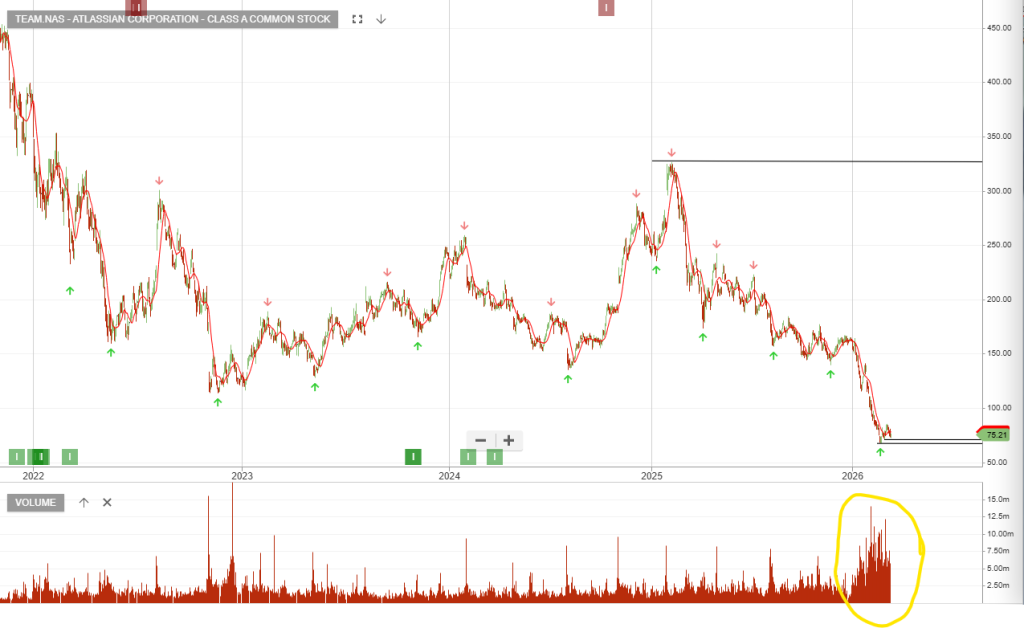
Atlassian Corporation – Class A Common is currently exhibiting a “bottom bounce” technical pattern, with recent volume support helping the stock stabilise after falling nearly 48% year-to-date and 84% from its all-time high.
The trading volume for Atlassian (TEAM) has seen significant increases since January, characterized by three primary waves of activity linked to earnings milestones, institutional conferences, and a broader sector rotation.
### 1. February Earnings Spike (The Primary Surge) The most substantial increase in volume occurred in early February following the company’s Q2 fiscal 2026 earnings report on February 5.
Volume Peak: Trading reached approximately 14 million shares on February 6, nearly double the session volume of the preceding days and significantly higher than the ~3 million daily average seen in early January.
Driver: While Atlassian surpassed $1 billion in quarterly Cloud revenue for the first time, high GAAP operating losses (driven by share-based compensation) led to a sharp -6.3% price dip, triggering high-volume sell-offs and re-positioning.
### 2. March “Relief Rally” & Conference Surge A second wave of elevated volume occurred in the first week of March, specifically around March 5.
Volume Spike: The stock saw a high-volume session of 12.19 million shares as it jumped +7.4% in a single day.
Driver:
* Morgan Stanley TMT Conference: Management presented on March 5, highlighting their AI product (Rovo) and its 5 million monthly active users. * Sector Rotation: A broader “relief rally” swept the software sector as investors rotated back into beaten-down SaaS names, leading to high turnover in TEAM.
### 3. Overall Trend Comparison The average daily volume (ADV) has shifted higher throughout the quarter:
Early January: ~3.0M – 4.5M shares per day.
February Average: Elevated by volatility, often hitting 8M+ on high-activity days.
March Status: Currently averaging between 7.0M and 7.5M shares, indicating a sustained increase in market interest as the stock tests multi-year lows.
### Summary of Drivers
Institutional Flows: Large-scale positioning updates from firms like Morgan Stanley and DNB Asset Management (which grew its stake by 266% recently) have contributed to the increased liquidity and trade frequency since the start of the year.
AI Narrative Shift: Market sentiment transitioned from “AI fears” (concerns that AI would disrupt software) to “AI adoption” (viewing Rovo as a monetization catalyst).
Sophisticated Investor?
We have special opportunities available for Sophisticated Investors. If you're interested, and qualify, please provide your details below.