Global Macro

In the lead up to the UK Referendum on June 23rd, many market commentators warned that a “Brexit” vote would have an acute and immediate impact on domestic UK assets in general, and on the price of the GBP/USD , specifically.   

After posting an intraday low of 1.2800 on July 6th, the Sterling recovered over 5% to reach an intraday high of 1.3481 on July 15th, but only managed to hold on to the 1.3340 level on a closing basis; over 120 points below the high and the highest NY close since.

From a technical perspective, this week’s price action suggests the GBP/USD has completed a bearish pennant formation based on the break of the 1.3220 trend line last week and the failure of the pair to post a NY close above last week’s low close of 1.3020 on August 5th. Following this pattern, the next key support is found at 1.2820 followed by the 1985 low at 1.2750.

An interesting aspect of this this technical pattern is the correlation break and divergence between the Sterling and the FTSE 100 Index. The UK Equities markets rallied alongside the GBP from early July on a combination of “time-lagged” UK economic data and expectations of further stimulus from the Bank of England (BoE).

However, since mid-July, several key UK growth aggregates have softened or offered little in terms of positive forward guidance. As a result, the GBP/USD and the FTSE 100 have diverged with the index posting its highest close of 2016 at 6902.00 today, and the GBP/USD picking up momentum to the downside. It’s reasonable to expect that if this recent trend continues, investors hedging out currency exposure on rising UK equity prices could add to the downside pressure on the Sterling.

Yesterday’s UK Housing Survey illustrates how the Brexit impact may be finally working its way into the overall UK economy. The GBP/USD was triggered lower as the RICS house pricing index slumped to 5% from 15% in June. This was the lowest reading in three years and underscores concerns about how heavily leveraged UK consumers are to housing, and the potential impact on retail spending if the property market continues to adjust lower.

Global Macro

Leading up to last Friday’s July Non-Farm Payroll (NFP) report, the USD was being offered against all the other major G-7 currencies. After the June Headline NFP number beat expectations by over 150,000 last month, many forecasters were expecting a large correction in the number of new jobs created this month. Most FX traders understood that the risk to the USD was asymmetrical and that an “as expected” reading would be USD negative.  

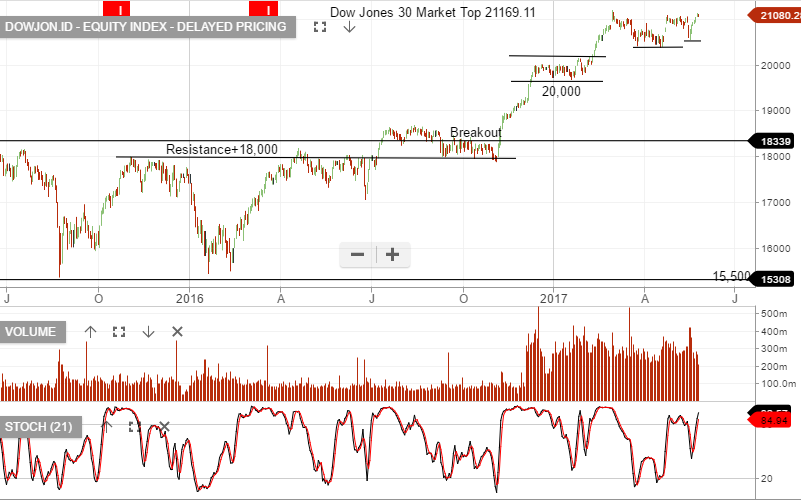
Instead, the robust NFP report allowed the Greenback to recoup the losses it experienced earlier in the week, the SP 500 reached an all-time new high close at 2176.00, US 10-yr bond yields hit a 3-week high of 1.60% and Fed Funds futures went from pricing a 57% chance of a 2016 rate hike to a 71% chance by the NY close.  

With the US economy posting an additional 255,000 jobs and average hourly earning increasing by 0.3%, it’s reasonable to expect that US interest rate policy will continue to move toward normalization while its peers continue to add to direct stimulus and unconventional easing measures. In addition, the forward outlook to the US labor market is improving with a jump in the participation rate, as well as, the total weekly hours worked.  

In short, by almost every metric, the US employment climate stands in sharp contrast to the dismal outlooks for the UK, Japan, most of Europe and Canada. That said, it’s our base case that seasonal factors effecting daily trade flows and a lack of any first-tier data this week could temper advances in the USD in the near-term. 

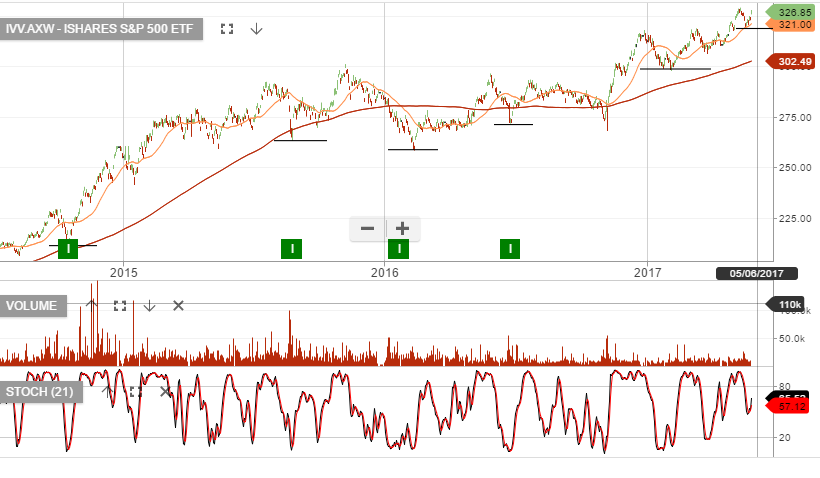
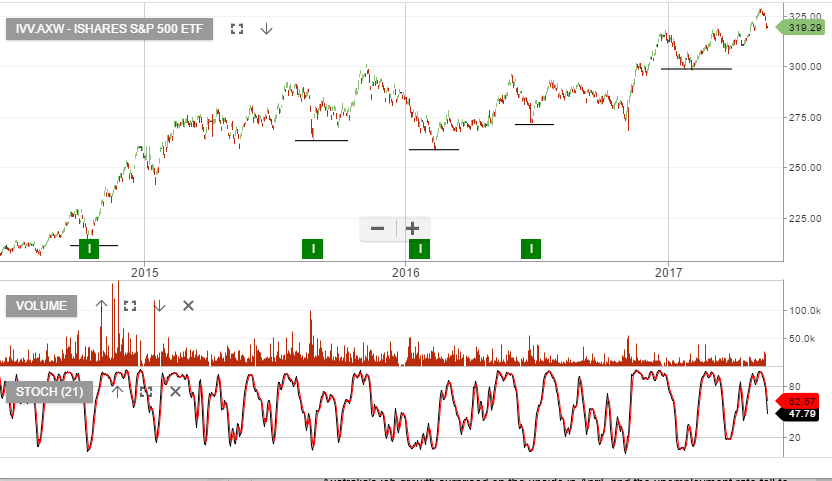
The impact of lower trading volume is best illustrated in the SP 500. Despite never trading lower than 1% below all-time high levels last week, the daily trading volume was consistently close to 25% below the 50-day moving average. With this in mind, we expect the USD, US Stocks and US Treasury rates to trade with an upward bias but with less momentum.

Short Walgreen (Update)

We’ve been short Walgreen (WBA.NAS) and Target (TGT.NYS), both stocks are now building downside momentum. We’re mindful of the supportive backdrop in broader equity markets and the countertrend position in both of these names, therefore, reduce the stop loss to the entry point and hold both of these names looking for a further 5% downside to reach our profit targets.

Short Walgreen WBA.NAS

WBA.NAS

Short Target TGT.NYS

TGT.NYS


Global Macro

Over the last few months, the foreign exchange market has been more sensitive to Central bank policy measures than at any other time in decades. However, the problem for the Central banks is that the FX market has largely not responded in the direction that they have intended. This is best illustrated by this year’s monetary transmission efforts by the Bank of Japan (BoJ).

The BoJ has, from a percentage of GDP basis, easily been the most aggressive of the all the G-7 central banks with the BoJ’s balance sheet reaching JPY 450 trillion early last month. Despite this aggressive easing, the BoJ has not come close to its three main policy goals of increasing consumer demand, kick-starting GDP growth and pushing domestic inflation back above 2%.

This impossible trinity of inflation, consumption and GDP growth took another hit today when the BoJ failed to satisfy the market with its most recent addition to the long running QQE policy. The Bank of Japan expanded its purchases of exchange-traded funds and doubled the size of a U.S. dollar lending program, while refraining from boosting the pace of government-bond purchases that have formed the main part of its monetary stimulus.

The central bank kept its annual target for expanding the monetary base at 80 trillion yen ($779 billion), done mainly through an equivalent increase in government bond holdings. It also left untouched the minus 0.1 % rate for a portion of commercial banks’ reserves. A dollar-lending program was expanded to $24 billion.

US Macro

The last week of July has a full schedule of first tier data releases and market events. These include the FOMC and BoJ meetings, the German IFO survey, Australian inflation data and GDP reports from both the USA and UK. In general, we believe the BoJ meeting will have more market impact than the FOMC meeting, the US GDP data could surprise to the upside and a weaker Aussie inflation report may not convince the RBA that an August rate cut is the appropriate course of action. 

However, we believe one of the most important data points for the week will be when the European Banking Authority stress tests are released after the NY close on Friday.

The financial markets have recently focused on Italian banks and their swelling non-performing loan book but there is an acute risk that other Euro-Zone banks, including large German, Austrian and French banks, will need to raise capital as well. It’s worth noting that the MSCI European Bank Index lost almost 25% of it’s value after the UK referendum, including a 28% drop in the shares of Deutsche Bank.

From a FX point of view, the main significance is that the correlation between the MSCI EZ Bank Index and the EURO currency has grown. Market statistics show that the running 60-day correlation between the value of EUR and the Index now stands at a positive 50%. This is the strongest reading on the 60-day correlation since Q1 2014 and adds to the growing negative fundamentals for the single currency.


US Macro

At the beginning of the week, we expected yesterday’s ECB meeting to be a significant risk event for the single currency and offer trading opportunities on new policy measures or adjustments to current stimulus operations. But Mr Draghi said nothing that surprised the FX market. 

He acknowledged the resilience of the financial markets in the aftermath of the UK referendum and noted that upcoming data, combined with new staff forecasts in September, would give the ECB a better view to assess the macroeconomic situation in the Eurozone. He also pointed out that the risks to growth and inflation remain tilted to the downside going forward.

As a result, the EUR/USD traded in a narrow, 70 point range throughout the LDN and NY trading sessions; one of the most passive ECB meetings in recent memory.

However, about two hours before the ECB announcement, comments from Bank of Japan (BoJ) Governor Kuroda that the upcoming stimulus package would not include “Helicopter” money hit the BBC newswire. This headline sent the USD/JPY plunging over 160 points to just under 105.50. Once the BBC clarified that these comments were from a June interview, the pair regained the 106.00 handle but came nowhere near the intra-day high of 107.40 and casts doubts on the FX impact of final BoJ package to be released next week.

These two examples illustrate the non-linear impact Central Banks currently have on increasingly skittish financial markets. On one hand there was a highly anticipated ECB announcement, with a live press conference, which produced little in terms of EUR/USD price action, and on the other hand, there was the release of month old radio interview which spun the USD/JPY into three hour trading frenzy.

Because of the non-traditional stimulus measures used by G-7 Central Banks, and the resultant negative interest rate environment, we have reached the point at which investors are buying stocks to capture yield, buying bonds for relative capital gains and trading currencies as a correlative by-product of the previous two.

With this in mind, officials at the Federal Reserve are, once again, talking about a rate rise before the end of the year. This, along with weak economies elsewhere in the developed world has resulted in the value of the USD increasing over last three months. As such, we maintain a long USD bias even though the trajectory higher may have a higher level of volatility due to equity related risk on/off correlations.

US Macro

US Macro

Watching the close of the financial markets early Saturday morning (Sydney time), we were thinking that this FX UPDATE would be discussing a change in leadership in Turkey and how that would impact the rest of the Eurozone economics…….tanks in Istanbul, helicopters strafing government buildings; it all sounded pretty grim for Mr Ergodan’s government.   

As it turned out, the coup failed and order has been restored in Turkey, for now.

However, there are several other data points in the Eurozone this week which will drive trade flow in the Euro and other G-7 currency pairs. The three events that FX traders will be following are; the German ZEW data on Tuesday, the German PPI report on Wednesday and the ECB meeting and rate decision on Thursday.

The preliminary forecast for the ZEW is for a sharp fall in business sentiment from 19 to 8. This is one of the first post-Brexit readings and would represent the weakest number of the year. Wednesday’s German PPI data is expected to fall from .4% to .2%. With this series, it’s not so much the actually number but the direction of the trend. German inflation was in negative territory earlier this year and turn back to a negative trajectory is worrisome for the ECB.


US Macro

US Macro

In the days following the June 23rd UK referendum, many FX market forecasters suggested the Sterling would fall sharply, perhaps even breaking below the 1.2000 handle against the USD. While these predictions may turn out to be correct, the GBP/USD has pretty much gone vertical since posting a 1.2850 low on Monday.  

And even though the consensus for the Bank of England (BoE) to cut rates yesterday was just slightly above 50/50, the GBP/USD traded sharply higher after the after the BoE voted 9 to 0 to leave rates unchanged. However, with most policymakers seeing a rate cut in August, the Sterling remains a sell into this recent reversion.

The Sterling’s reaction to yesterday’s BoE pause at .50% was an illustration of misplaced Central Bank expectations. The financial media was calling for a cut down to .25%, many FX traders believed them and when the BoE kept rates unchanged, the GBP/USD soared from 1.3250 to 1.3475 in less than five minutes……and then faded as the session progressed.

According to the minutes from the meeting, the BoE has been satisfied with how UK financial markets have functioned  post-referendum but there are some indications that businesses are delaying investment and hiring so economic aggregates are likely to be depressed in the near term. It’s worth noting that in addition to cutting rates, the BoE minutes discussed  a “range of possible stimulus measures.” We interpret this to mean a possible increase to Quantitative Easing in August.


Q2 Earnings JPMorgan

Earning JPM.NYS

JPM.NYS

JPMorgan – solid second quarter earnings signal improved health for US financials. This is bullish for upcoming bank earnings results in general. Analysts had generally lowered expectations for bank earnings this quarter due to low global growth. Our outlook on JPM and the major index is for mostly sideways consolidation with solid support at the lower range of the band.

JPMorgan Q2 earnings beat on both top and bottom line at $1.55 a share and on revenue of $25.2 billion.