Amcor – Price Target Update

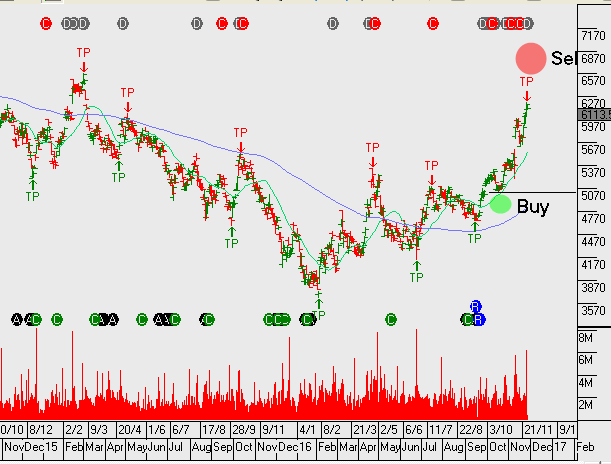
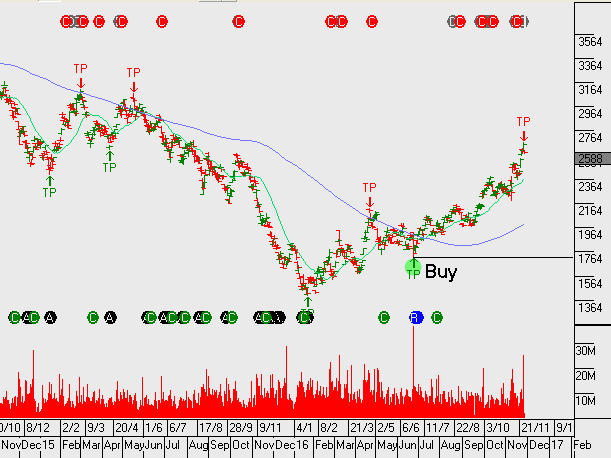
The recent rally from $13.60 to $15.00 may be the best upside performance we see in Amcor for a while. Some analysts are downgrading Amcor from “outperform” to “neutral” as the company’s defensive revenue stream isn’t likely to expand as higher global interest rates affect their expense line and cost of capital calculation. This includes the impact of the USD appreciation against the EURO lowering EPS by about 5%.

With its large US and European asset base, Amcor has been able to maintain lower borrowing costs. However, with Weighted Average Capital Costs, (WACC), increasing from 6.6% to 7.1% in FY 17, bottom line profit growth may not be able to keep pace with rising interest rate. 

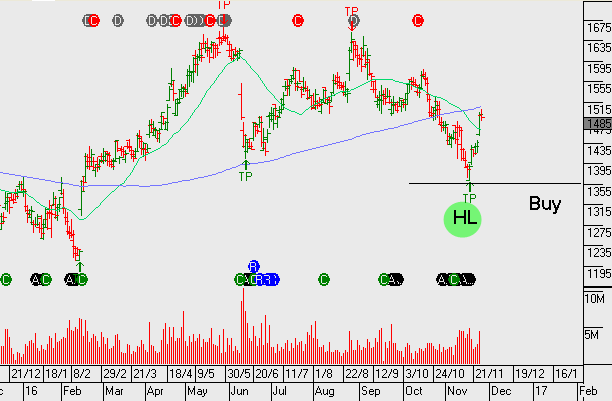
We see the price impact reflected in the lower high and lower low technical structure in the Amcor chart.  Whilst we don’t expect aggressive upside share price targets, we still feel owning AMC and selling covered calls to generate 10% annual cash flow from the dividend and call option premium makes sense.

The trading range is now $14 to $15.50 and investors should consider locking in gains at the top of the range, (or delivering the stock under the call option at $15.50 strike) and looking to buy the stock back on any pullbacks to $14.00.
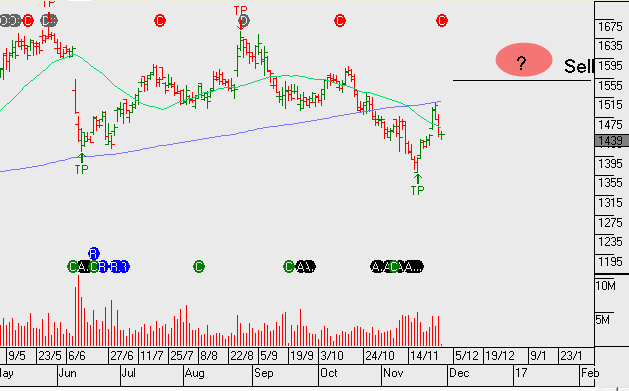
Chart - AMC
Chart – AMC


Key Australian Data Points

After several weeks of following US and European economic reports, Australian investors will get the chance to see how the domestic economy is performing into the end of the year.

This week’s key data points include Building Approvals and New Home Sales on Wednesday, then the quarterly CAPEX reading on Thursday, followed by the Monthly Retails Sales data on Friday.

The Building and New Home sales data have been steady over the last six months and have not offered any surprises which the RBA have had to respond. This week’s data is expected to show that building approvals have bounced back from last month’s 8.7% decline and the sales of new homes is in the 3% range.

The CAPEX and Retail Sales data are a different story. These two data points have been diverging over the last 12 months. Friday’s retail sales report is called .3% higher, which would be the third consecutive monthly increase. On the other hand, the quarterly CAPEX data is expected to show a 2.8% decline reflect the third consecutive quarter of weaker Capital Outlays and the 7th quarter of the last 8 quarters.

From an interest rate policy perspective, the CAPEX data has the greatest potential to move the market.


BHP & RIO – Iron Ore Price Update

Iron Ore prices continued its two month rally last Friday and trading close to the $80.00 per ton level for the first time in over two years. According to spot metals pricing, the benchmark 62% fine rose another 3.5% to 79.60 on Friday, extending its four-day rally to an impressive 13.2%.

The benchmark price has now gained over 82% so far in 2016, and has risen 108% from the all-time low of $38.30 per ton posted on December 11, 2015. The rally corresponds to the news that Chinese policymakers had managed to remove 88 million tons of steelmaking capacity across the country since the beginning of the year.

This has help trigger gains in steel prices, along with Iron Ore.

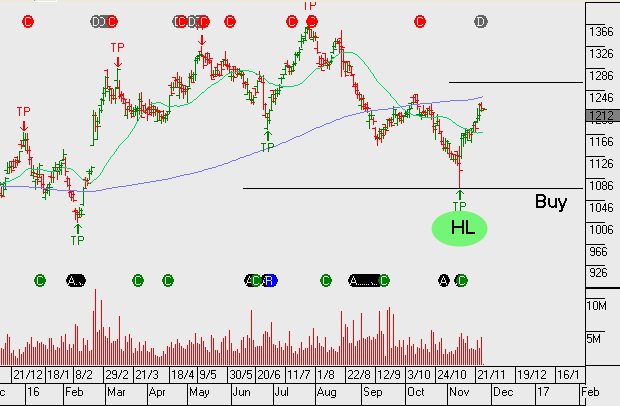
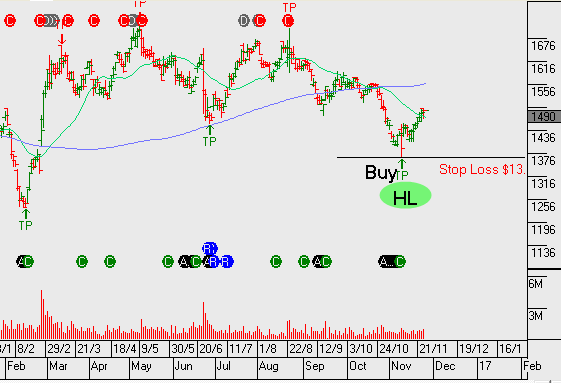
BHP and RIO have performed well, we look to keep exposure to these names and add to the cash flow through selling covered call options.

Chart - RIO
Chart – RIO
Chart - BHP
Chart – BHP

Global Macro

The European Central Bank (ECB) meets on December 8th and they are widely expected to extend their asset purchases, as well as, modify their bond qualifications to expand the supply of eligible securities. With the Italian referendum scheduled for December 4th, it’s  becoming very clear that the ECB’s stimulus program, and how it evolves, is changing from an economic strategy to a political necessity.

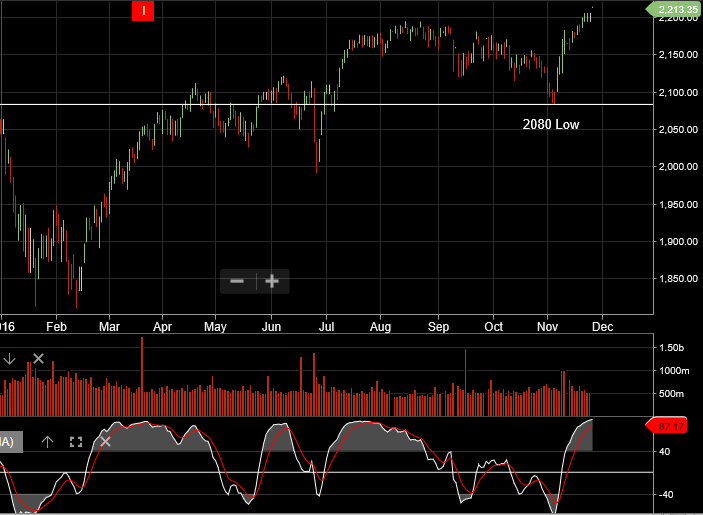
On the other side of the Atlantic, the SP 500 Index has traded sharply higher over the last two weeks. The Index  has jumped to a new all-time high of 2207.00. The new administration’s commitment to tax reform, fiscal stimulus and repealing the Dodd-Frank legislation has drawn investment capital from both domestic and overseas investors.

Taking into account the Non-farm payroll data next week, followed by the ECB meeting the following week and then the FOMC meeting, we’ll be monitoring closely the momentum signals in the major global equity indices.

Chart - SP500
Chart – SP500

XJO – Momentum Indicators Still Positive

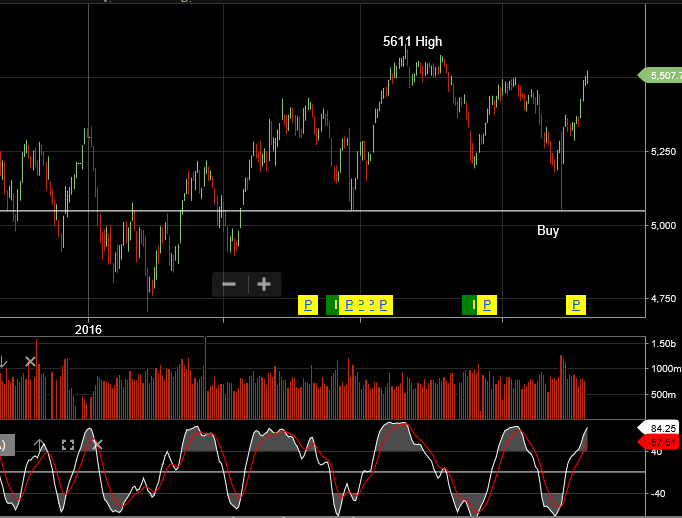
Our algo engine is flagging the lower high technical structure in the ASX 200 index (XJO) and a number of the stocks making up the index are also displaying a similar set up. The resources are the driving force behind the index rally and any attempt to short the market or the index needs to be built upon a view that the big cap resources have exhausted their current rally.

Whilst we’re watching the above and looking for further confirmation, we’re not quite there with regards to changing our existing “long market bias”.

The following chart of the XJO shows the index approaching the previous high of 5611 points (set on 1/8/16). The momentum indicators still remain positive at this stage.

Chart - XJO
Chart – XJO


BXB – Running into Resistance

We’ve been buyers of BXB on the recent low and are now mindful the stock has rallied almost 10% from its lows and on a valuation basis the share price is likely to run into selling pressure around $12.50.

At $12.50 it places BXB on a forward yield of 2.5%, assuming management delivers 8% underlying EPS growth. From a technical perspective, the algo engine is now flagging the lower high formation which we take as a signal to either lock-in short term profits, or for longer term holders, sell covered calls to enhance the cash flow yield.

Chart - Brambles
Chart – Brambles


Seek – Reaffirms Guidance for FY17

SEEK reaffirms guidance for FY17 underlying profit of A$215m-A$220m.

SEEK was able to maintain guidance for FY17 due to strong operational performance from most business units, despite unfavourable currency moves.

FY17 revenue $1.b, EBITDA $400m, EPS $0.60, DPS $0.40 places the stock a forward yield 2.8%.

We like Seek and see upside earnings potential, however, after entering long positions at the recent low, we now look to lock-in profit ahead of anticipated resistance, at or near $15.50

We’ll revisit new entry opportunities on the next algorithm signal.

Chart - Seek
Chart – Seek


Global Macro – China

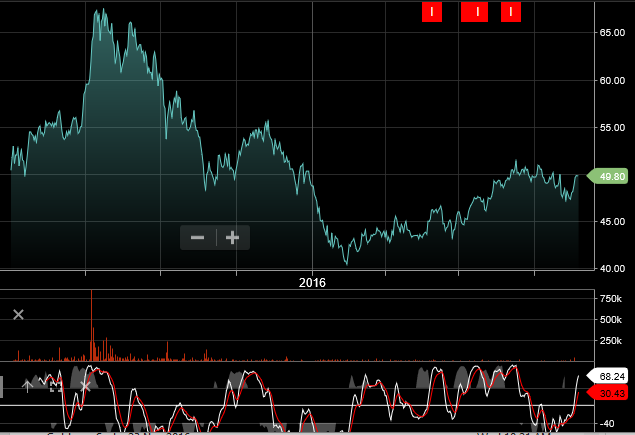
In the two weeks since the US Presidential elections, many global stock indexes have seen material gains with the Dow Jones and SP 500 posting new all-time highs. Notably absent from the list of sharply higher indexes is the the China Top 50 index. This index of China’s large capitalization stocks has moved higher over recent days, but is still 7% below the highs posted at the beginning of 2016.

We believe a combination of positive developments going into 2017 make this index represent good value at current levels. One of the biggest developments has been the revaluation of the Chinese Yuan to the US Dollar.

The weaker currency will have positive knock-on effects on next years earnings and lead to more robust investment demand, as well as escalating CPI/PPI inflation.

As such, several analysts believe consensus growth numbers are too low and will be upgraded between now and next March. In addition, the general top-down forecast for earnings growth has been lifted from 5.7% .

This upgrade stems from non-financial sales and profit margin assumptions based on higher nominal GDP and stronger capacity utilization.       

izz-china
Chart – iShares IZZ (China Large Cap)

Global Macro

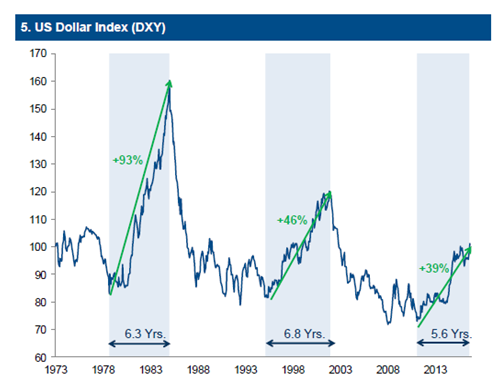
The US Dollar has had a great month of November, so far. Not only has the Greenback gained over 5% versus the Yen and 3% versus the Euro, but the USD Index has recorded its best two-week performance in 20 years. The USD Index has traded higher for ten consecutive sessions and gained just over 4.25% to reach the highest level since 2003 at 101.25.

Investors are anticipating a very pro-business bias from the new US administration, featuring across the board tax cuts, deregulation and a comprehensive infrastructure stimulus package. However, the  inauguration of President Trump is still more than two months away and it’s reasonable to expect the USD, US Stocks and US yields to take pause after the recent rallies.

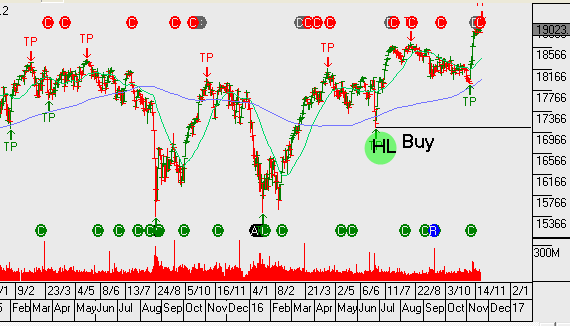
The Dow Jones 30 set a new record high at 19,023

Chart - Dow Jones
Chart – Dow Jones
Chart - USD (since 1973)
Chart – USD (since 1973)