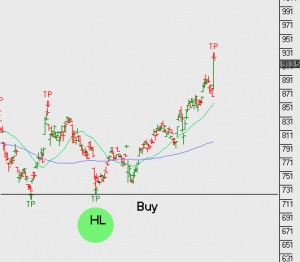
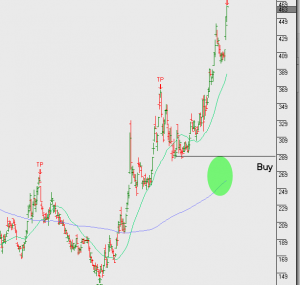
Short Walgreen (Update)

We’ve been short Walgreen (WBA.NAS) and Target (TGT.NYS), both stocks are now building downside momentum. We’re mindful of the supportive backdrop in broader equity markets and the countertrend position in both of these names, therefore, reduce the stop loss to the entry point and hold both of these names looking for a further 5% downside to reach our profit targets.

Short Walgreen WBA.NAS

WBA.NAS

Short Target TGT.NYS

TGT.NYS


Global Macro

Over the last few months, the foreign exchange market has been more sensitive to Central bank policy measures than at any other time in decades. However, the problem for the Central banks is that the FX market has largely not responded in the direction that they have intended. This is best illustrated by this year’s monetary transmission efforts by the Bank of Japan (BoJ).

The BoJ has, from a percentage of GDP basis, easily been the most aggressive of the all the G-7 central banks with the BoJ’s balance sheet reaching JPY 450 trillion early last month. Despite this aggressive easing, the BoJ has not come close to its three main policy goals of increasing consumer demand, kick-starting GDP growth and pushing domestic inflation back above 2%.

This impossible trinity of inflation, consumption and GDP growth took another hit today when the BoJ failed to satisfy the market with its most recent addition to the long running QQE policy. The Bank of Japan expanded its purchases of exchange-traded funds and doubled the size of a U.S. dollar lending program, while refraining from boosting the pace of government-bond purchases that have formed the main part of its monetary stimulus.

The central bank kept its annual target for expanding the monetary base at 80 trillion yen ($779 billion), done mainly through an equivalent increase in government bond holdings. It also left untouched the minus 0.1 % rate for a portion of commercial banks’ reserves. A dollar-lending program was expanded to $24 billion.
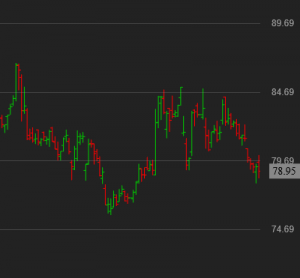
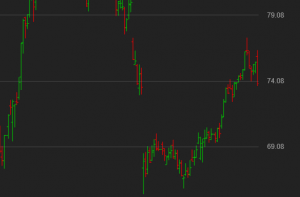
Origin Energy June Quarter Production

ORG.ASX released the June quarter production numbers that were slightly better than market expectations.

This supports our gradual recovery outlook for ORG and we see FY 17 revenue of $12b producing an  EBIT of $1.1b on reported profit in the range of $700m.

Dividend is likely to remain unchanged at $0.20 which puts the stock on a 3.5% forward yield.


Resmed Hits Our Profit Target

RMD.ASX traded at our $9.00 profit target today. The stock has put on 20% since our buy trigger. Patience has paid off here and waiting for  todays earnings result has proven to be the right approach.

ResMed’s annual profit for the year to June 30 was $US352m on annual revenue of $US1.8b, up from $US1.7b. Revenue for the fourth quarter lifted 15 per cent to $US519m boosted by the acquisition in healthcare software group Brightree. Quarterly dividend raised to 33 US cents per share.

Our algorithm engines will continue to track RMD.ASX for future buying opportunities and I’ll be sure to keep you informed.

RMD

Enjoy the proceeds of this quick profit!

AGL Buy Write 14% cash flow

AGL.ASX is in our buy write basket. Buy at $20.00 and sell the $20.50 Nov call options for $0.60 and collect the $0.35 August dividend. $0.95 cash flow for 4 months or $2.85 annualised = 14% annualised cash low return.

Analysts are a little too bullish on the outlook for AGL but I think downside risks are minimal and we should see EPS grow by 5% and DPS of $0.70 in FY17 and $0.73 in FY18. NPAT FY17 of 905m and growing to FY18 of $950m.

This allocation is for income seekers and not traders.


US Macro

The last week of July has a full schedule of first tier data releases and market events. These include the FOMC and BoJ meetings, the German IFO survey, Australian inflation data and GDP reports from both the USA and UK. In general, we believe the BoJ meeting will have more market impact than the FOMC meeting, the US GDP data could surprise to the upside and a weaker Aussie inflation report may not convince the RBA that an August rate cut is the appropriate course of action. 

However, we believe one of the most important data points for the week will be when the European Banking Authority stress tests are released after the NY close on Friday.

The financial markets have recently focused on Italian banks and their swelling non-performing loan book but there is an acute risk that other Euro-Zone banks, including large German, Austrian and French banks, will need to raise capital as well. It’s worth noting that the MSCI European Bank Index lost almost 25% of it’s value after the UK referendum, including a 28% drop in the shares of Deutsche Bank.

From a FX point of view, the main significance is that the correlation between the MSCI EZ Bank Index and the EURO currency has grown. Market statistics show that the running 60-day correlation between the value of EUR and the Index now stands at a positive 50%. This is the strongest reading on the 60-day correlation since Q1 2014 and adds to the growing negative fundamentals for the single currency.