NCM Meets Gold And Copper Output Targets

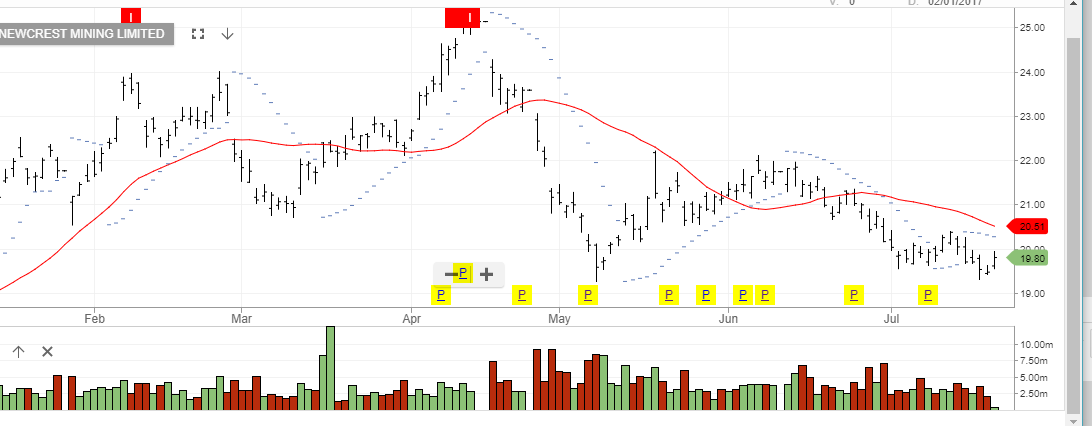
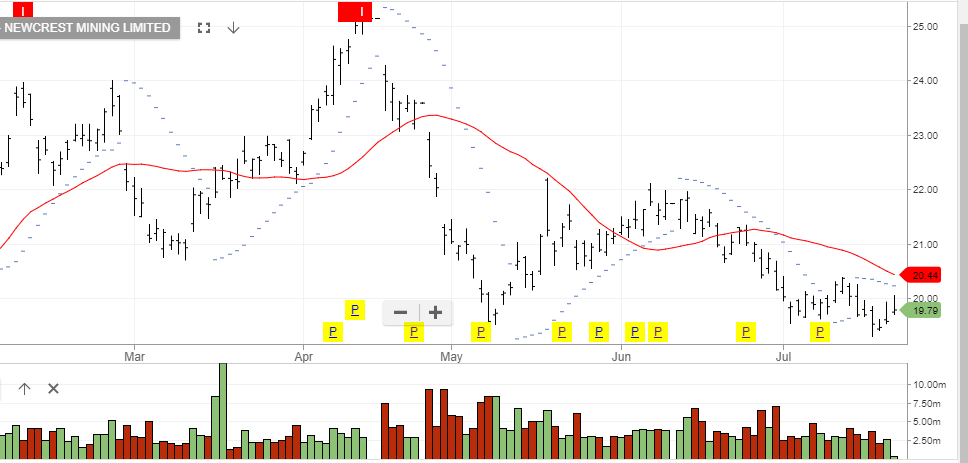
Shares of Newcrest have opened  1% higher at $19.80 as their quarterly production report reflected a uptick in production going into the second half of the year.

The company said that its Q4 gold production fell 7.7% from a year ago after the closure of its Cadia mine, but overall output was just enough to meet its full-year target.

Overall production of 551,815 ounces in the quarter helped the gold miner reach an annual output of 2.38 million ounces, which is at the lower end of their 2.35 to 2.60 million ounce forecast.

NCM also posted copper production of  83,900 tons, which is within the guidance of 80,000 to 90,000 for the year.

With spot Gold now trading at one-month high of $1255.00, we expect NCM to move back into the mid-June range of $21.50 to $21.75.
Newcrest
 

VIX Index Posts All-Time Low

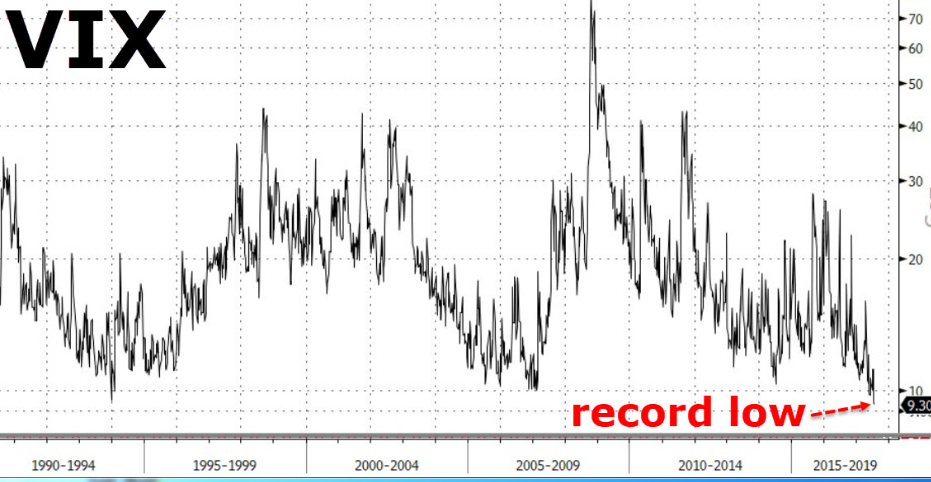
The VIX Volatility Index was introduced to investors in 1993. Today the index posted an all-time low weekly closing price of 9.31.

The price of the index reflects the market’s expectation of 30-day volatility in put and call options on the SP 500 stocks. It’s a widely used measure of market risk and often referred to as the “investor fear gauge”.

A price on the VIX greater than 30.00 is generally associated with high market volatility driven by investor uncertainty, while a value of 20.00 or lower corresponds to complacency in the market.

As a point of reference, the VIX has not posted a closing value above 20.00 in over 8 months.

With the SP 500 index trading near all-time highs on declining volume, it’s reasonable to expect a material increase in market volatility over the medium-term.

VIX Index

NCM: Quarterly Production Preview

The price of Gold posted a low of $1208.00 on July 10th.

Since then, the yellow metal has rallied over 3% hitting a high of $1247.00 in last night’s New York trade.

However, shares of NCM have not participated in this recent upswing in Gold and have been trading in a range between $19.50 and $20.00 for the last two weeks.

That could change on Monday after NCM announces their quarterly production report.

Much of the negative sentiment in the stock has centered on the impact of the seismic event and subsequent shutdown of the Cadia mine in April.

And while production numbers from Cadia are expected to fall from forecasts made earlier in the year, it’s also expected that other company assets have been worked harder to make up some of the gap.

On balance, we see the price risk asymmetrically skewed to the upside as the market should be able to look through the one off cost of getting Cadia back in production.

As such, we would expect a neutral-to-positive report to support a move in NCM back into the mid-June price range of $21.50 to $21.75.

Newcrest Mining


ALGO UPDATE: ORG Shares Firm On NT Gas Discovery

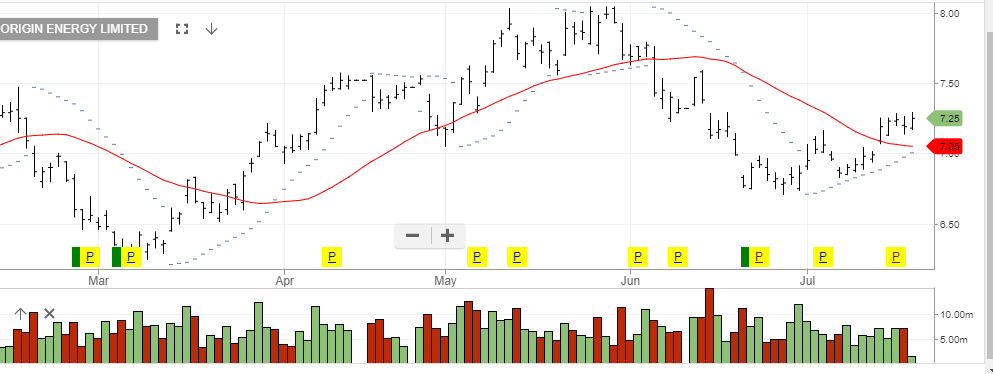
On June 23rd, the ALGO engine triggered a buy signal on ORG at $6.90.

Shares of ORG got a boost today as news of a multi-billion dollar gas resource was found in the Northern Territories.

Origin estimates that up to 6.6 trillion cubic feet of gas is in the area based on a 57-day production test. That volume is enough to cover Australia’s domestic gas needs for over five years.

We have a medium-term upside target of $8.00 and would consider ORG as a good buy/write strategy to add value to investor’s portfolios.

Origin


Lower US Yields Lift the AUD/USD

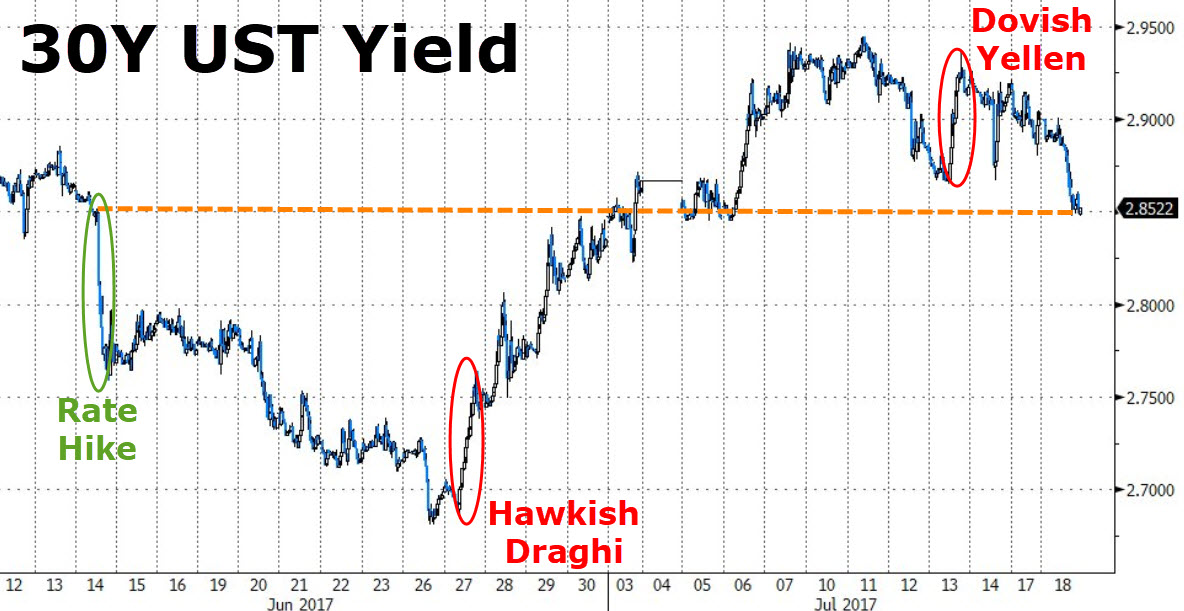
Over the last 10 trading sessions, yields in the benchmark 10-yr and 30-yr US bonds have dropped over 5% to 2.26% and 2.82, respectfully.

The quick reversal in yield expectations has had several “knock-on” effects across various markets.

The lower US yields will have a dampening effect on US banks, which has been illustrated by the weaker forward guidance from Goldman Sachs and JP Morgan.

More locally, the weaker US yields has triggered a sharp rally in the AUD/USD up to a 2-year high of .7940 in early trade.

We have written about how a back up in US rates would benefit local yield sensitive names like GPT and negatively impact multinationals like CPU.

US 30-yr Yield


ALGO UPDATE: CBA and APRA

Our ALGO engine triggered a sell signal in CBA on June 29th at $84.10. The share price hit a low of $81.30 yesterday.

Before the market opened this morning, APRA announced new “capital adequacy” targets with the goal of making the domestic banks safer.

The regulator will now require a 150 basis point increase to 10.5% in the minimum safety reserves that must be held by the five major banks.

Shares of the “Big 5” have all opened sharply higher in early trade. However, we believe that the local banking sector faces other market headwinds going forward and that lower share prices are likely over the medium-term.

CBA


ETF Update: Aussie Dollar Reaches A 15-Month High

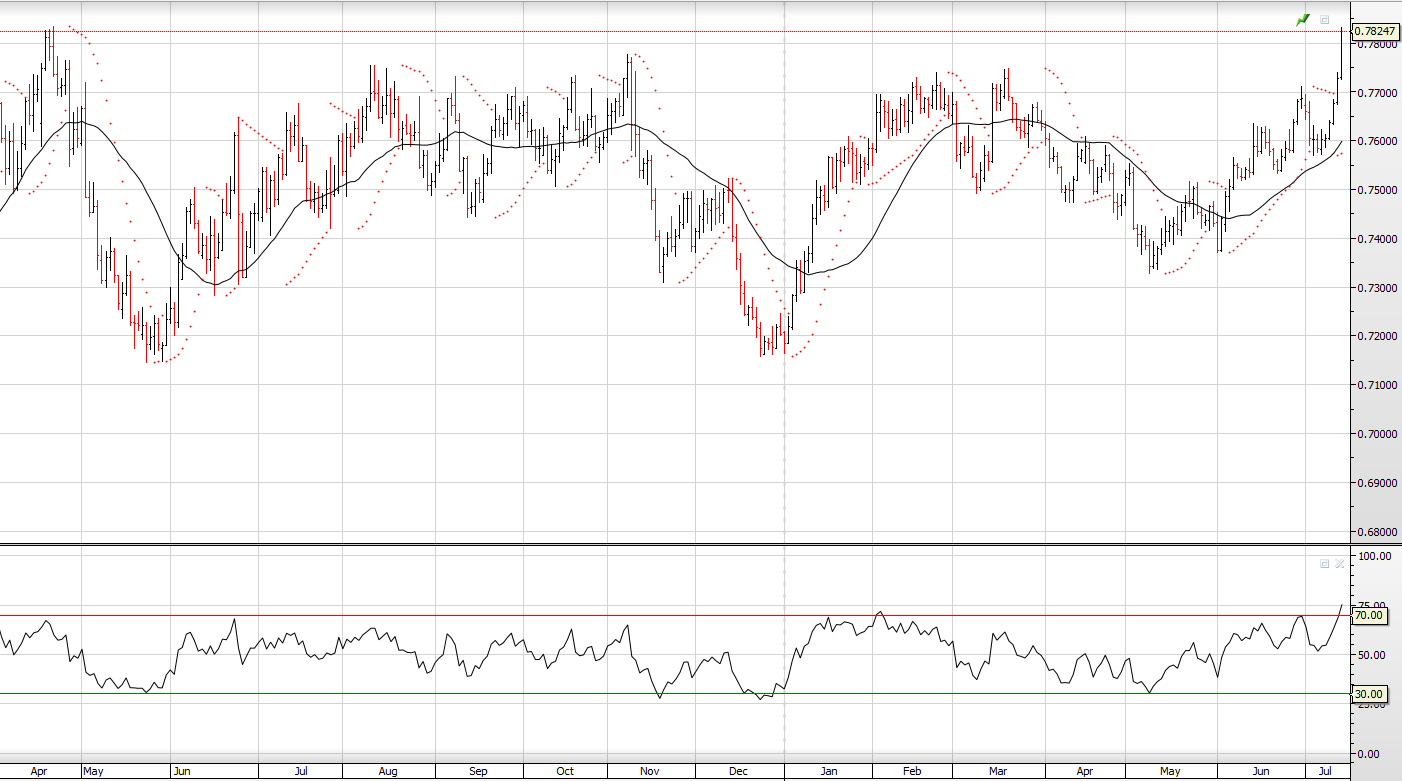
The AUD/USD traded higher everyday last week as the  currency traded to a 15-month high versus the USD at .7833.

General weakness in the USD combined with stronger Chinese import data gave the AUD/USD the momentum to break above the .7825 level last traded in April last year.

It’s worth noting that over the last 15 months, the AUD/USD has traded over .7750 four times. On each of these occasions, within a month, the AUD/USD had dropped by 4%, or more.

More precisely, after trading up to .7825 on April 21st, 2016, the AUD/USD lost over 8.5% to trade at .7150 on May 24th.

With both the RBA minutes and the monthly employment data set for release this week, we could hear some comments from the RBA regarding the impact of a higher currency on Aussie exports and the economy.

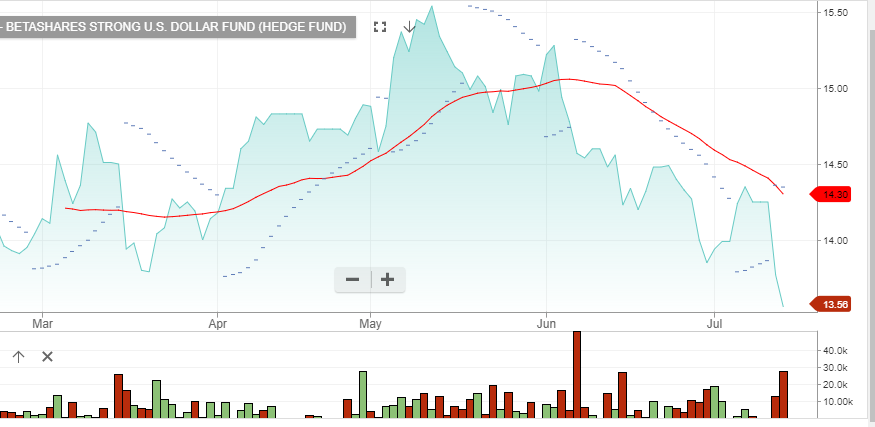
Investors looking to profit from a lower AUD/USD can look to buy the BetaShare ETF with the symbol: YANK.

YANK is an inverse ETF, which means the unit price increases as thew AUD/USD trades lower.

YANK has a 2.5% weighting, which means a 1% move in the AUD/USD translates to a 2.5% move in the unit price.  The unit price is currently $13.50, we calculate that when the AUD/USD falls back to .7300, the unit price of YANK will be over $16.00.

BetaShare ETF: YANK

AUD/USD Spot price.


Dow Hits All-Time High As “Short Interest” Drops To A 10-Year Low

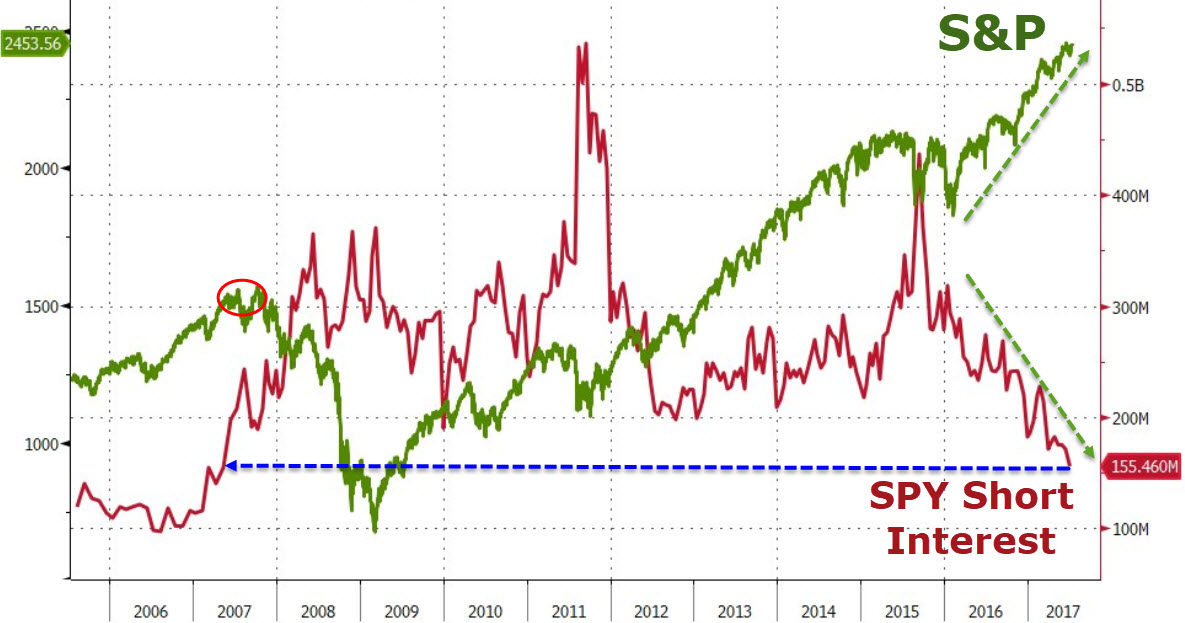
As both the Dow Jones 30 and the S&P 500 rose to new all-time highs this week, daily trading volume was 20% lower than the 3-month average and “short interest” in stocks fell to the 2007 lows.

Short interest is defined as the total Dollar value of stocks which investors have “sold short”, which they don’t own, with the idea of making a profit after buying them back at a lower price.

The combination of seeing the Dow and SP 500 rise to new highs on lower volume, and contracting short interest, is an illustration of a technical “short covering” rally.

Seeing index prices at new highs on lower volume suggests that “new money” is not coming into the market and that stock prices will revert lower after “short sellers” have taken their losses.

This technical combination doesn’t always trigger an immediate sell off in stocks. However, the market condition of “higher highs on lower volume” is often cited after a material correction in the market occurs.

As US earnings season goes into full swing next week, we’ll continue to watch the price/volume correlation and the potential impact on the market.


SYD, TCL And GPT Show Upside On Rate Reversion

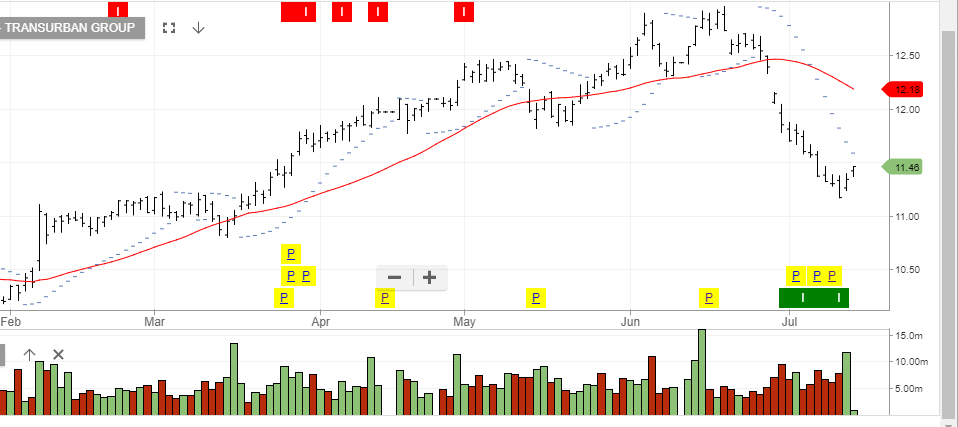
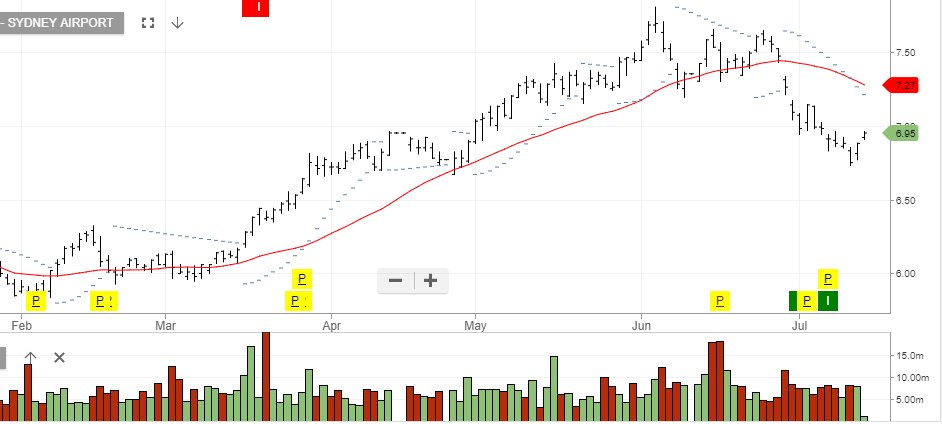
Over the last two weeks, yield sensitive names like SYD, TCL and GPT have all dropped over 10% from recent highs.

One of the main drivers has been the change in interest rate expectations from G-7 central bankers and the subsequent rise in short-term paper.

Moving forward, we see more likelihood of G-7 rates reverting lower within the year’s range and providing upside potential in the stocks above.

Other stocks we like on the basis of lower local rates are: AMC, WOW and MPL.

We see reasonable upside potential in the names and will employ the derivative overlay strategy (selling covered calls)  to enhance the portfolios returns.

Transurban

Sydney Airport

General Property Trust


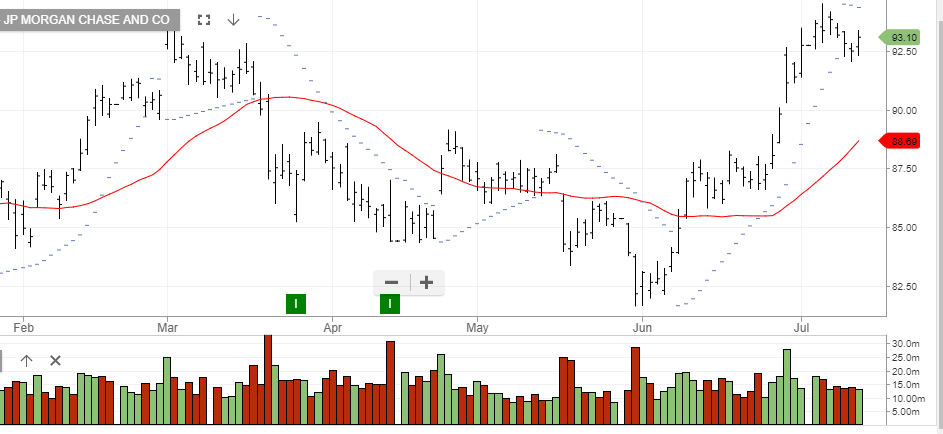
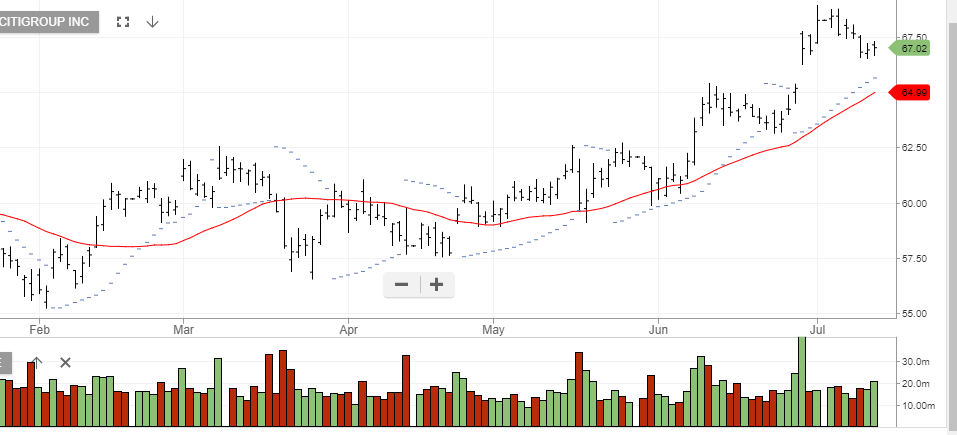
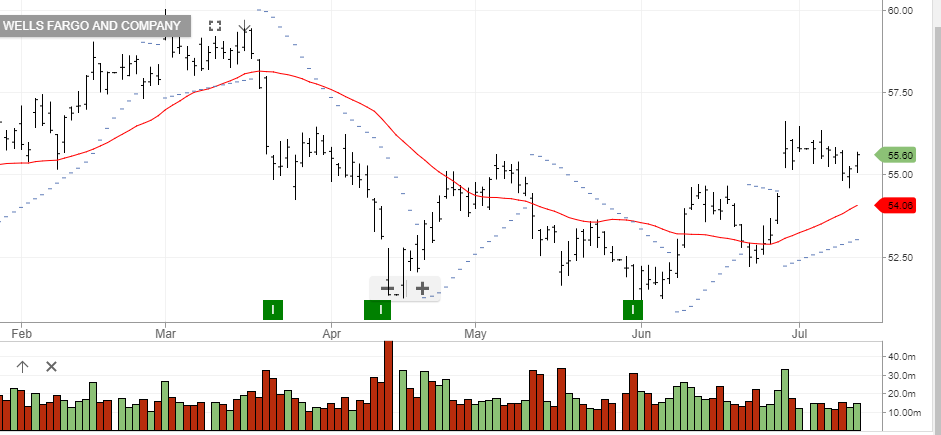
US Earnings Preview: JP Morgan, Citi and Wells Fargo

Before the US market opens later today, JP Morgan, Citigroup and Wells Fargo will report their Q2 results.

After last year’s post-election rally, these stocks and others in the financial sector have been trading in wide ranges.

However, over the last few weeks, bank stocks have rallied after the results of the FED’s “stress tests”, a push higher in short-term rates and hopes of further government de-regulation.

For Q2, JP Morgan is expected to report earnings of $1.57 per share, up 2 cents from last year on revenue of $24.8 billion. Wells Fargo is expected to report earnings of $1.02 per share, which is up 1 cent from last year on revenue of $22.3 billion. Citigroup is expected to report earnings of $1.21 per share, which is 3 cents below last year on lower revenue of $17.3 billion.

Our base case for the US banks is that trading revenues will be trending lower for the remainder of the year and the current levels look fully-valued with risk to the downside.

JP Morgan

Citigroup

Wells Fargo