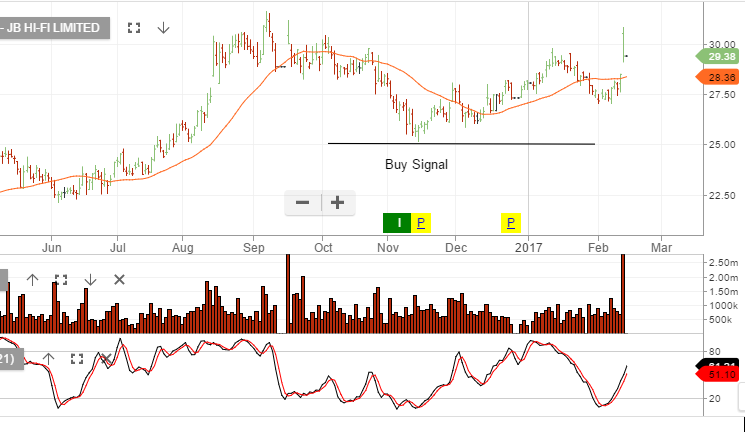
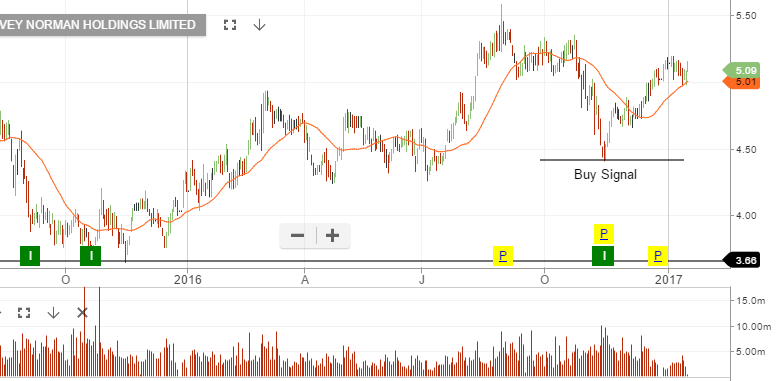
Our algo engine is flagging the lower high technical structure in the ASX 200 index (XJO) and a number of the stocks making up the index are also displaying a similar set up. The resources are the driving force behind the index rally and any attempt to short the market or the index needs to be built upon a view that the big cap resources have exhausted their current rally.
Whilst we’re watching the above and looking for further confirmation, we’re not quite there with regards to changing our existing “long market bias”.
The following chart of the XJO shows the index approaching the previous high of 5611 points (set on 1/8/16). The momentum indicators still remain positive at this stage.
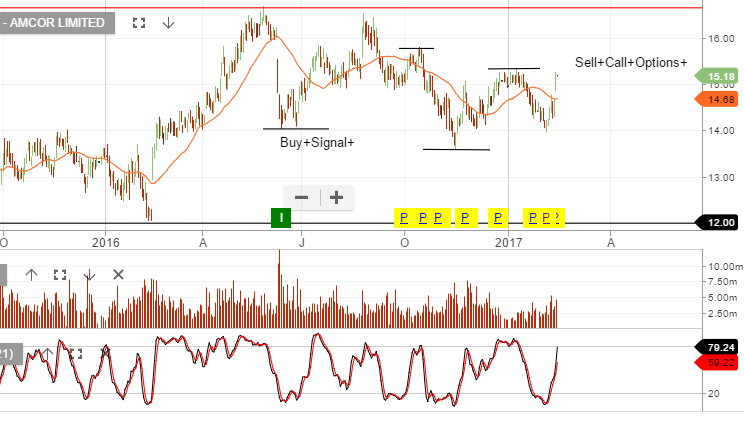
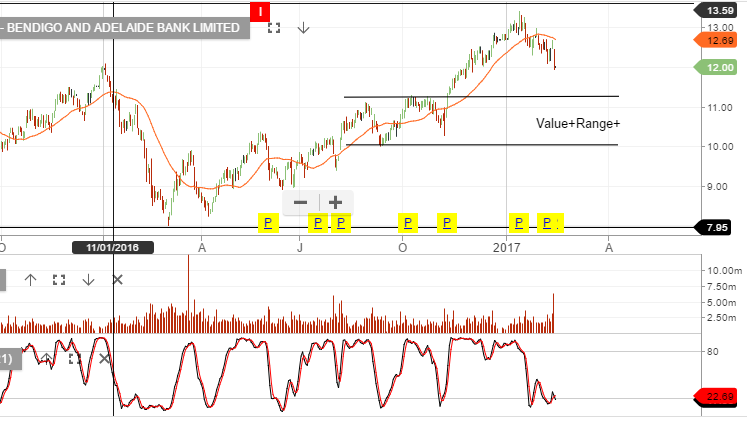
We’ve been buyers of BXB on the recent low and are now mindful the stock has rallied almost 10% from its lows and on a valuation basis the share price is likely to run into selling pressure around $12.50.
At $12.50 it places BXB on a forward yield of 2.5%, assuming management delivers 8% underlying EPS growth. From a technical perspective, the algo engine is now flagging the lower high formation which we take as a signal to either lock-in short term profits, or for longer term holders, sell covered calls to enhance the cash flow yield.
SEEK reaffirms guidance for FY17 underlying profit of A$215m-A$220m.
SEEK was able to maintain guidance for FY17 due to strong operational performance from most business units, despite unfavourable currency moves.
FY17 revenue $1.b, EBITDA $400m, EPS $0.60, DPS $0.40 places the stock a forward yield 2.8%.
We like Seek and see upside earnings potential, however, after entering long positions at the recent low, we now look to lock-in profit ahead of anticipated resistance, at or near $15.50
We’ll revisit new entry opportunities on the next algorithm signal.
Boral intends to acquire US based building product group Headwaters Inc in a deal worth US$2.6b The transaction has been approved by the Headwaters’ Board and is expected to close mid next year.
Boral will raise $2b through a $1.6bn retail and institutional entitlement offer and a A$450m institutional placement at an issue price of $4.80 per share. The remaining $1.6b will be funded through existing cash and debt.
We continue to see upside in Boral & James Hardie.
Crude Oil prices rallied over 4% to a three week high today, as the market perceived a growing conviction that major oil producing countries would agree to limit output at the OPEC meeting in Vienna on November 30th.
West Texas Intermediate crude oil traded as high as $48.50, up over 10% in five days, since Saudi Arabia, the de facto leader of OPEC, increased pressure on the group’s more reluctant members to join its proposed reduction of output plan. In recent days, OPEC members including Iran, along with non-OPEC member Russia, have suggested that they were leaning toward a deal to limit production.
Both Iran and Russia have been the main hurdles facing any output curtailment by OPEC, as both nations want exemptions to try to recapture market share lost by years of Western sanctions. Analysts have been clear participation by Iran, Nigeria and Libya are integral in any agreement to cut production and shore up crude oil prices.
There is a saying in the financial markets that a “rising tide floats all boats” This old adage has been used recently to describe how the rally in US bank shares has lifted the share prices of Australian banks.
Since November 4th, shares of Citibank have gained 14%, shares of JP Morgan have gained 16%, shares of Bank of America have risen by 17% and Goldman Sachs shares have rallied by over 20%.
Over the same period of time, shares of ANZ have gained 6%, shares of Westpac have gained 8%, CBA shares have lifted by 8.5% and shares of the NAB have rallied by 11%.
Interest rates in the US began bottoming out in late September, which was positive news for most US financial names. In addition, the election of Donald Trump is being hailed as a “game changer” for the U.S. banking sector, as the Republican sweep of the White House and both houses of Congress appears to have shifted investor’s expectations about interest rates, regulation and the broader business environment.
With respect to the Australian banking names, these two key points aren’t applicable.
The RBA may have moved to a neutral bias on domestic interest rates, but there’s no realistic expectations for a rate hike anytime in the foreseeable future. And, if any regulatory changes are legislated in the Australian banking industry over the next 12 months, they are more likely to be restrictive, as opposed to accommodative.
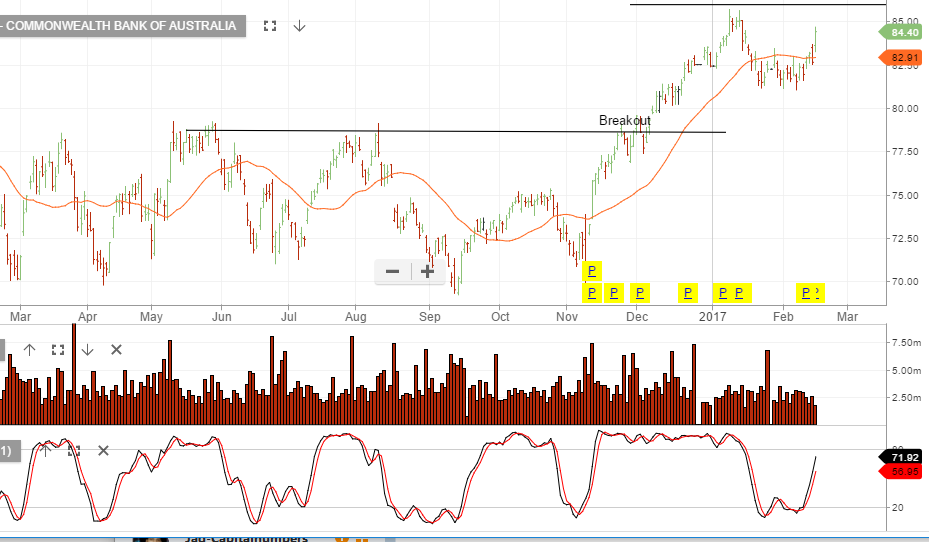
With this in mind, we will use this recent rally in Australian banking names to implement our derivative overlay strategy and sell covered call options to enhance returns on bank share holdings.
Stay tuned to the Investor Signals daily blog for specific timing and price information.
The sell-off in property trusts and infrastructure names has been substantial, 15 to 20% since early September.
The REIT sector has underperformed as bond yields have rallied. The repricing has seen the dividend yield of REIT’s back above 5%.
Historically, the correlation between Australian yield names and US 10-year yields has been inverse; as US yields fall, Australian property trusts and infrastructure stocks rise.
US 10-year bond yields have risen by 79 basis points, or over 50%, since early October. We see this pace as unsustainable and expect the local yield names to trade higher as the US Treasury yields drift lower.
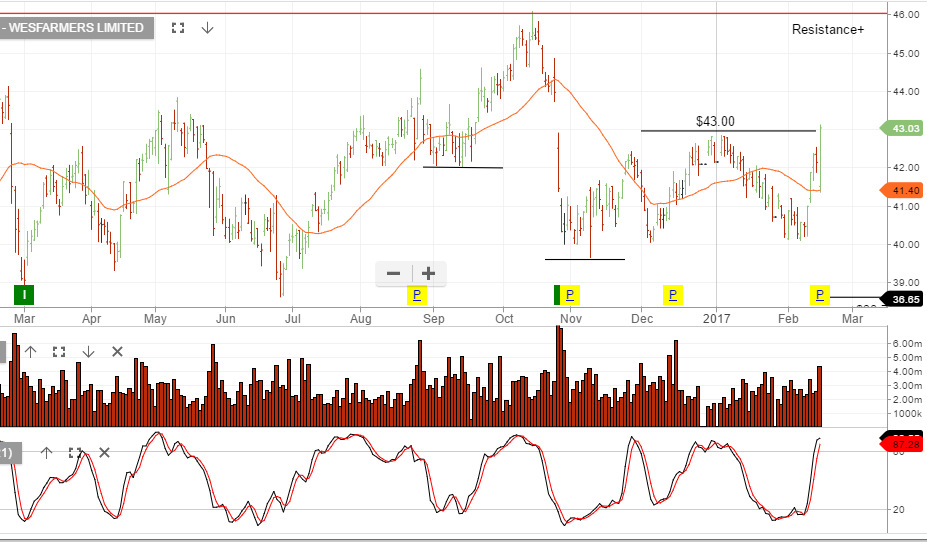
We continue to track WFD, GPT, SGP, SYD and TCL versus the US10 year bond yields.
Currently ASX leading indices are building higher highs and higher lows and therefore, our predominate focus is on long or buy side signals triggered by the Investor Signals algo engine. When the structure of the indices turn bearish, we’ll provide greater analysis and coverage of short signals.
Occasionally, counter trend opportunities will present and work their way onto our radar screen. CPU and AGL are two countertrend short signals we’re monitoring.
We’ve been buyers of SEK this week at or near $14.50. We highlight the benefit of running a stop loss as indicated on the chart. Whilst we see value at the current price point, we’re also mindful that the technical structure is weak, therefore, as a protection of capital we apply a stop loss at $13.90
Seek (SEK.ASX) reported FY16 NPAT of $198m in line with guidance. The company maintained FY17 guidance of NPAT in the range of $215 – $220m.
Weakness in the education segment was off set by strength in the Asian employment business. FY17 revenue should increase 10% to $1b on EBITDA of $415m, EPS of $0.64 representing 15 – 20% underlying growth. This places the stock on a forward yield of 2.8%, assuming $0.40 in dividends for FY17.
Chart – Seek
Sophisticated Investor?
We have special opportunities available for Sophisticated Investors. If you're interested, and qualify, please provide your details below.