For the fourth fiscal quarter of 2026, management provided the following targets:
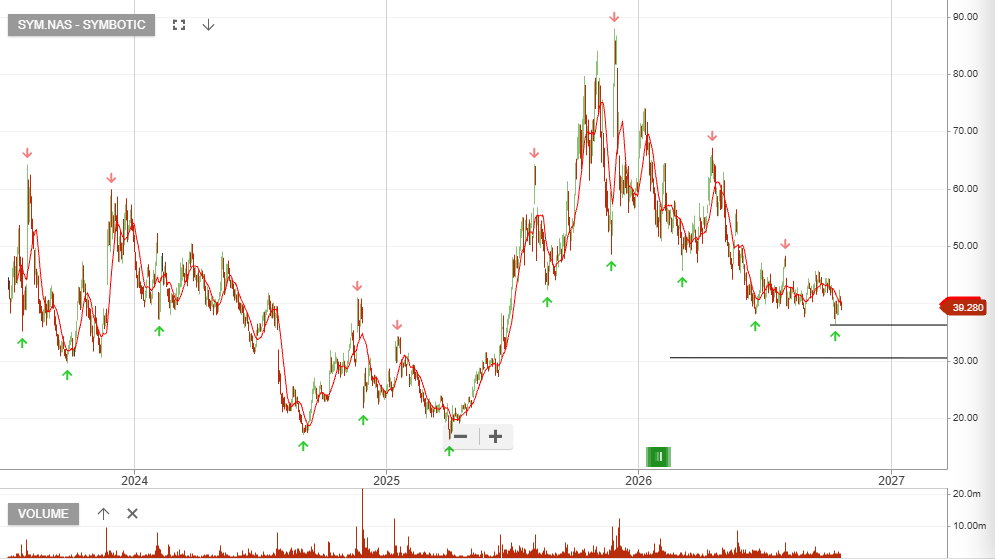
Revenue: Expected between $760 million and $780 million (representing continued sequential and YoY expansion).
Adjusted EBITDA: Guided in the range of $100 million to $105 million.
Cash Flow: Full-year free cash flow is projected to remain positive.
Next Earnings Date: Symbotic is scheduled to release its Fiscal Q4 and Full-Year 2026 results around late November 2026 (tentatively November 23, 2026).
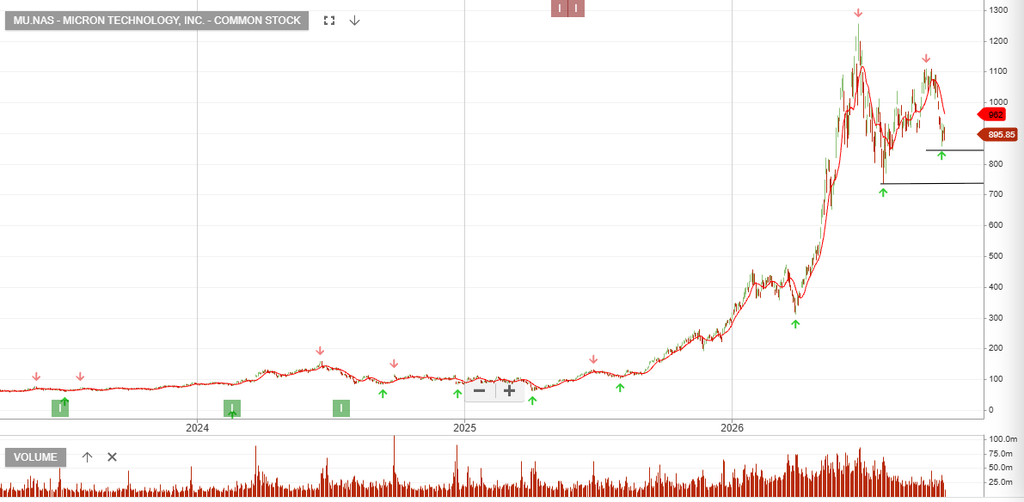
Q4 FY26 results were stellar, with sales up 379% YoY to $54.2B and operating margins exceeding 80%. This brought total FY26 revenue to a whopping $133.2 billion, which represents an increase of 256% YoY.
Outlook:
2. Expected Revenue & Growth (Q1 FY2027)
Consensus Revenue Forecast:~$61.74 billion
Prior Year Q1 (FY2026): ~$13.64 billion
Expected YoY Revenue Growth:~350%+
(Reflects massive top-line expansion fueled by high-bandwidth memory / HBM and enterprise AI server DRAM adoption).
3. Expected Profit & Earnings Growth (Q1 FY2027)
Consensus Adjusted EPS:~$37.90 to $38.21 per share
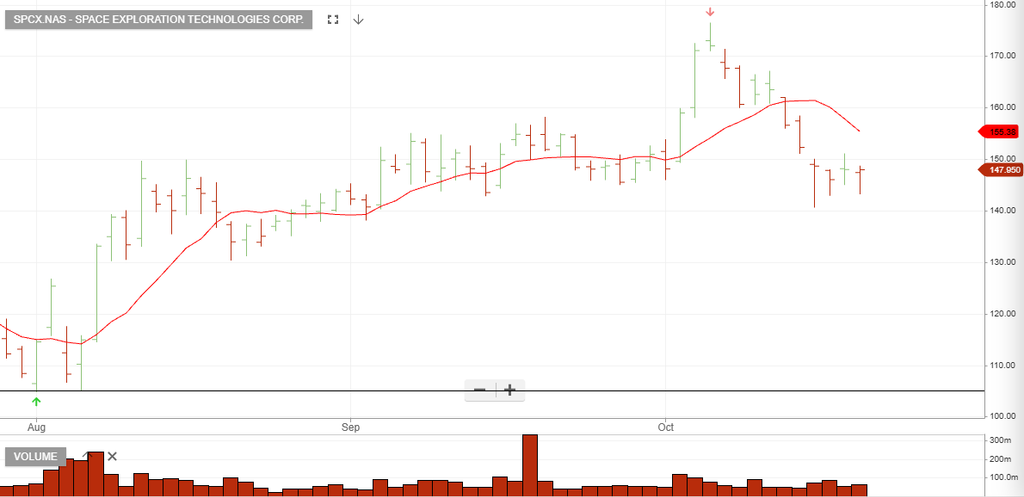
SpaceX Beats Q3 2026 Earnings Expectations Driven by AI and Starlink Surge
SpaceX reported its third-quarter 2026 financial results, posting strong beats on both top and bottom lines.The company reported revenue of $14.58 billion, representing a 161% increase year-over-year and comfortably outperforming Wall Street expectations of $12.7–$12.9 billion.
Adjusted earnings per share reached $0.35, beating analyst consensus estimates of $0.13 to $0.16.Net income surged to $4.4 billion—marking a significant turnaround from a $1.1 billion net loss in the prior-year period.
Key Segment Performance
Super Intelligence (AI):Reached $7.56 billion in revenue (up 830% YoY), making it the company’s largest reporting segment.Growth was accelerated by expanded cloud service contracts, Grok usage, and the integration of Cursor.
Connectivity (Starlink):Generated $5.25 billion in revenue (up 69% YoY) as total global subscribers reached 13.6 million.
Space Operations:Contributed $1.77 billion, supported by launch operations and the first revenue-generating mission using Starship.
Balance Sheet & Outlook
SpaceX reported holding approximately $90 billion in cash and marketable securities alongside $19.6 billion in capital expenditures for the quarter, primarily directed toward AI infrastructure and compute expansion.Following the release, shares of SpaceX (SPCX) traded higher in after-hours sessions.
SpaceX Q3 revenue jumped to $14.58bn from $7.8bn in Q2, 15% ahead of ests, while EPS of $0.35 more than doubled the $0.15 expected for its first quarterly profit since listing.
Next Earnings Date
Expected Date: Estimated between November 24, 2026 and December 1, 2026 (After Market Close).
Reporting Period: First Quarter Fiscal 2027 (ended October 31, 2026).
Expected Revenue & Profit Growth
Q1 FY2027 (Upcoming Quarter)
Full Year Fiscal 2027 (FY27)
Expected Total Revenue:$3.908B – $3.938B
YoY Revenue Growth:16.6% – 17.5%.
Sophisticated Investor?
We have special opportunities available for Sophisticated Investors. If you're interested, and qualify, please provide your details below.