Inner Circle
NAS:ORCL is under Algo Engine buy conditions.
Following a Q3 beat in March, the next estimated earnings announcement is 10 June 2026.
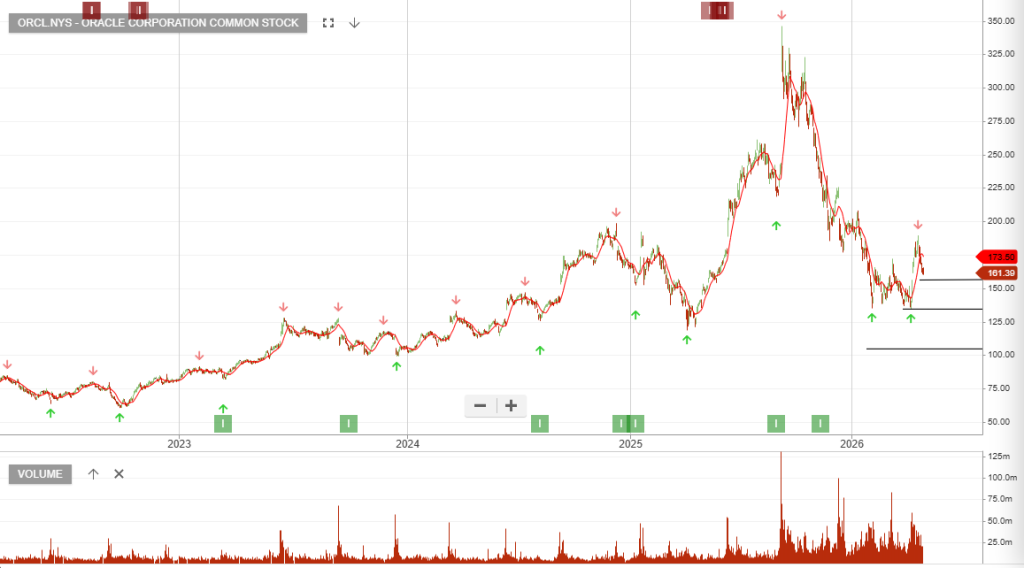
NAS:ORCL is under Algo Engine buy conditions.
Following a Q3 beat in March, the next estimated earnings announcement is 10 June 2026.
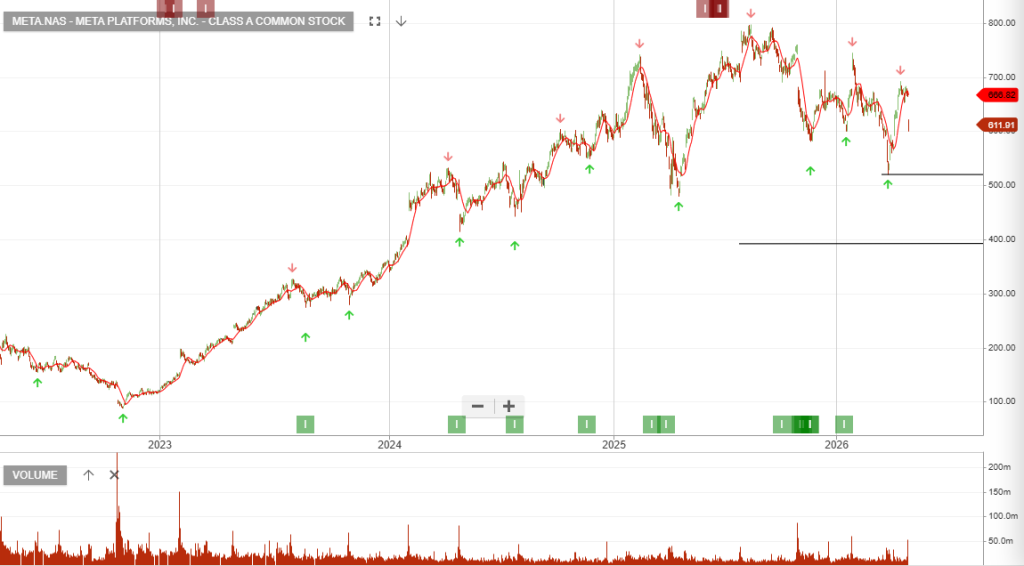
Meta Platforms, Inc. – Class A Common is under Algo Engine buy conditions.
Earnings per share: $7.31 adjusted vs. $6.79 estimated
Revenue: $56.31 billion vs. $55.45 billion estimated
Revenue climbed 33% from $42.3 billion a year earlier, marking the fastest quarter for growth since 2021.
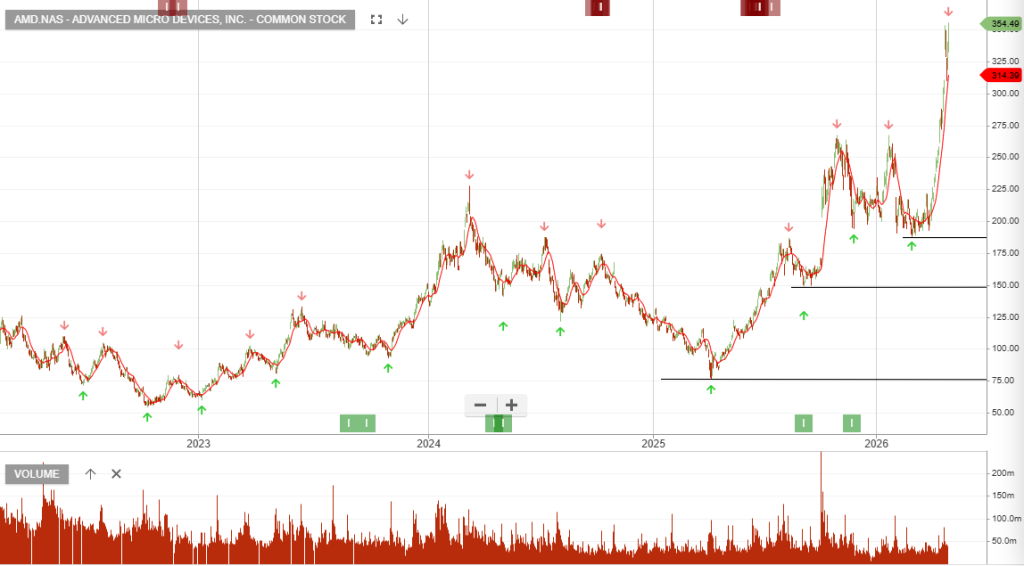
Intel’s latest earnings report showed big demand for central processing units, or CPUs, as companies rush to build out their artificial intelligence capabilities, sending its stock surging. The numbers led investors to scoop up shares of another major chipmaker:
AMD shares soared more than 12% on Friday as Wall Street analysts were caught off guard by Intel’s CPU performance — which they believe will translate to other big CPU makers.
We figured CPUs were the next big bottleneck, but Intel’s results indicate that is already translating to very significant upside.
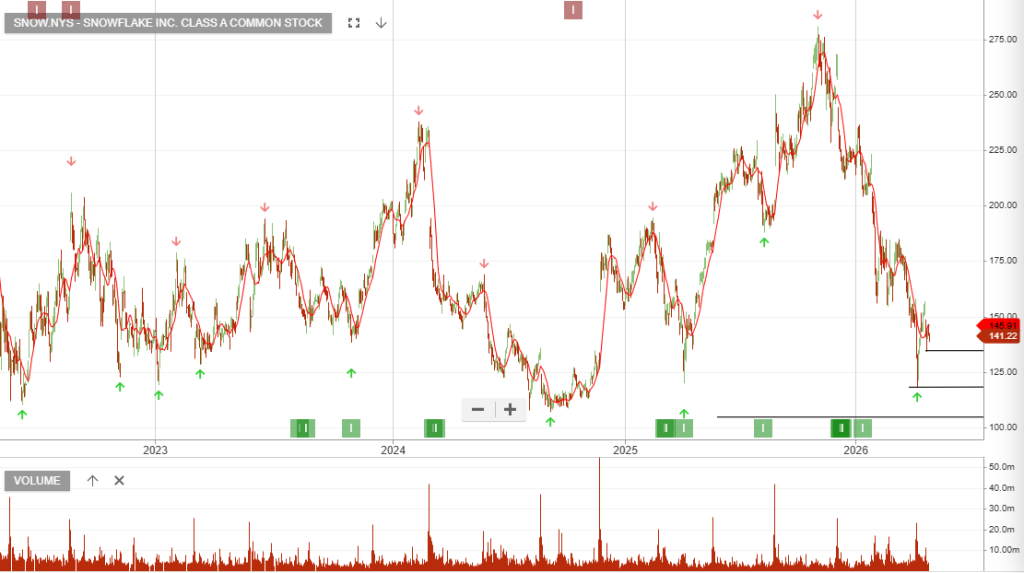
Snowflake remains one of the highest-quality data + AI infrastructure platforms globally, positioned at the centre of enterprise data workflows.
The investment case is simple:
👉 The market is pricing Snowflake as a ~25–30% revenue compounder with accelerating earnings power
| Metric | Current | Forward View |
|---|---|---|
| Revenue Growth | ~30% YoY | ~25–27% YoY |
| FY2026 Revenue | ~$4.7B | — |
| Medium-Term Target | — | ~$8–9B (next ~3–4 yrs) |
👉 Takeaway:
Revenue growth is high but normalising, still well above most large-cap software peers.
Based on current market estimates as of April 30, 2026, Snowflake (SNOW) is expected to report its fiscal first quarter 2027 results in late May.
Estimated Earnings Date
Q1 FY2027 Analyst Expectations
Analysts are currently forecasting the following metrics for the quarter ending April 30, 2026:
Implied Growth: This would represent approximately 27% year-over-year revenue growth.
Consensus EPS Forecast: ~$0.32 (estimates range from $0.14 to $0.32 depending on the source).
Revenue Forecast: ~$1.32 billion.
Based on the latest fiscal year and trailing-twelve-month (TTM) results available as of April 30, 2026, here are the top 10 holdings of the ProShares Big Data Refiners ETF (DAT) reordered by their revenue growth rates.
Palantir Technologies Inc. | PLTR | +56.0% | Driven by explosive U.S. commercial AI demand.
Datadog, Inc. | DDOG | +28.0% | Continued cloud monitoring scale (FY25).
Commvault Systems, Inc. | CVLT | +19.0% | Strong transition to subscription & SaaS revenue.
Dynatrace, Inc. | DT | +18.7% | Solid growth in observability and ARR (FY25).
Nutanix, Inc. | NTNX | +18.1% | Benefit from VMware migrations and hybrid cloud.
Zebra Technologies Corp. | ZBRA | +8.3% | Recovery in inventory and warehouse automation.
NICE Ltd. | NICE | +8.0% | Steady growth in cloud-based customer experience.
MicroStrategy | MSTR | +1.9% | Flat core software growth; focus remains on BTC.
InterDigital, Inc. | IDCC | -4.0% | Volatile revenue due to timing of patent licenses.
Teradata Corporation | TDC | -5.0% | Decline in legacy revenue despite cloud growth.
Key Observations:
Hyper-Growth Leader: Palantir (PLTR) remains the outlier in this group, with growth accelerating due to the rapid adoption of its Artificial Intelligence Platform (AIP).
The “Observability” Cluster: Both Datadog and Dynatrace continue to post high double-digit growth, reflecting the sustained enterprise need for data monitoring in complex cloud environments.
Value vs. Growth Divergence: Companies like Teradata and InterDigital show negative or flat top-line growth, as they are either navigating legacy transitions or rely on lumpier, non-recurring licensing cycles.

Level 17 Chifley Tower
2 Chifley Square
Sydney, NSW 2000
1300 614 002
Investor Signals Pty Ltd
ABN 44 143 555 453