Amcor
Amcor is under Algo Engine buy conditions.
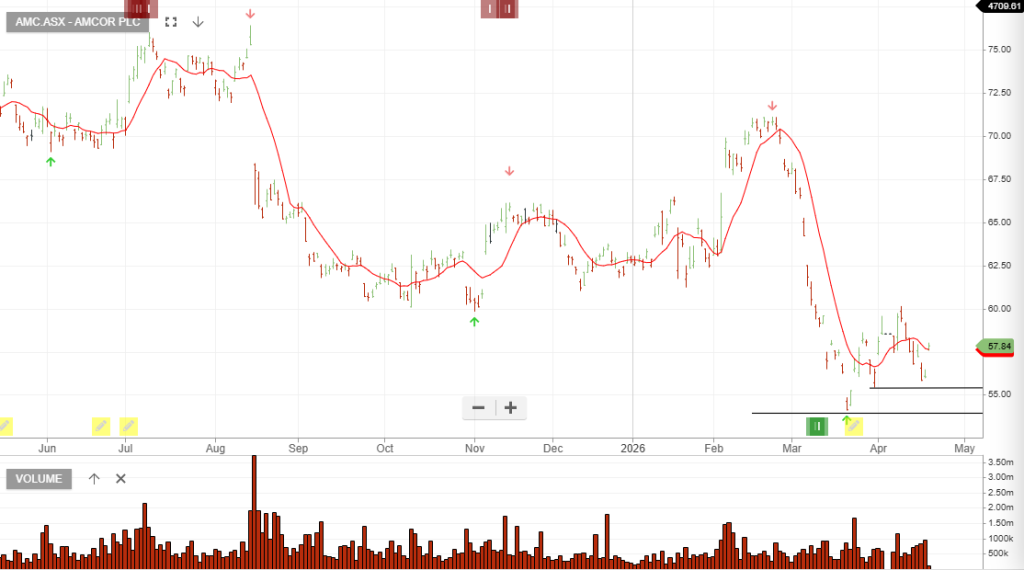
Amcor is under Algo Engine buy conditions.
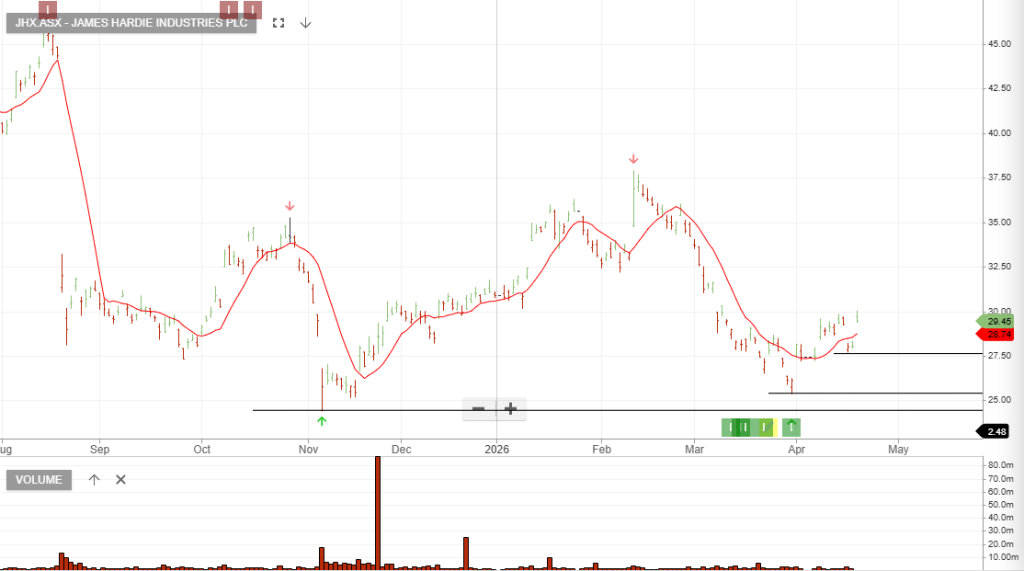
James Hardie Industries is under Algo Engine buy conditions.
Monday, April 20: Steel Dynamics.
Tuesday, April 21: GE Aerospace, 3M, Halliburton, United Airlines.
Wednesday, April 22: Tesla, Philip Morris), IBM, Boeing.
Thursday, April 23: Intel, American Express, Blackstone.
Friday, April 24: P&G.
Here’s a very brief, revenue + profit growth–focused snapshot of that earnings week:
Takeaway: Industrials strong; energy lagging.
Takeaway: Growth present but more selective vs 2023–24 tech boom.
Takeaway: AI + financials driving earnings momentum.
Takeaway: Defensive names = stable but low growth.
Laggards: Energy, defensive consumer
Revenue growth: ~mid-to-high single digit overall (S&P ~10%)
Earnings growth: ~mid-teens (~15%)
Leaders: Industrials, AI/tech, materials
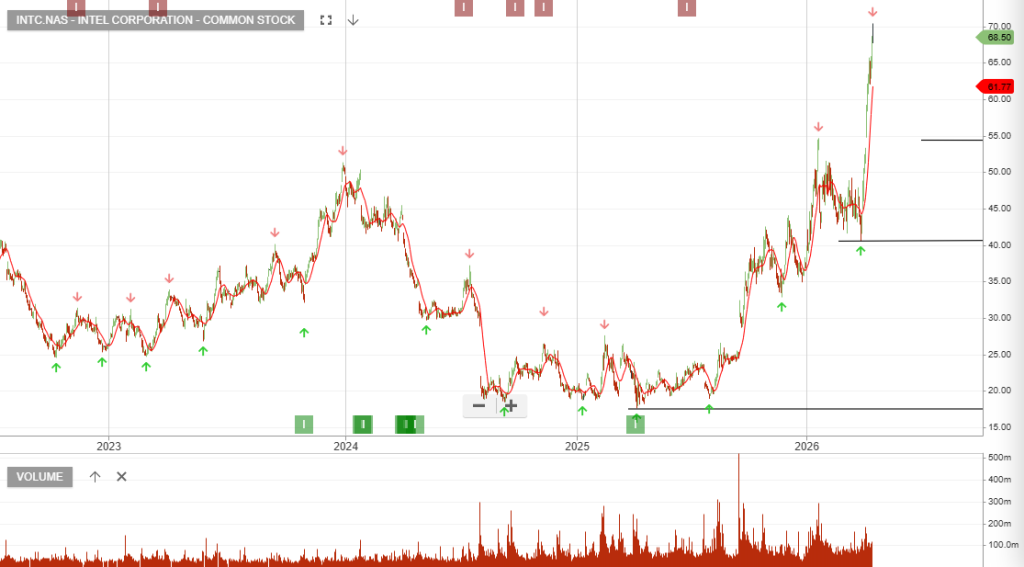
Intel Corporation is set to report Q1 results after Thursday’s close, with analysts expecting earnings to plunge ~94% Y/Y on a modest revenue decline.
The company recently introduced its Core Series 3 processors, targeting AI-ready devices for cost-sensitive segments.
Intel is emerging as a key provider in the AI supply chain, supported by heavy investments in fabs and advanced packaging technologies. However, risks remain around execution, competition from Taiwan Semiconductor Manufacturing Company Limited, and the need to secure external foundry demand.
Consensus EPS Estimates: $0.01
Consensus Revenue Estimates: $12.38B
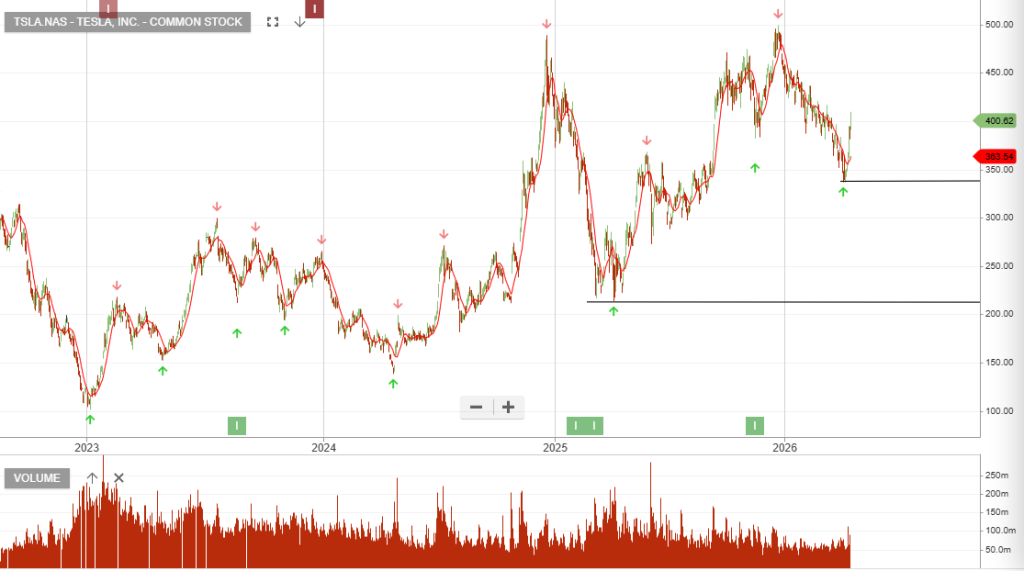
Tesla is set to report Q1 results after Wednesday’s close, with analysts expecting 32% Y/Y earnings growth on 16% revenue expansion.
The long-term thesis remains anchored in AI, robotics, and autonomous driving, with upcoming updates on robo-taxi and Optimus seen as potential catalysts.
With fundamentals under pressure but long-term optionality intact, Tesla’s Q1 print is likely to be a key test of whether execution can catch up with expectations.
Consensus EPS Estimates: $0.36
Consensus Revenue Estimates: $22.34B
Intel (INTC): Focus remains on the progress of the “Intel 18A” node. Recent reports highlight a $1.1 billion award for research and development in Ohio, though the company continues to face stiff competition in AI PC chips from Qualcomm. Estimated Earnings: April 23-25.
Honeywell (HON): The company recently announced a $4.95 billion acquisition of Carrier’s Global Access Solutions business to bolster its building automation segment. Analysts are monitoring margin expansion in the Aerospace division. Estimated Earnings: April 24-26.
Oracle (ORCL): Oracle is riding a wave of cloud infrastructure demand; recent partnerships with Microsoft and Google for multi-cloud database services have been viewed positively by the market.
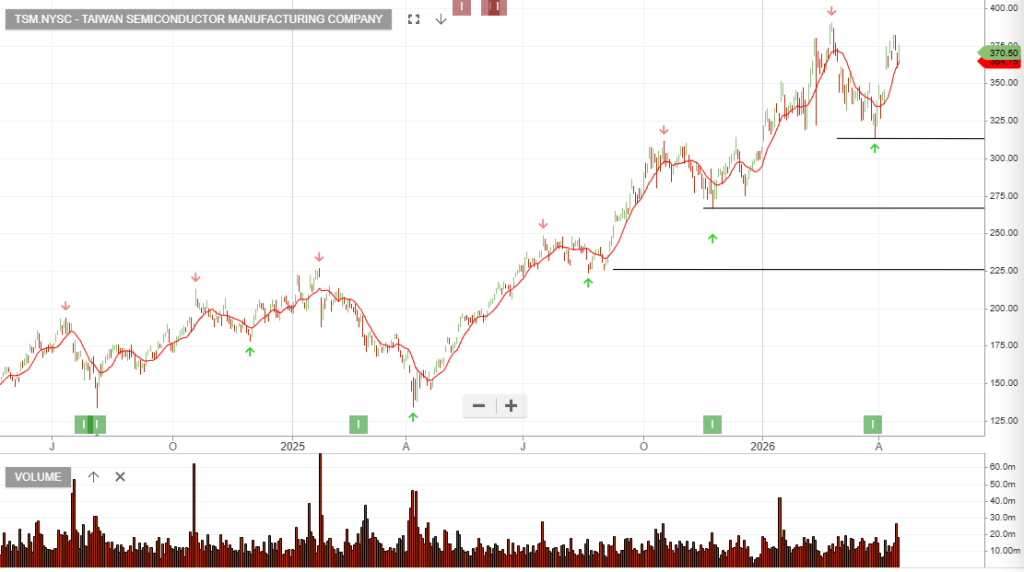
TSMC (TSM) recently reported exceptionally strong Q1 2026 results on April 16, 2026, leading to a revised upward outlook for the remainder of the year. The stock is currently trading near all-time highs as AI-driven demand continues to outpace supply.
Q1 2026 Earnings Performance
TSMC’s most recent quarterly report beat expectations across all major metrics:
2026 Outlook & Guidance
The company has significantly raised its full-year expectations:
Valuation Metrics
Key Investment Considerations
TSMC remains the sole provider for high-end AI chips (NVIDIA, Apple, AMD). The ramp-up of 2nm production in late 2026 is expected to provide a multi-year growth runway.
Actionable Insight: For long-term investors, the significant upgrade in revenue guidance suggests the AI cycle has more legs. However, at $370+, the stock is approaching some analysts’ price targets (e.g., Needham at $480), suggesting new entries might wait for minor pullback.
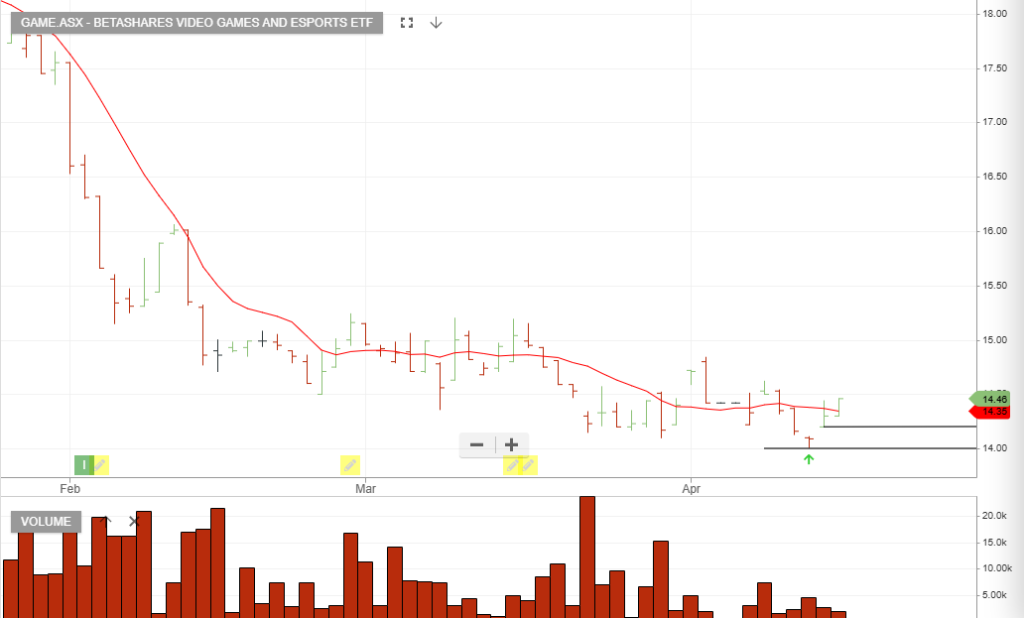
Betashares Video Games and Esports buy with a stop loss at $14.01
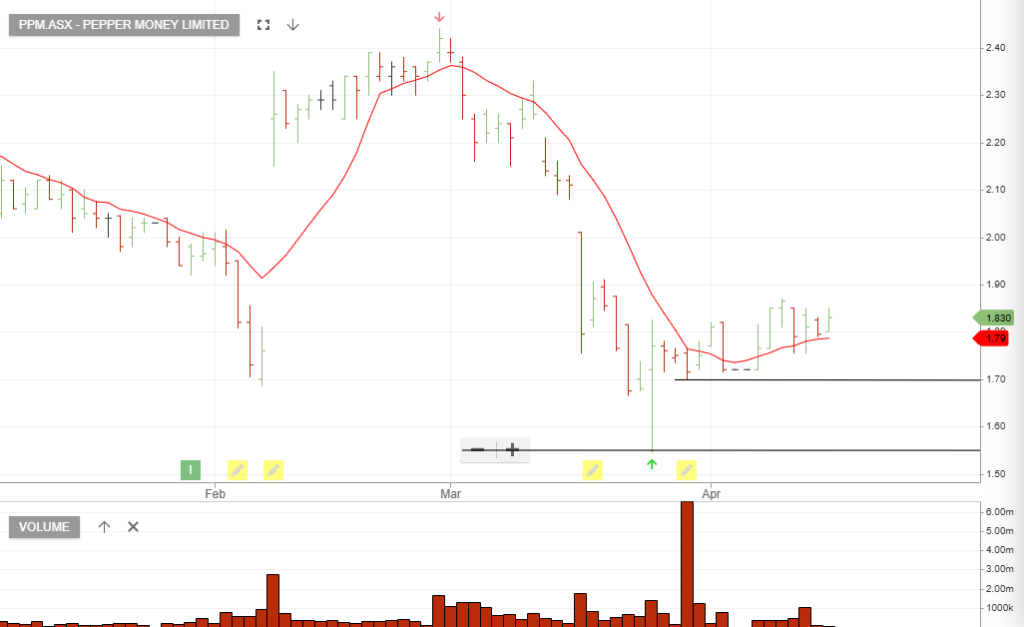
Pepper Money buy with a stop loss at $1.70
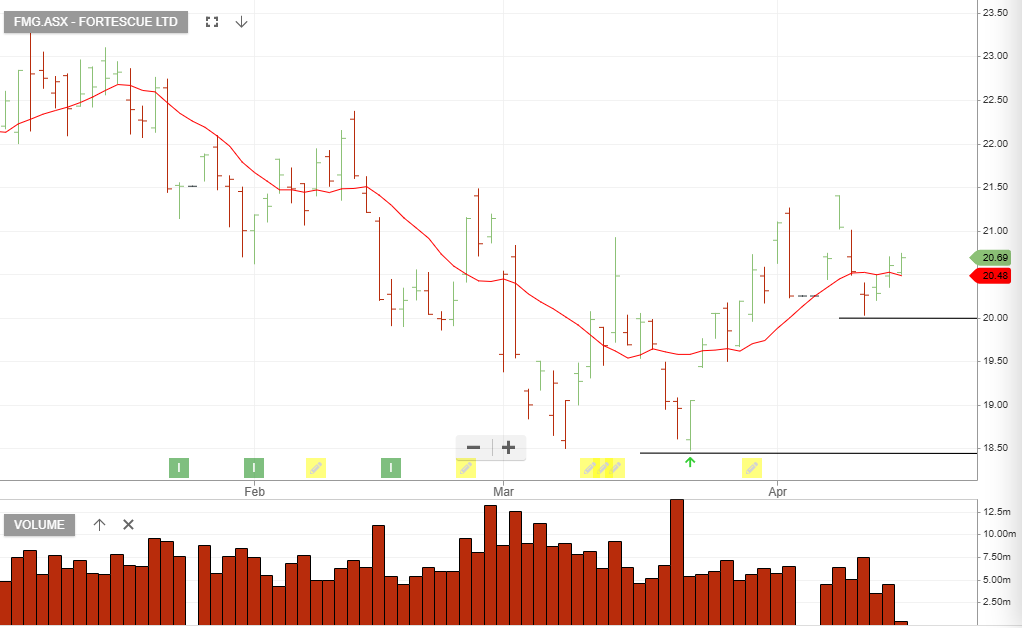
Fortescue buy with a stop-loss at $20.03

Level 17 Chifley Tower
2 Chifley Square
Sydney, NSW 2000
1300 614 002
Investor Signals Pty Ltd
ABN 44 143 555 453