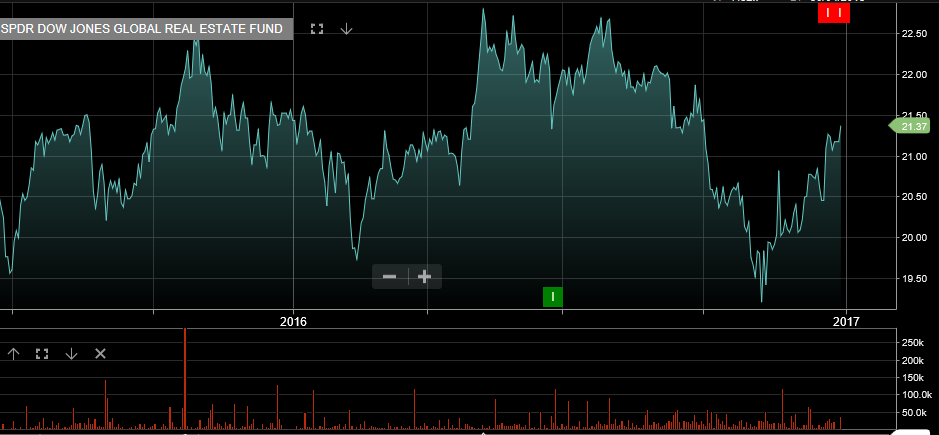
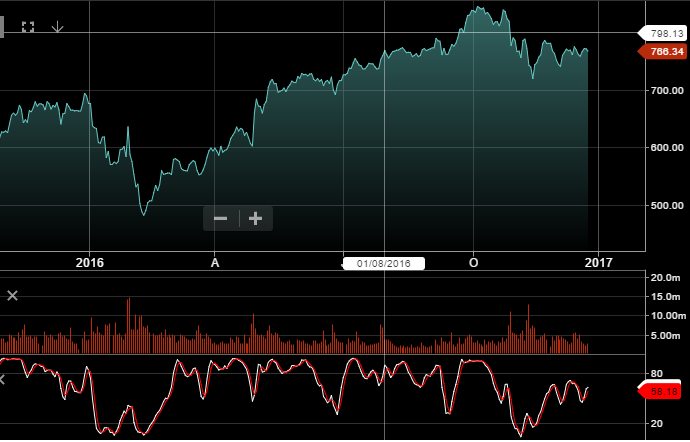
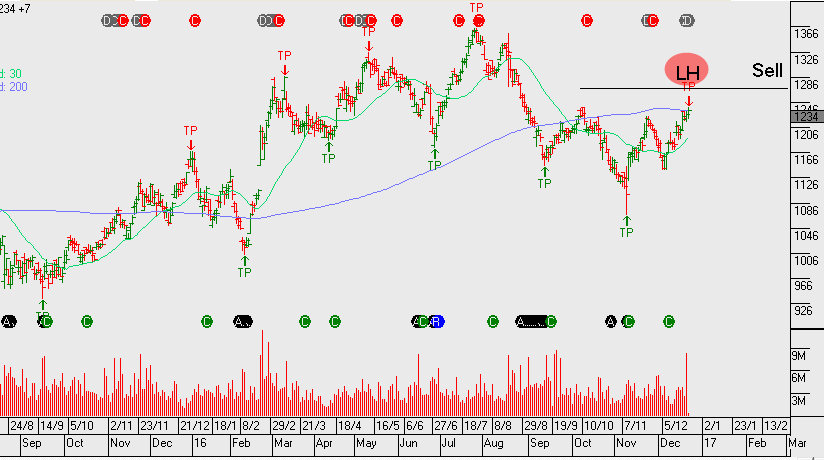
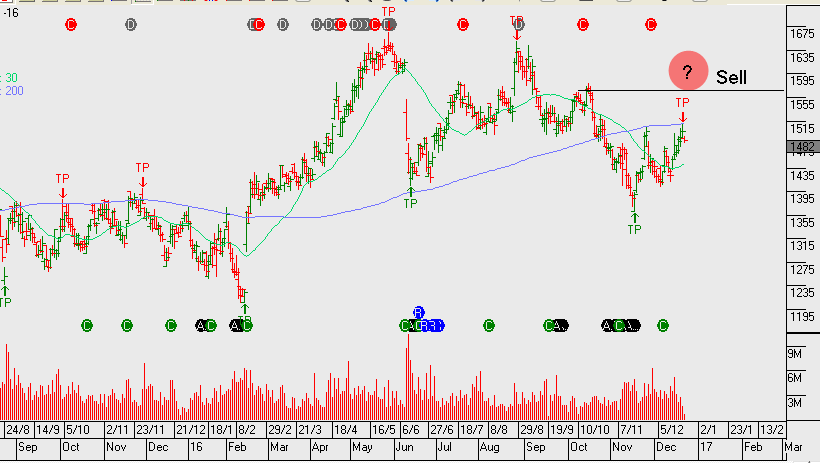
The Algo Engine has triggered a short signal in the ASX listed SPDR Dow Jones Global Real Estate Fund. We’re being alerted to the change in structural trend and the potential that we’re in a counter trend bounce. To align this technical picture with fundamental analysis it’s most likely that a trigger for a sell-off in yield sensitive names, (such as property trusts), needs further upside in US bond yields to generate the tipping point.
We struggle with the timing of the above alert, as our base case for markets is that US yields are topping out short term and not moving higher. Therefore, not providing the catalyst needed to go short yield sensitive names.
Domestically, many of our REIT’S also display a very similar technical picture to the below chart. Our preference from an asset allocation perspective is to use the current short signals in yield sensitive names as a timing tool to sell at-the-money calls.
Going into 2017, one of the biggest decisions investors face is what portfolio weighting to allocate to Australian banks.
Over the past three years, the Australian banking sector has grown to represent over 30% of the ASX 100 capitalization.
This growth has been supported by record bank profits, weakness in other sectors and the chase for yield by offshore investors as central banks in Europe, Japan and the USA have pushed interest rates to historically low levels.
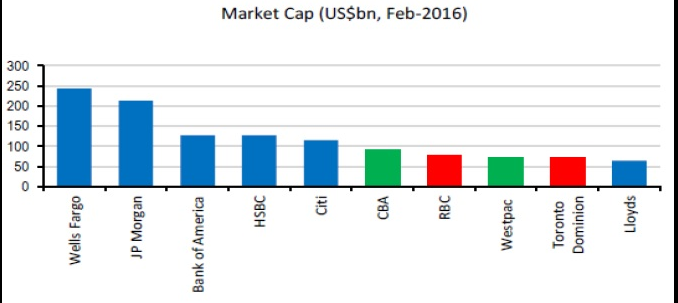
This has contributed to all four of Australia’s primary banks now being in the top 15 global banks by market capitalization, despite their relatively small footprint in the global financial system. In fact, as of February 2016, both CBA and Westpac were listed in the top 10 global banks in terms of market capitalization.
Over the past five years, Australian banks have been very successful in generating profits from their domestic branches which operate in a snug banking oligopoly. Competition from non-bank lenders hasn’t increased materially in the mortgage area and bad debts remain at manageable levels.
Nevertheless, Australian banking shares (while offering high dividend yields) are likely to face a fairly constrained pricing environment and higher loan losses, should the domestic economy continue to slow in 2017.
It’s been reported that international fund managers have been systematically, shorting Australian banks based on the belief that the domestic housing market is overvalued and primed for the same dramatic decline which occurred in Ireland, Spain and the USA over the last 10 years.
Furthermore, a growing number of analysts are suggesting that protracted weakness in the local economy will burst the housing bubble, contributing to the Government losing its AAA credit rating and putting downward pressure on Australian bank share prices throughout 2017.
Our base case is not quite that grim. However, we do expect to see limited upside to the share prices of the big four banks from current levels and eventual rotation into healthcare companies and yield names.
From a technical perspective, we expect to see price resistance for the four major banks around the following levels: WBC $33.50, CBA $86.00, ANZ $32.50, NAB $32.00.
Flash points for the global equity markets in 2017 remain Italian Banks, Chinese Economy & uncertainty around Trump presidency.
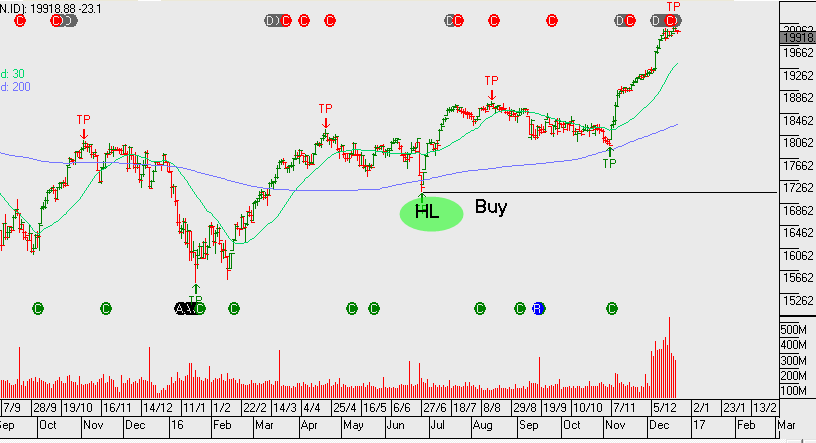
Japan continues to struggle to shake off deflationary pressures as the November consumer price index fell for the ninth straight month. Bank of Japan Governor,Haruhiko Kuroda rejected claims the BOJ’s yield curve control and 2% inflation target may be too ambitious and that the central bank has room for more economic stimulus.
China’s 6.5% economic growth target may not be maintained, especially if it continues to compound the rising debt issues the country faces and creates too much risk.
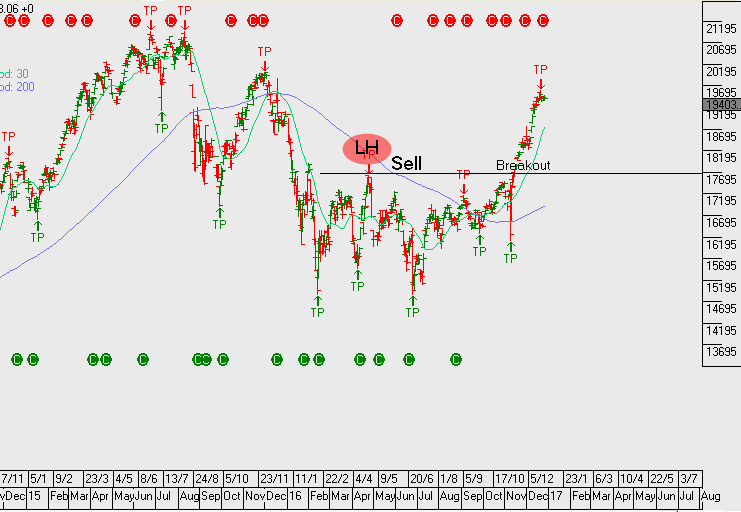
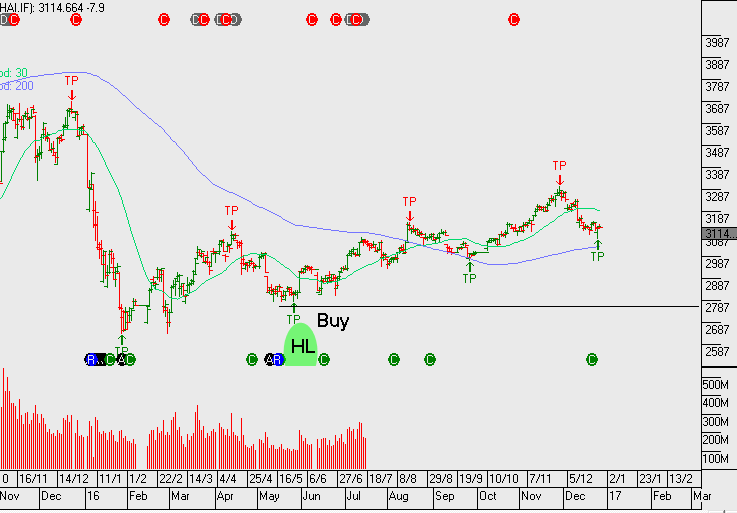
During 2016 we’ve been bullish on the Chinese equity markets which performed inline with our forecasts. The strength and the breakout in the Japanese equities on the other hand, caught us a little by surprise.
The breakout in the Nikkei has been fuelled by the BOJ’s broad-based equity ETF being program and the recent weakness in the Yen.
From the team at Investor Signals, we wish you and your family a Merry Christmas and Happy Holiday. May the spirit of the season bring you happiness, joy & good times with your loved ones.
Thank you for your involvement & support throughout 2016 and I look forward to working with you to help successfully navigate the markets in 2017. Merry Christmas and wishing you a happy & prosperous 2017.
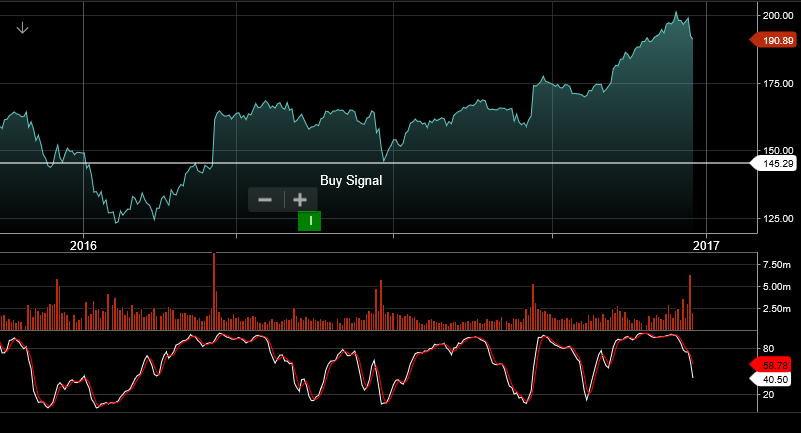
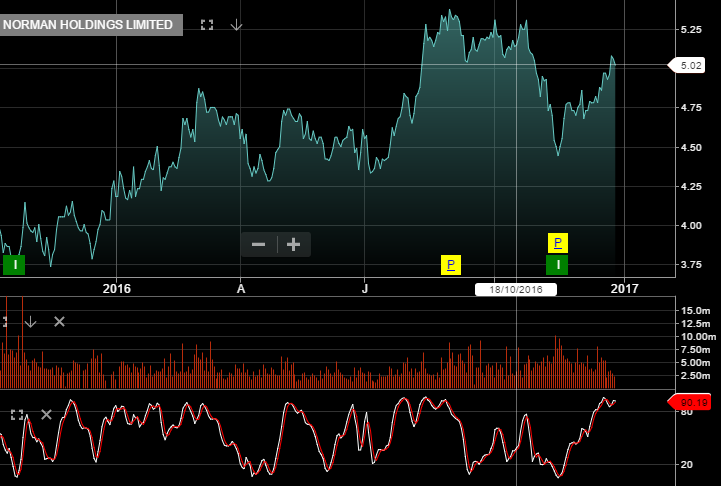
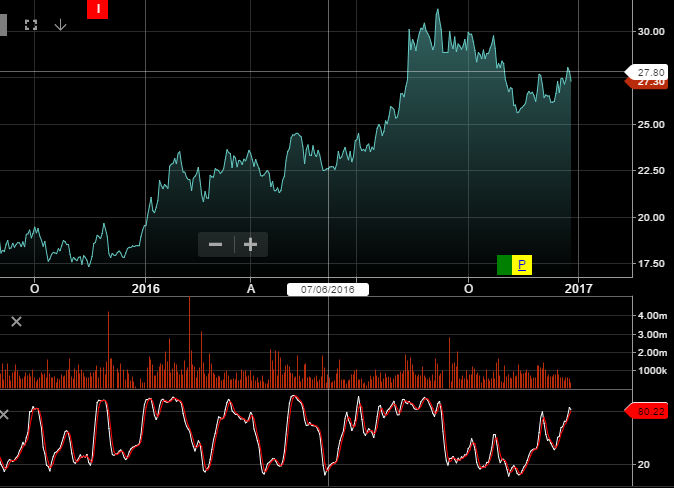
Let’s take a quick look at a few names that should prosper from the Christmas period spending activity. In the US I’ve focused on Amazon and FedEx as two relevant examples and domestically, I’ve looked at Harvey Norman and JB HI-FI.
We had buy signals from the algo engine on these names and our preference was the long position in HVN, which has now rallied 10% from the November low.
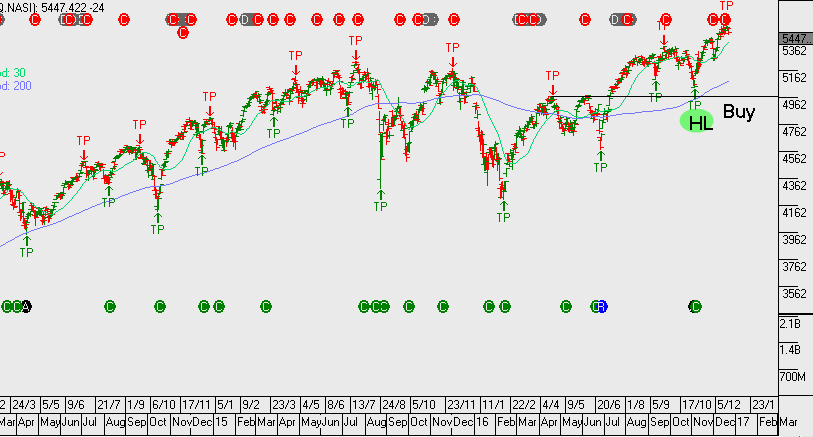
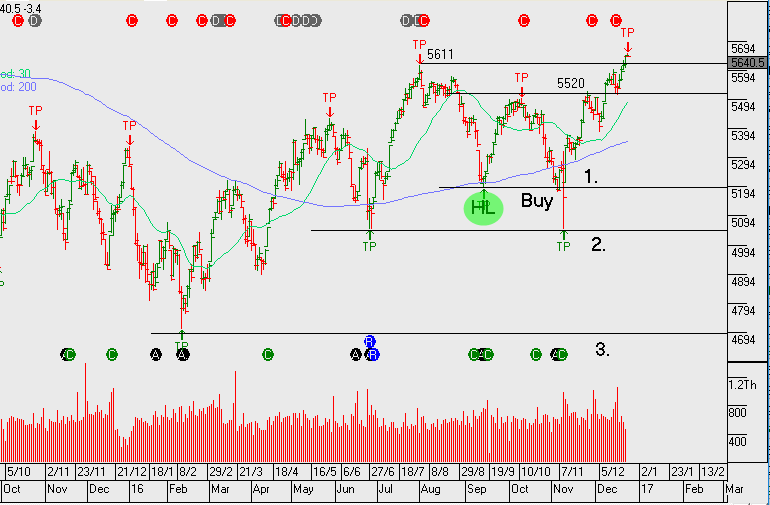
US stock Indexes closed modestly lower during Thursday’s thinly-traded preholiday session. With the lower trading volumes expected over the holiday and US Earnings season commencing in a few weeks, investors seemed reluctant to bid up prices of indexes that are already hovering near all-time highs.
The SP 500 and the NASDAQ Composite booked their first consecutive losses in three weeks, as the post-election rally has lost momentum over the last few sessions.
It’s worth noting that since November 4th, all three of the major US Index have posted respectable gains with the Dow Jones 30 rising 11.2%, the SP 500 up 8.3% and the NASDAQ Composite gaining over 9%.
Therefore, it’s really not surprising to see stocks take a breather going into the Christmas break.
Shares of Brambles have bolted to new 3-month high at $12.35 as the trading conditions in the US and European markets continue to reflect a sustainable revenue outlook.
The international pallet, crate and container supplier is looking to benefit in FY 2017 from a recent joint venture in the in the Oil and Gas sector, as well as, a restructuring in their container division.
Despite a change in CEO, our EBIT remains unchanged in the 9.0% range, which is in the lower end of management’s 9-11% range.
In the near-term, we see price resistance in the $12.75 area and will look to sell covered calls in the $13.00 area to enhance the low 2.8% forward dividend yield on offer.
After meeting price resistance at $15.00 yesterday, shares of Amcor have opened over 1% lower $14.80.
Earlier in the year, the firm’s multi-currency revenue stream was considered a tailwind. However, with the USD trading sharply higher against the AUD and the EURO, these trends are now seen as a headwind to market earnings forecasts.
This means that our 1H 2017 forecasts are expected to show a marginal fall in profits from US$ 310 million to just above UD$ 300 million, or about 6% lower on a reported USD basis. For the full year in FY 2017, our constant FX forecasts are unchanged at US$ 700 million, which implies 5% YoY growth.
As such, we expect Amcor shares to trade in a sideways pattern over the medium-term and look to buy on a pull back based on the Algo signal alerts. At this point, with the share price in the upper band of the 6-month range, we will sell the covered call option to enhance yield and reduce volatility.
Woolworths has rallied from the November $22.20 support level. Based on consensus earnings the stock trades 18.5 times FY17 earnings and 3.8% dividend yield.
The earnings update in Jan/Feb will provide greater clarity on the turnaround following the Masters business failure and the refocus on Woolworth’s traditional food and liquor business.
Chart – WOW
Sophisticated Investor?
We have special opportunities available for Sophisticated Investors. If you're interested, and qualify, please provide your details below.