Boral – US Investor Day

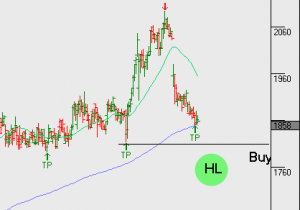
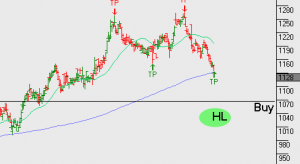
Boral (BLD.ASX) remains on our preferred watch list. The recent management briefing in San Antonio, Texas reaffirms what we see as positive industry trends in construction material prices and domestic strength in infrastructure spending.

FY17 NPAT forecast profit of $295m on EPS $0.41 and DPS of $0.27 places the stock on a forward yield of 4%. Underlying growth should remain in the range of 7%+ over FY17 and FY18.

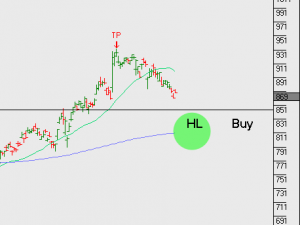
On the above basis, the recent pullback in BLD warrants the stock staying on our preferred watch list, with a potential entry point at or near the current higher low formation.

ASX:BLD
ASX:BLD – Boral Chart


Healthcare Opportunities – add to your watch list

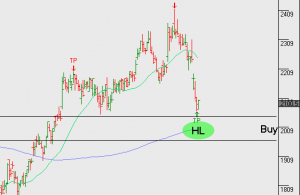
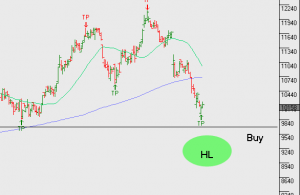
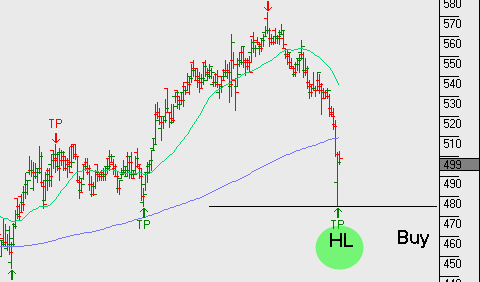
Within the current sell-off Resmed, Sonic Healthcare & CSL look like reasonable opportunities in a back drop of increased volatility. Here are the entry levels to add to your watch list.

Resmed (RMD.ASX) – Buy at $8.50 – $8.70 range

rmd

Sonic Healthcare (SHL.ASX) Buy at $20.50 – $21.00 range

shl

CSL (CSL.ASX) Buy at $96 – $102 range

csl


Global Macro

After a slow start, last week turned out to be pretty solid for the USD as the unit was steady or stronger against all the G-7 pairs. Even though the mid-week economic reports on manufacturing were on the weak side and the US service sector expanded at the slowest pace in 6 years, Treasury yields moved higher supporting the USD’s rally. The US 10-year yield was up 16 basis points from the mid-week low  of 1.50% and reached its highest level since the UK referendum in late June.

However, US equity markets were beaten down after Boston FED President Eric Rosengren said there was a “reasonable case” for a rate hike at next week’s FOMC meeting. These comments pushed the SP 500 just below 2120 and, from a technical perspective, sets up a very ugly chart pattern. The Relative Strength Index (RSI) dropped from 54.2 to 31.00 and the MACDs have rolled over on the daily charts.

It’s worth noting that this is just one day and the major equity indexes may reverse course in short order, but it’s a reminder of how vicious the market decline was in January following the FOMC’s initial rate normalization from the zero bound.

Ahead of the media blackout period in front of next week’s FOMC meeting, FED Governor Lael Brainard will speak on Monday at an economic conference in Chicago. Ms Brainard has generally been in the dovish camp, and has tended to emphasize the international risks of FED policy trajectory. Her speech, on the outlook of the US economy, will be closely watched by market participants.

In this sense, if there’s no change in her core position or tone, it would lend support to equities, lower yields and lead to a softer USD. One the other side of the coin, any hint that the FED has been sufficiently cautious and that the normalization objectives have been met could lead to an extension of Friday’s price activity.

This type of diametrical “cause and effect” price prognosis is the ugly underbelly of the markets that the central bankers have created, and is what they fear the most. On balance, we maintain the view that the Fed Funds futures market has underestimated the possibility that the FED will lift the Fed Funds target band to .50% – .75% next week, and short-term traders have overestimated the resultant equity market impact within the broader bull market pattern.

Global Macro

Even though the European Central bank (ECB) lowered their 2017 and 2018 growth and inflation forecasts, and acknowledged that the risks to these forecasts are skewed to the downside, Mr Draghi and the other ECB governors made no adjustments to European monetary policy at yesterday’s meeting in Frankfurt.

The overnight deposit rate of -.40% was left unchanged, as expected. However, the ECB also refrained from extending the timeframe of QE from the current date of March of 2017; which was disappointing since it was the only policy action that market commentators were discussing as a highly likely possibility. Bond yields across G-7 treasury markets traded higher, ( Euro zone stocks lower) in response as further stimulus, against a weaker economic outlook, appears be delayed.

Only in the eyes of the ECB can a slower pace of economic and inflationary deterioration be considered an improvement in overall conditions. During his press conference, Mr Draghi pointed out several times their stimulus options are not exhausted and that the ECB has the will, capacity and ability to do more within their mandate. This includes extending the QE timeframe beyond March of 2017, when needed.

After all was said and done, a lot was said and nothing was done. There was no date provided for the new staff forecasts which sets up a “FED” style data dependency for Euro traders until the next key meeting in December.

After trading in a narrow 30 point range around the 1.1250 level prior to the ECB meeting, the EUR/USD climbed up to the 1.1320 level just after the announcement. However, as the NY session progressed the pair reversed lower on the eventual divergence between US rates moving higher and EU rates drifting lower.

GPT – Income Play

GPT now trades on a forward yield of 4.8% with distribution per unit in FY17 of $0.24

Owning GPT at $5.00 and selling long dated covered call options into March 17 at the $5.25 strike, creates $0.15 in premium. Add in the  December dividend of $0.12 and total cash flow equals $0.27. If exercised,  an additional 5% capital gain or $0.25 on top of the $0.27 takes that total return to $0.52 or 10% for 6 months exposure.

GPT

Domestic Trade Balance for August

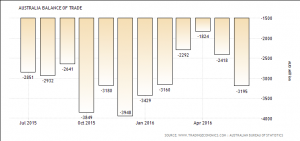
The Australian Bureau of Statistics will announce the Domestic Trade Balance for August today at 11:30. The consensus forecast is for a deficit of A$ 2.65 billion. The Bureau reported a trade gap of A$ 3.19 billion in June of this year, an increase of 32% from the A$ 2.42 billion deficit reported in May.

The domestic trade balance has not printed a surplus since May of 2014 with a record high deficit of A$ 4.43 billion reported in April of 2015.

The RBA held overnight interest rates unchanged at 1.50% on Tuesday but expressed concern that a rising AUD/USD could dampen economic growth and cause the trade balance to widen further. We expect a larger than consensus reading could weaken the AUD/USD, support local ASX stocks, and increase the RBA’s easing bias into the end of the year.

Trade Balance

Global Macro

Last Friday’s US Non-Farm Payroll data were unspectacular in the sense that they offered investors little clarity about the likelihood of a rate hike at the FOMC meeting on September 21st. The Headline jobs growth printed at 151,000, which was lower than the consensus 180,000, wage growth slowed to .1% and the unemployment rate was unchanged at 4.9%.

The US Dollar was sold off initially but regained bids mid-session and finished stronger by the holiday shortened NY close. The USD’s resilience in the face of the disappointing jobs data reflects the feeling that the report didn’t alter the FED’s information set, or sway investor sentiment very much for another move to normalize rates either this month or in December.

As a result, the SP 500 posted another firm close above the 30 day moving average at 2172.00, the US 10-yr note yield inched back over 1.60% and the US Dollar index close above recent resistance at 95.50.

In short, over the last two weeks, the primary market drivers have been about the US monetary policy trajectory. First, it was the Jackson Hole confab where the FED leadership all confirmed they were reading from the same “data-dependent” playbook. They all signalled the time was approaching to take another step in the normalization of interest rates, without specifying exactly when. Then, the market focused on the US Jobs report; which FED Vice-Chairman Stanley Fischer had identified as important to the timing of the next move.

With those US-centric events and information absorbed into the market, we believe that this week’s European Central Bank (ECB) policy meeting (and press conference) will be the primary driver for foreign exchange flows.

In addition to the usual discussions about the path of EU monetary policy, this Thursday’s meeting will also include updated staff economic forecasts. Aside from the uncertain political nuances of these staff forecasts, two points are patently clear: the EU economy doesn’t have much forward momentum from Germany and inflation remains well below the 2% target throughout the entire region.

We expect the ECB chief Mario Draghi to take direct aim at these two lingering issues and probably add comments about slowing exports due to the UK decision to leave the EU back in June. Of the additional stimulus measures on the table, the extension of the current Quantitative Easing (QE) program beyond March 2017 appears to be the decision of least resistance.

Other changes to the current asset purchase program include removing the interest rate floor on the securities pool so the ECB could buy assets which yield LESS than -.40% , cutting the ECB deposit rate deeper into to negative territory and expanding the total purchase amount above the current €1.7 trillion. On balance, we feel that there is little political or economic appetite for lowering the ECB base rate deeper into negative territory and that expanding toward a QE3 program is a more likely way of lowering the Euro and supporting EURO zone stock markets.
Transurban – approaching value

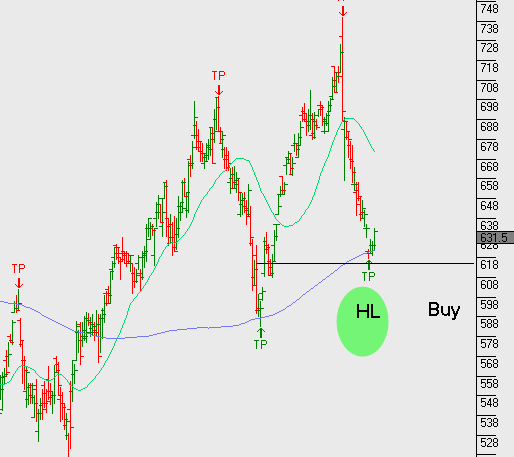
Transurban (TCL.ASX) is now trading back on 4%+ yield on current numbers. Allowing for the increase in yield into FY17 where the dividend should grow from $0.44 cps in FY16 to $0.50 cps in FY17, the stock now trades on a forward yield of 4.5%

With the above metric in mind and the reducing chance of a September interest rate rise in the US, (following Friday’s US employment data), we’re likely to see some buy side interest in TCL and other defensive yield names this week.

Look to establish an entry point within the $11.30 – $10.70 range.

TCL