US Macro

At the beginning of the week, we expected yesterday’s ECB meeting to be a significant risk event for the single currency and offer trading opportunities on new policy measures or adjustments to current stimulus operations. But Mr Draghi said nothing that surprised the FX market. 

He acknowledged the resilience of the financial markets in the aftermath of the UK referendum and noted that upcoming data, combined with new staff forecasts in September, would give the ECB a better view to assess the macroeconomic situation in the Eurozone. He also pointed out that the risks to growth and inflation remain tilted to the downside going forward.

As a result, the EUR/USD traded in a narrow, 70 point range throughout the LDN and NY trading sessions; one of the most passive ECB meetings in recent memory.

However, about two hours before the ECB announcement, comments from Bank of Japan (BoJ) Governor Kuroda that the upcoming stimulus package would not include “Helicopter” money hit the BBC newswire. This headline sent the USD/JPY plunging over 160 points to just under 105.50. Once the BBC clarified that these comments were from a June interview, the pair regained the 106.00 handle but came nowhere near the intra-day high of 107.40 and casts doubts on the FX impact of final BoJ package to be released next week.

These two examples illustrate the non-linear impact Central Banks currently have on increasingly skittish financial markets. On one hand there was a highly anticipated ECB announcement, with a live press conference, which produced little in terms of EUR/USD price action, and on the other hand, there was the release of month old radio interview which spun the USD/JPY into three hour trading frenzy.

Because of the non-traditional stimulus measures used by G-7 Central Banks, and the resultant negative interest rate environment, we have reached the point at which investors are buying stocks to capture yield, buying bonds for relative capital gains and trading currencies as a correlative by-product of the previous two.

With this in mind, officials at the Federal Reserve are, once again, talking about a rate rise before the end of the year. This, along with weak economies elsewhere in the developed world has resulted in the value of the USD increasing over last three months. As such, we maintain a long USD bias even though the trajectory higher may have a higher level of volatility due to equity related risk on/off correlations.
Long QUB.ASX (update)

QUB

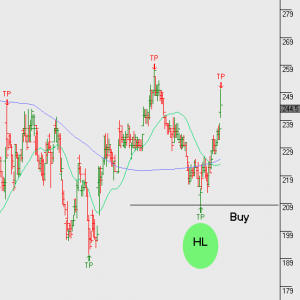
Qube Holding Ltd (QUB.ASX) is starting to trend higher as expected. The premise of this trade is the market will begin to re-rate QUB following the finalisation of the asset purchases from Asciano. Traders may look to take take profit around the $2.50 level.

Keep this one on your radar as the 2 to 3 year outlook should see this stock present multiple buying opportunities. Our algorithm engines will continue tracking for optimum entry and exit levels.

US Macro

US Macro

Watching the close of the financial markets early Saturday morning (Sydney time), we were thinking that this FX UPDATE would be discussing a change in leadership in Turkey and how that would impact the rest of the Eurozone economics…….tanks in Istanbul, helicopters strafing government buildings; it all sounded pretty grim for Mr Ergodan’s government.   

As it turned out, the coup failed and order has been restored in Turkey, for now.

However, there are several other data points in the Eurozone this week which will drive trade flow in the Euro and other G-7 currency pairs. The three events that FX traders will be following are; the German ZEW data on Tuesday, the German PPI report on Wednesday and the ECB meeting and rate decision on Thursday.

The preliminary forecast for the ZEW is for a sharp fall in business sentiment from 19 to 8. This is one of the first post-Brexit readings and would represent the weakest number of the year. Wednesday’s German PPI data is expected to fall from .4% to .2%. With this series, it’s not so much the actually number but the direction of the trend. German inflation was in negative territory earlier this year and turn back to a negative trajectory is worrisome for the ECB.


Short BEN.ASX (update)

Short BEN.ASX (update)

Following the short recommendation on the 1st of June and our $9.10 target, it’s worth highlighting that Bendigo Bank hit our target (traded down to $8.91) two weeks later and a profit of over 10% in less than 10 trading days. Bendigo has now bounced and traded back up towards a sell price that puts the short trade back on our radar again, however, until the broader market indices rollover, we’re not focused on new short positions just yet.

Stay tuned.

US Macro

US Macro

In the days following the June 23rd UK referendum, many FX market forecasters suggested the Sterling would fall sharply, perhaps even breaking below the 1.2000 handle against the USD. While these predictions may turn out to be correct, the GBP/USD has pretty much gone vertical since posting a 1.2850 low on Monday.  

And even though the consensus for the Bank of England (BoE) to cut rates yesterday was just slightly above 50/50, the GBP/USD traded sharply higher after the after the BoE voted 9 to 0 to leave rates unchanged. However, with most policymakers seeing a rate cut in August, the Sterling remains a sell into this recent reversion.

The Sterling’s reaction to yesterday’s BoE pause at .50% was an illustration of misplaced Central Bank expectations. The financial media was calling for a cut down to .25%, many FX traders believed them and when the BoE kept rates unchanged, the GBP/USD soared from 1.3250 to 1.3475 in less than five minutes……and then faded as the session progressed.

According to the minutes from the meeting, the BoE has been satisfied with how UK financial markets have functioned  post-referendum but there are some indications that businesses are delaying investment and hiring so economic aggregates are likely to be depressed in the near term. It’s worth noting that in addition to cutting rates, the BoE minutes discussed  a “range of possible stimulus measures.” We interpret this to mean a possible increase to Quantitative Easing in August.


Earnings CTX

Earnings CTX.ASX

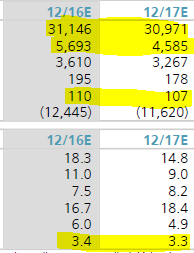
First half 16 EBIT $340 million is well above the $265 million in first half 15. Underlying forecast growth tracks at around 7% and forecast FY17 dividend of $1.03 (up from $0.94 in FY16) puts CTX on a forward yield of 3.3%.

Continue to maintain long position with $34 target + covered call.


Earnings IPL

Earnings IPL.ASX

First half 2016 underlying profit of AUD$137 million is down 6% of the same time last year. Full 2016 earnings should be around $360 million down 10% on Fy15.

Start up of new Louisiana plant in 2017 should create support for future earnings and we’re probably looking at the low point in the cycle for IPL.

FY17 forecast for $430 million profit on $0.25 EPS and $0.127 in dividends. No buy rec at this stage, waiting for the next bullish signal.