Newcrest Mining Profits Jump 22%

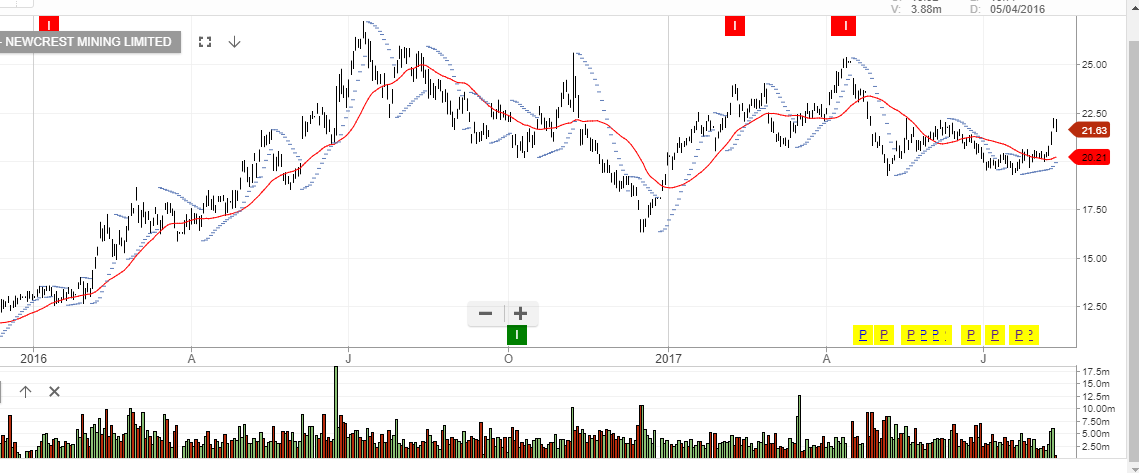
Australia’s biggest gold miner, Newcrest Mining, has recorded a full year underlying profit of $394 million, a 22 per cent jump on the previous year.

The strong rise in profit still missed analysts expectations of around $434 million, which has seen the share price slip to $21.65 in early trade.

The company will pay a final dividend of US7.5 cents per share (70 per cent franked) – for a full year dividend of US15 cents.

Further, NCM outlined a new policy under which the company’s dividend payout would be at least 10-30 per cent of that financial year’s free cash flow.

In a statement to the ASX, Newcrest said that under the new policy, the dividend would be “no less than US 15 cents per share on a full year basis”.

Newcrest said its healthy profit came from gold production of 2.38 million ounces, at a “Group All-In Sustaining Cost” of $787 per ounce.

The gold producer recorded free cash flow of $739 million, and reduced net debt by 29 per cent to $1.5 billion.

We maintain an upside bias to NCM and look for rising Spot Gold prices to lift the share price into the $22.60 area over the near-term.
Newcrest Mining
 

Black Monday 2011, Revisited

Just over  six years ago, August the 2nd 2011 to be exact, the US Congress avoided a Sovereign default and finally reached an agreement to raise the US debt ceiling from $14.29 trillion to  $15.77 trillion.

The legislation was called the “Budget Control Act of 2011”, and was signed on the same day by President Barack Obama.

During the negotiations, credit agencies, Moody’s, Fitch and Standard and Poor’s all advised lawmakers that the US AAA credit rating was going to be reviewed regardless of the debt ceiling legislation.

After the market closed on Friday, August 5th, several rating agencies downgraded the US credit rating to AA+ .

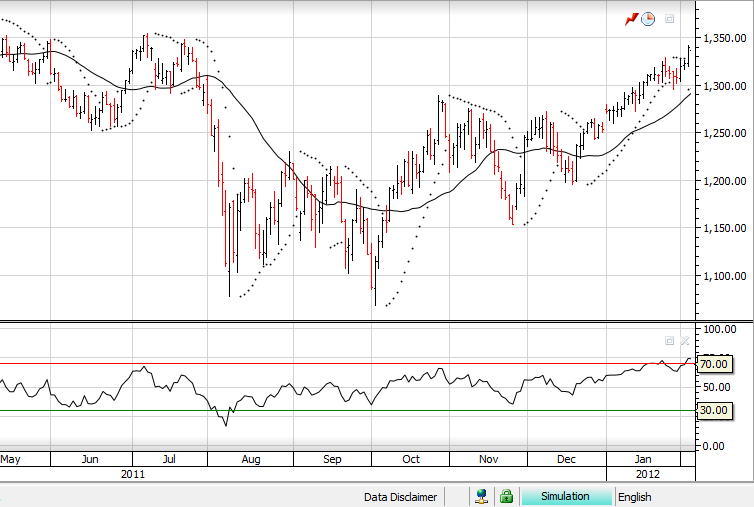
This triggered a massive selloff on Monday, August 8th,  where The NASDAQ Composite Index fell 174.72 points (-6.90%), the SP 500 Index shed 79.92 points (-6.66%), and the Dow Jones 30 Index lost 634.76 points (-5.55%).

The aggregate loss on the day was over $1 trillion.

As the chart below illustrates, the fall out from the 2011 debt ceiling crisis led to the SP 500 losing 208 points, or 16.1% in just 6 trading days.

The US Congress and the White House have already commenced discussions about raising the debt limit from the current level of $19.80 trillion, with a September 29th deadline.

Considering the market’s inflated valuations based on tax cuts and infrastructure spending, domestic issues with consumer credit and autos loans, and the escalation of geopolitical risks, we suggest caution that this time the US equity market sell off could be much greater.


SP 500 August 2011.


Telstra Shares Firm In Front Of Earnings Report

Telstra will announce its earnings report this Thursday, August 17th.

The Telco giant is expected to maintain its 15.5 cents per share dividend, which will take its FY 2017 total dividend to 31 cents per share.

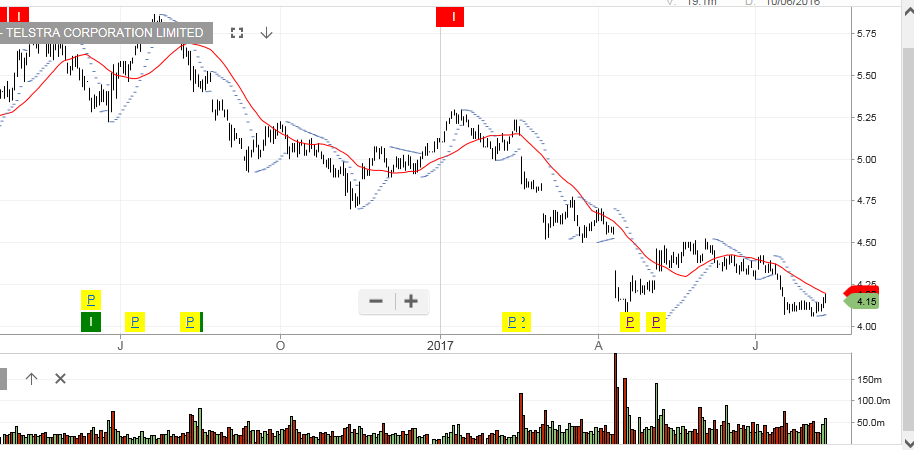
At the current share price of $4.15, this pencils out to a dividend yield of 7.4%, which is respectable in the current market environment.

Some analysts expect TLS to cut their dividend guidance into 2018 as the government cuts the NBN related payments, and may rule unfavorably on the unsettled bandwidth sharing plan.

However, considering the share price has dropped over $1.00 since the beginning of the year, and the recent price action has shown good support at $4.00, we consider the risk asymmetrical to the topside over the medium term.

As such, we view TLS as a good dividend play with a medium-term target of $4.80.

Telstra

Wall Street Wobbles On Geopolitical Risk

The S&P 500 dropped 1.45% last night, with the other major indices down over 1%, as investors sold shares amid an escalation of the war of words between the USA and North Korea.

Technology and Financials were the worst hit posting their worst day in three months. Goldman Sachs fell 2.4% as part of a weaker banking sector.

We can recap the the overall market performance as follows:

Nasdaq, Dow, S&P, Small Caps had their worst day in 3 months (to one month lows)

High-Yield Bonds worst 3-day move in 5 months.            

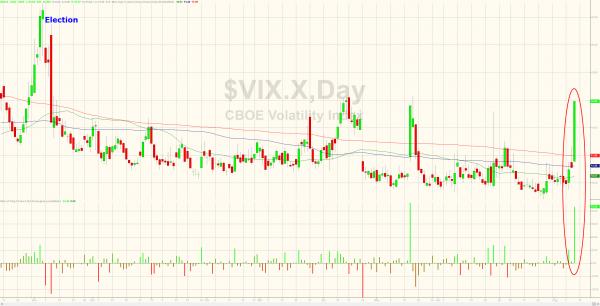
VIX volatility index posts its biggest 3-day spike since Aug 2015         

Gold’s best 3-day rally in 3 months to $1292.00

These bullet points are just a few examples of the heighten volatility we can expect in global financial markets going into the weekend.

VIX Volatility Index 


GOLD- CFD Trader Update

The spot Gold price posted a low of $1204.50 on July 10th.

Since then, the yellow metal has rallied almost 6.5% and hit an intra-day high of $1281.20 in last night’s New York trade.

This marks a two-month high for Spot Gold. Internal momentum indicators, combined with increasing geopolitical risks, now suggest the $1300.00 resistance level is within reach.

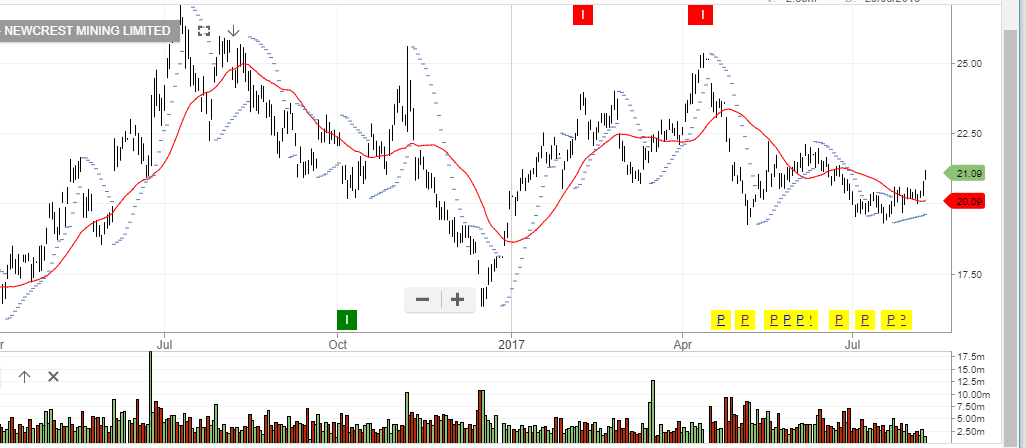
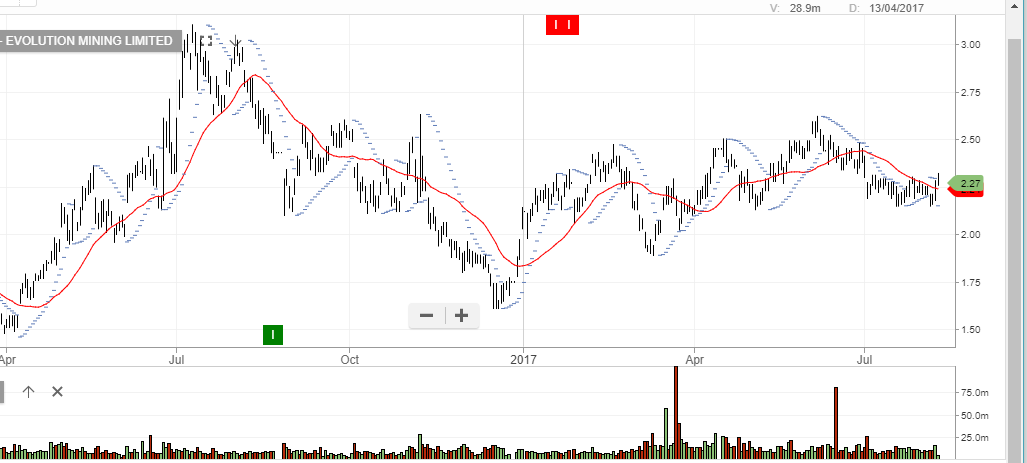
The share prices of local gold miners NCM and EVN have finally commenced participating in the positive uptrend in the spot Gold price.

We expect both names will break out their recent ranges to the topside and have medium-term price targets of $22.10 for NCM and $2.60 for EVN.

Investors have been showing keen interest in buying both the outright shares, as well as, trading the CFDs listed on the SAXO Trader GO platform.

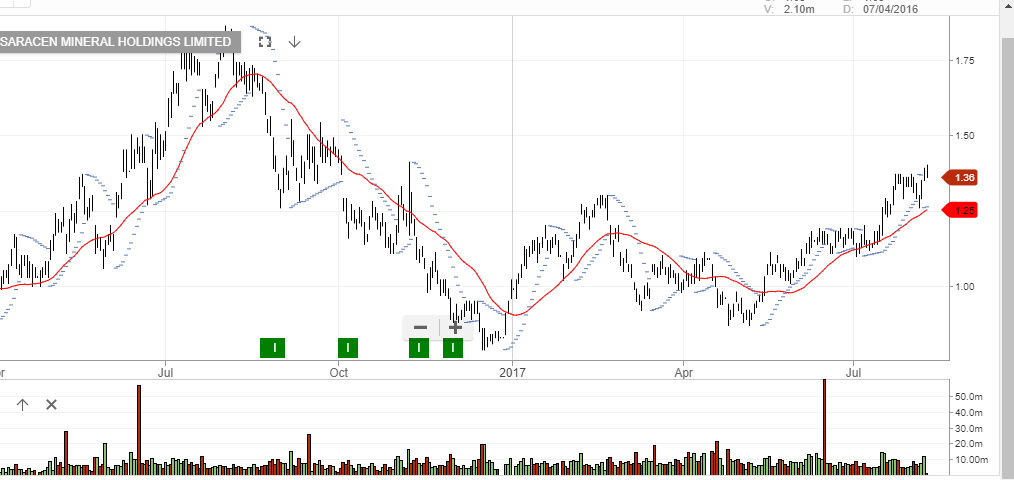
In addition to the larger-cap mining stocks, the SAXO GO platform offers direct access, tight spreads and deep liquidity in some of the smaller-cap mining names.

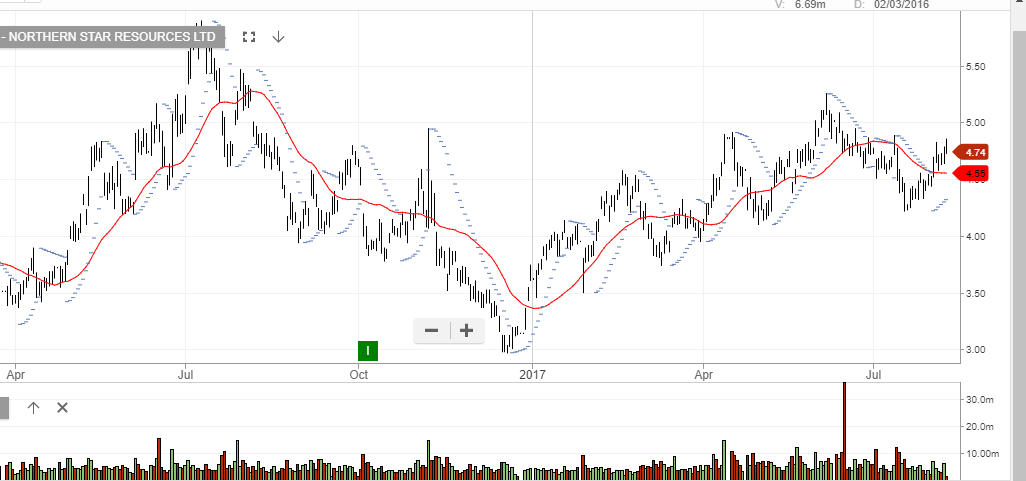
These include NST and SAR. Call in to the office for more detail about how to trade CFDs on the SAXO GO platform.

Newcrest

Evolution Mining

Saracen Mineral Holdings

Northern Star Resources


CBA Rebounds On Solid Earnings Report

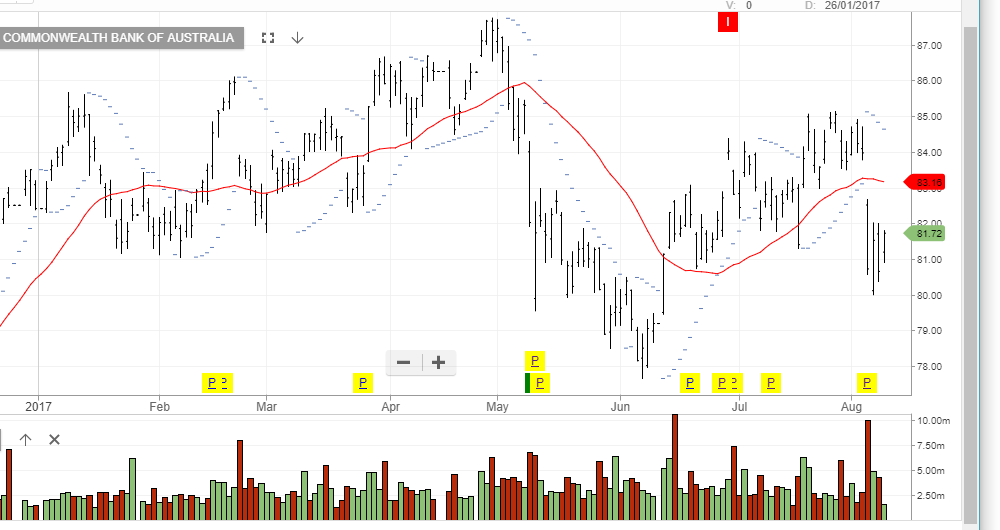
Shares of CBA have jumped over 1% to $81.50 in early trade as the bank’s earnings report was slightly ahead of expectations, with no surprises, and with no mention of their current AML issues.

The bank announced a net profit of $9.9 billion with operating income up 3.8% and bad debt provisions down to a 9-year low of 15 basis points.

A final dividend of $2.30 per share  was announced, which lifted the total annual dividend to $4.29, compared to $4.20 last year. The EPS came in at $5.74 versus $5.55 a year ago.

The return on equity dropped 50 basis points to 16%, as net interest margins fell 3 basis points to 2.10%. CBA also announced plans to sell their capital-intensive life insurance business.

On balance, this was a positive report which will likely be overshadowed by the AUSTRAC allegations of wide scale  AML and counter-terrorist financing breaches.

Technically, we still advise caution to the downside risk as the “lower high” pattern dating back to early May is still the dominant chart feature. We still see scope for a test of the June 7th low of $77.65 as a reasonable price target.

  Commonwealth Bank


James Hardie Hammered As Profits Drop 34%

Shares of JHX have dropped over 3% in early trade as the building materials supplier announced Q1 profits fell 34% to $USD 57 million.

JHX reported that net sales for the three months to June 30 have grown 6% to $USD 507 million, compared to the same period last year.

However, it said earnings margins were under pressure from higher production costs and increased competition in the construction materials sector.

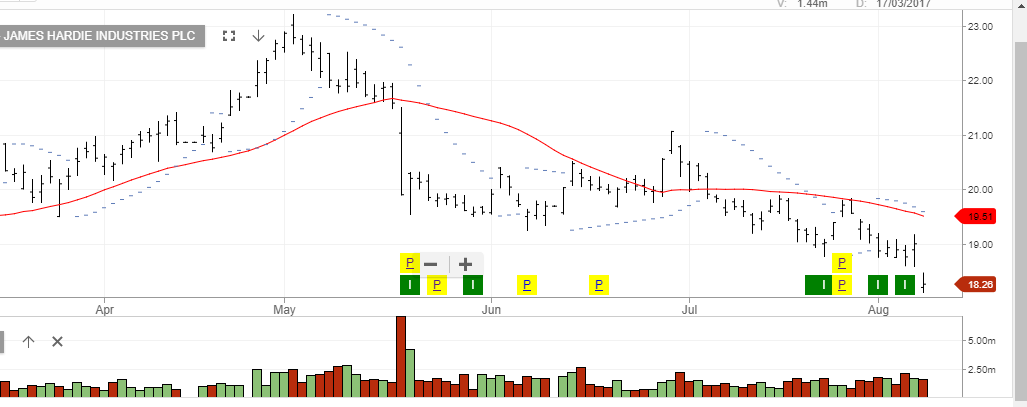
At 26x forward earnings with a 2.7% forward yield , we’ve been advising clients about the risks of the low dividend, high P/E posture of the stock since it traded in the $22.50 area in early May.

We now see the next downside target for JHX in the $17.60 area.

James Hardie


ETF Update: Has The Aussie Dollar Topped Out?

The Aussie Dollar posted a high on July 27th against the US Dollar at .8065.

It tested that level again just before the RBA announcement last Tuesday but failed to advance and slipped briefly below .7900 going into the weekend.

Comments in the RBA statement about the strength of the AUD/USD combined with a weaker Trade Balance report on Thursday pressured the pair lower.

A break of the .7875 level will confirm that a formidable top is in place, and will likely spur another cent correction lower to the next support price of .7780.

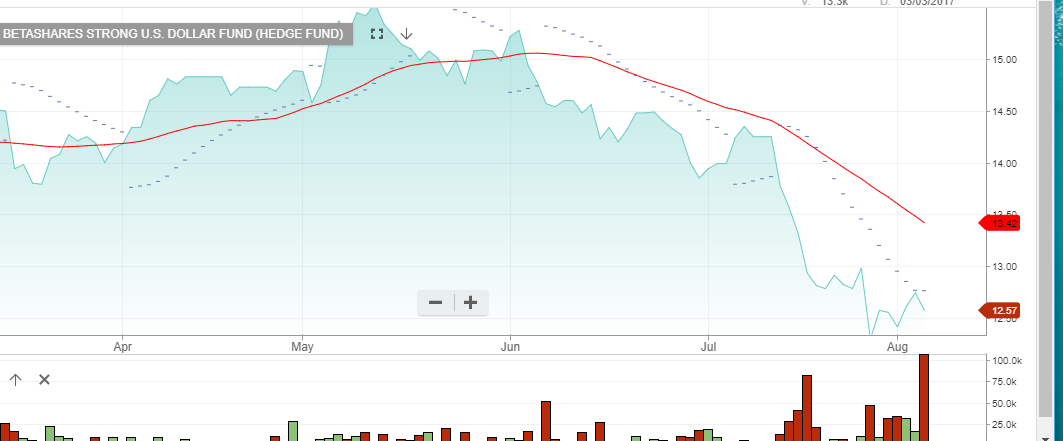
Investors looking to profit from the AUD/USD trading lower can look to buy the BetaShare ETF with the symbol: YANK.

YANK is an inverse ETF, which means the unit price increases as the price of the AUD/USD decreases. YANK also has a 2.5% weighting, which means a 1% change in the AUD/USD will correspond to a 2.5% move in the unit price.

The current price of YANK is $12.60. We calculate that when the AUD/USD trades back to the January low near .7300, the unit price will trade at $16.75.

BetaShare ETF: YANK


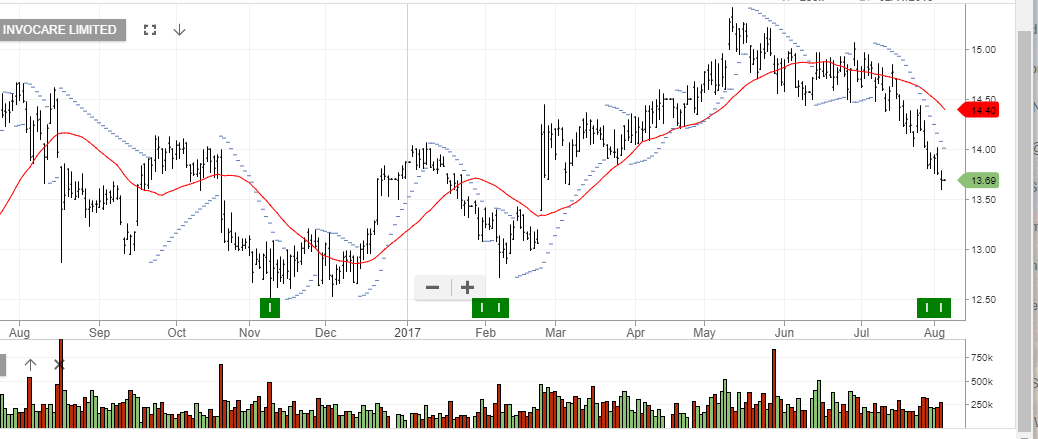
ALGO UPDATE: Buy Signal For InvoCare

Our ALGO engine triggered a buy signal for Invocare (IVC) on yesterday’s ASX close at $13.60.

As Australia’s largest operator of funerals and cemeteries the share price has risen over 30% since trading at $10.50 in February 2016. IVC is currently trading with a dividend yield of 4.12%  and increased its half-year by 11.8% in it’s last report.

IVC is scheduled to report its latest half-yearly results on August 16th.

We consider IVC  a defensive stock as demographics point to a 3.3% potential growth rate for their industry.

The May 11th high of $15.50 is the reasonable target over the medium-term.

InvoCare


ETF UPDATE: When Will BBUS Take Off Again?

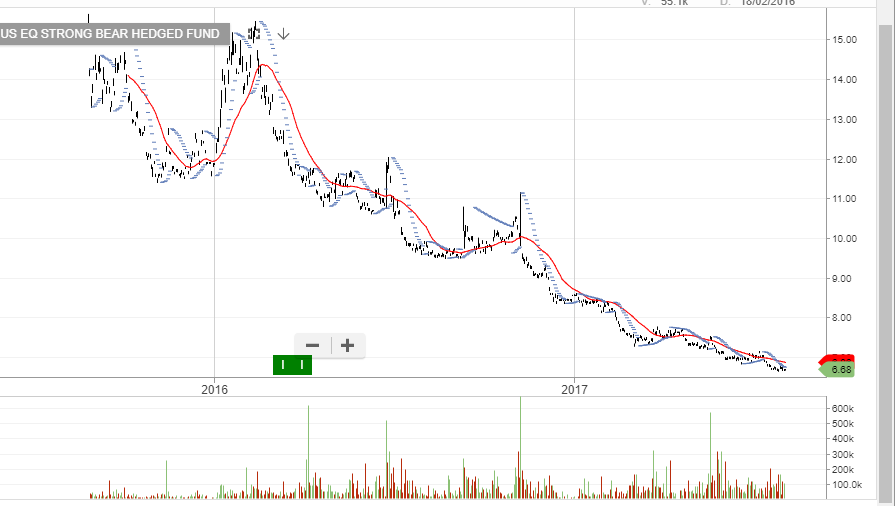
Since December of 2105, there have been three distinct periods of high volatility in the SP 500 which triggered sharp rallies in the BetaShare ETF with the symbol: BBUS.

BBUS is an inverse ETF, which means the share price will rise when the SP 500 trades lower. It’s also weighted, which means that a 1% move in the SP 500 Index will correspond to a 2.5% move in share price.

From December 17th, 2015 to January 19th, 2016, the SP 500 fell from 2077.50 to 1856.25.

This 10% sell off pushed the price of BBUS from $11.85 to $15.20, roughly a 28% gain.

As the chart below illustrates, over the course of 2016 there were two other periods when the BBUS saw  sharp moves higher of over 15%.

BBUS

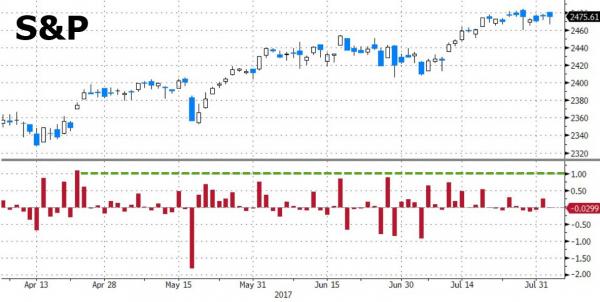
The general point is that the listless drift continues for the SP 500, which hasn’t gained 1% or more in a single day for the last 70 trading sessions, the longest streak since 2007.

The price of BBUS is currently $6.70.