Global Macro

Over the last three weeks, the USD has gained more than 6% versus the Japanese Yen, nearly 4% against the Euro and USD Index has reached its highest level in over 13 years at 102.10. Further, the US SP 500 and Dow Jones 30 both pushed into new record territory. But the strong surge in the Greenback and US Stocks met resistance last Friday with the G-7 pairs closing well away from the best levels on the session. This pullback has FX strategists wondering if the US equity run is over and it’s time to sell the US Dollar.

Statistically, there is no question that the US Dollar has gotten ahead of reality and a correction of some degree is reasonable. However, it’s important to recognize that the sharp rally in the USD and US Stocks, along with surge in US Bond yields has been driven by 3 fundamental factors: position adjustments to USD and US rates, the prospects of an aggressive fiscal program from the new US administration and the expected impact of higher US inflation.

Along this line of thinking, the US FED FUNDS futures have fully priced in an adjustment higher in the FED Funds target next month to .75% and nearly a 40% chance of another 25 basis point hike by May of 2017. With the second rate hike not expected until the middle of next year, the USD and US Stocks could take another leg higher if the FOMC statement suggests that further rate normalization could come sooner.

This means that the USD correction could be swift and unbalanced across the G-7 pairs. For example, a large percentage of the USD/JPY rally has been driven by US yield spreads gaining against Japanese Government bonds. This is not the case for the sell off in the AUD and the EURO. The Euro faces a list of political and economic troubles which should keep the pair under pressure going into the end of the year. Which brings us to the Sterling; which has firmed against the USD over the last few sessions.

The GBP/USD looks to be setting up for a breakout after consolidating over the last week. The big story driving the Sterling last week was UK Chancellor Hammond’s comments about the budget. While Mr Hammond lowered his growth forecasts for the next two years, he promised more borrowing and investment into innovation and infrastructure. He also announced a new National Productivity Investment fund of £23 billion and plans to double UK export finance to make it easier for British businesses to export.

These new spending plans were not expected which pushed the EUR/GBP sharply lower and lifted the FTSE 100 to its highest close in two weeks. With respect to Brexit politics, Prime Minister May repeated her plans to trigger article 50 by march of 2017 and exit the European Union by March of 2019. As such, we believe that the Sterling will outperform the Euro, USD and the other G-7 currencies over the near-term as the USD and US Stocks correct lower.

Global Macro

The European Central Bank (ECB) meets on December 8th and they are widely expected to extend their asset purchases, as well as, modify their bond qualifications to expand the supply of eligible securities. With the Italian referendum scheduled for December 4th, it’s  becoming very clear that the ECB’s stimulus program, and how it evolves, is changing from an economic strategy to a political necessity.

On the other side of the Atlantic, the SP 500 Index has traded sharply higher over the last two weeks. The Index  has jumped to a new all-time high of 2207.00. The new administration’s commitment to tax reform, fiscal stimulus and repealing the Dodd-Frank legislation has drawn investment capital from both domestic and overseas investors.

Taking into account the Non-farm payroll data next week, followed by the ECB meeting the following week and then the FOMC meeting, we’ll be monitoring closely the momentum signals in the major global equity indices.

Chart - SP500
Chart – SP500

Global Macro – China

In the two weeks since the US Presidential elections, many global stock indexes have seen material gains with the Dow Jones and SP 500 posting new all-time highs. Notably absent from the list of sharply higher indexes is the the China Top 50 index. This index of China’s large capitalization stocks has moved higher over recent days, but is still 7% below the highs posted at the beginning of 2016.

We believe a combination of positive developments going into 2017 make this index represent good value at current levels. One of the biggest developments has been the revaluation of the Chinese Yuan to the US Dollar.

The weaker currency will have positive knock-on effects on next years earnings and lead to more robust investment demand, as well as escalating CPI/PPI inflation.

As such, several analysts believe consensus growth numbers are too low and will be upgraded between now and next March. In addition, the general top-down forecast for earnings growth has been lifted from 5.7% .

This upgrade stems from non-financial sales and profit margin assumptions based on higher nominal GDP and stronger capacity utilization.       

izz-china
Chart – iShares IZZ (China Large Cap)

Global Macro

The US Dollar has had a great month of November, so far. Not only has the Greenback gained over 5% versus the Yen and 3% versus the Euro, but the USD Index has recorded its best two-week performance in 20 years. The USD Index has traded higher for ten consecutive sessions and gained just over 4.25% to reach the highest level since 2003 at 101.25.

Investors are anticipating a very pro-business bias from the new US administration, featuring across the board tax cuts, deregulation and a comprehensive infrastructure stimulus package. However, the  inauguration of President Trump is still more than two months away and it’s reasonable to expect the USD, US Stocks and US yields to take pause after the recent rallies.

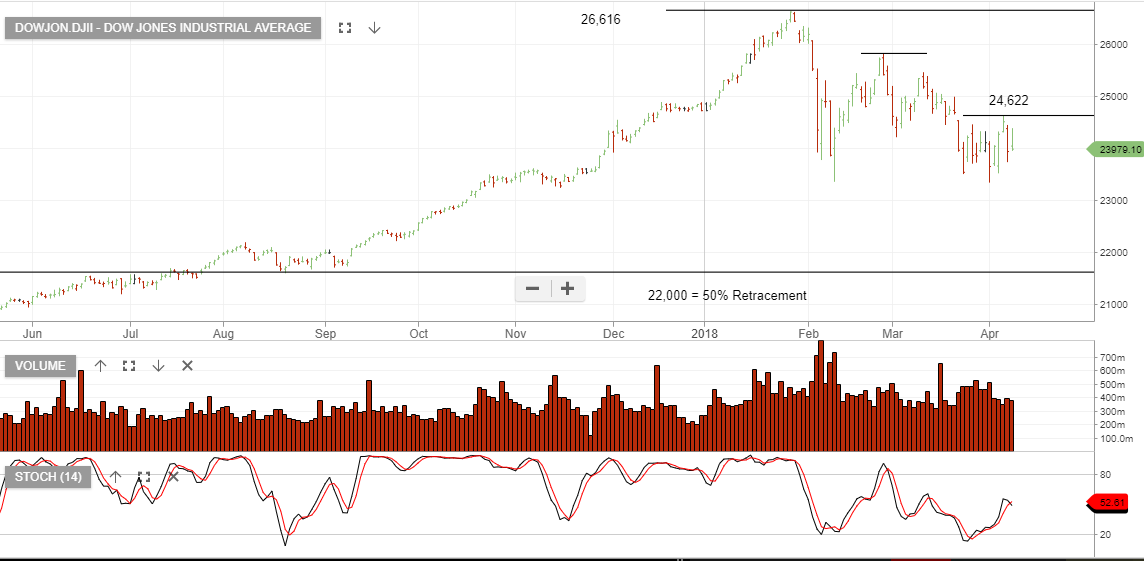
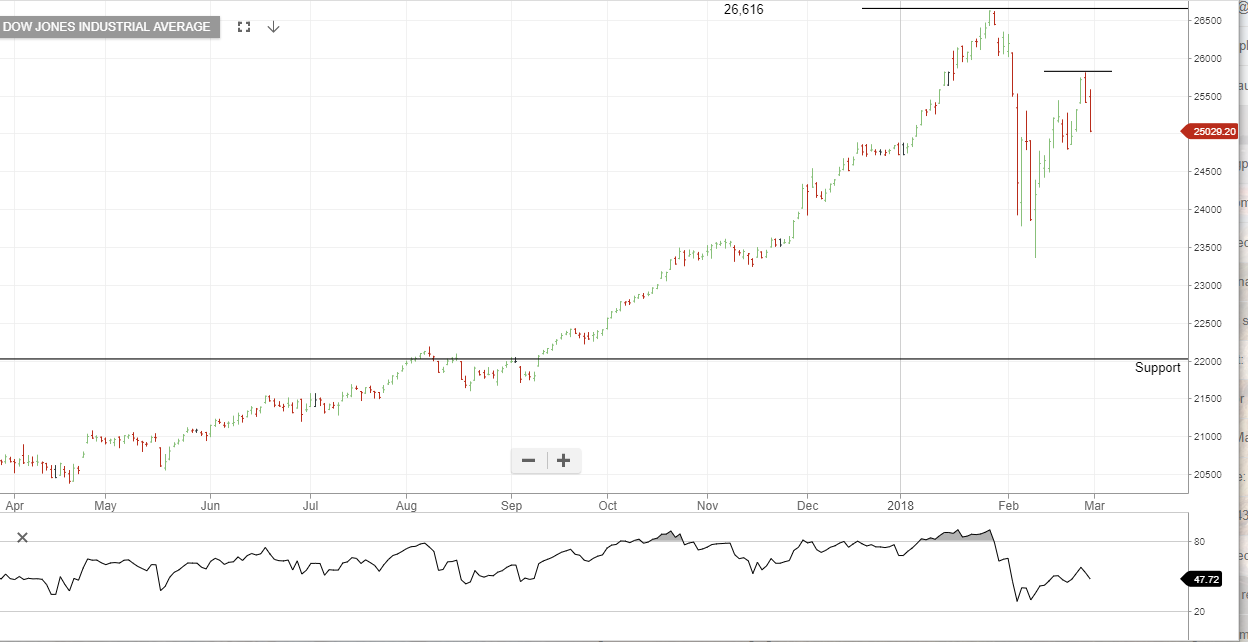
The Dow Jones 30 set a new record high at 19,023

Chart - Dow Jones
Chart – Dow Jones
Chart - USD (since 1973)
Chart – USD (since 1973)


Global Macro

Federal Reserve Chief Janet Yellen was on Capitol Hill today addressing Congress for the first time since the US Presidential election. With the USD Index pushing against a 13-year high over 101.00, it was reasonable to expect some of her testimony to address the stronger USD and the sharp increase in Treasury yields. However, these specific developments weren’t addressed and, instead, Ms Yellen expressed confidence in the progress the economy is making towards their inflation and employment goals.

She indicated that waiting too long would force the FED to tighten faster in 2017 and could spur excess volatility in financial markets, but gave no indication about the pace of interest rate normalisation going forward. On balance, her comments were hawkish enough to keep the G-7 basket of currencies under pressure against the USD, but tempered enough to lift the DOW Jones 30 and SP 500 back up into historic high closing territory.

The economic data released supported this view with housing starts and building approvals rising sharply and weekly jobless claims falling to a 40-year low at 235,000. With three other FED Governors scheduled to speak today, we could see further confirmation that US rate policy is ready to adjust higher.

With all of the bullish USD data stacking up, it’s no surprise that the EUR/USD made a new low for the year, fell for the 9th consecutive day and posted a NY close below 1.0650. It’s worth noting that only once in its 17-year lifetime has the EUR/USD gone down 9 days days in a row. That was from August 28th to September 11th, 2008 when the pair dropped for 11 days in a row and lost close to 10 big figures from 1.4810 to 1.3880. The Euro also lost more ground against the Sterling, reaching a 7-week low of .8540, which is more than 11.5 big figures below the spike high of .9695 on October 6th.

With the Fed Funds futures now showing a 98% chance of a rate hike in December, we expect the chatter from the FED Governors to remain hawkish about the December hike but somewhat blithe about the dot plots and interest rate trajectory going into 2017. It was the markets’s expectation of 4 rate hikes in 2016 which roiled global equity markets earlier this year, and it’s unlikely that the voting FOMC members will want to repeat that level of market dysfunction.

With this in mind, we expect the USD to maintain an upward bias, but with a slower pace, and for US Stock indexes to probe higher and beyond recent resistance levels.

Chart - XJO
Chart – XJO
Chart - US 10YR
Chart – US 10YR
Chart - S&P500
Chart – S&P500


US Earnings – Cisco Q1

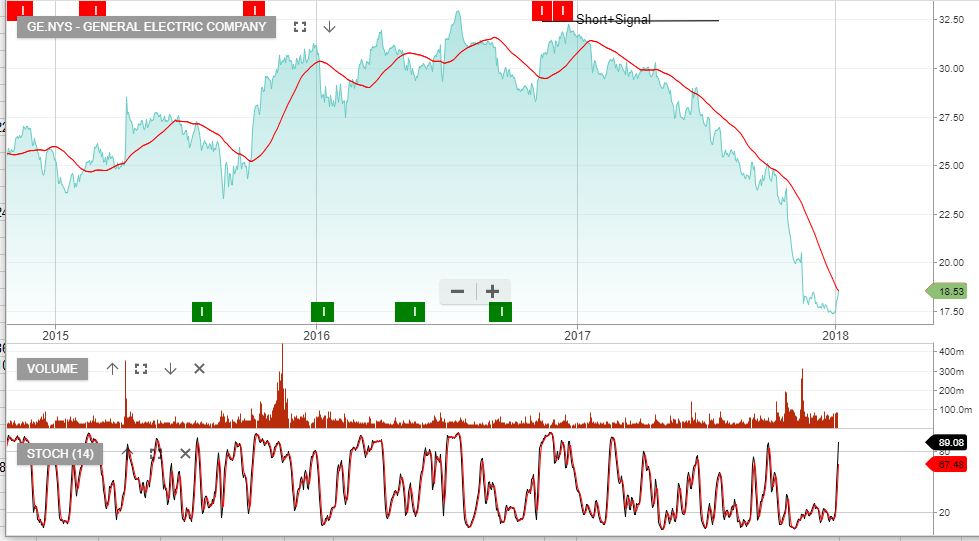
Despite reporting better-than-expected Q1 17 fiscal earnings, shares of Cisco systems have traded down to a 3-month low of $30.00 in late NY trade.

The tech giant announced Q1 EPS of 61 cents per share versus expectations of 59 cents per share on reported revenue of $12.4 billion, which beat the street’s expectation of $12.33 billion in revenue.

The share price has dropped due weaker forward guidance, as the company believes the current quarter revenue could drop 2% to 4% compared  to the year-ago quarter. Analysts had forecasted  a 2% rise in revenue over the same period. As a result, Cisco is expecting EPS to drop into the 55 to 57 cents per share range.

With the company expecting weaker growth, the share price could slip back to the $26.50 support level last traded in early May.

Chart - CISCO
Chart – CISCO

Global Macro

The USD has been a major beneficiary of the final result of the US Presidential election. Not only has US Dollar sentiment improved now that no protracted legal challenge will create market uncertainty, but it’s also getting a lift from the direction of current policy measures outlined by the FED and  President-elect Donald Trump.

Long time readers will recall that our bullish case for the USD has been based on the theme of diverging monetary policy between the FED and the other G-7 central banks. However, now that Mr Trump is discussing some details about his economic plans, investors are now anticipating favorable fiscal policy measures which are bullish for US Stocks and the USD, as well.

During the Presidential campaign, both Trump and Clinton promised fiscal stimulus , but Trump’s plan offers more infrastructure spending and tax cuts and could top the $1 trillion mark (or 6% of GDP) by the time it’s fully implemented. At the same time, investors are growing more confident of a FED rate hike next month and the futures markets are beginning to price in a more aggressive FED. On the Friday before the election, market participants learned that US average hourly earnings rose by 2.8% on a year-on-year basis. This is the fastest pace in five years and consistent with rising core inflation pressures.

This policy mix of tighter monetary policy and expanding fiscal policy is the most bullish combination for a currency. The last time the US economy saw this this concurrent policy dynamic was after the 1980 election when the Reagan/Volcker mix sparked a 30% US Dollar rally into 1985; which was the impetus for the Plaza Accord. With little first tier Economic data scheduled in the US, we expect to see the firm tone in the USD and US asset prices continue this week.

dow-jones
Chart – Dow Jones
nasdaq
Chart – NASDAQ
us10yr
Chart – US10YR


Commodities Update

Since the Global Financial Crisis in 2008, one of the most consistently followed market correlations has been …. how the value of the US Dollar influences the price of base metals and industrial minerals including  Coal, Copper and Iron Ore.

Over the last eight years, from a basic “cause and effect” standpoint, as the US Dollar appreciated against the basket of G-7 currencies, the price of Coal, Copper and Iron Ore declined; and vice versa.

However, over the last 45 days, this correlation has soften materially. During this period, the price of Comex Copper has rallied from $2.10 per pound to $2.60 per pound; a gain of over 23%. Similarly, over the same timeframe, the price of Iron Ore has risen from $63.00 per ton to $76.00 per ton for a 20% gain, and the price of Coal has lifted over 11% from $41.00 per ton to $45.50 per ton.

This has all occurred while the USD Index has traded just over 4% higher from 95.50 to 99.50.

Chart - Copper
Chart – Copper
Chart - Iron Ore
Chart – Iron Ore
Chart - USD
Chart – USD

Global Macro

Following Mr Trump winning the election and Mrs Clinton accepting the result, bedlam broke out in the financial markets midway through the Asian timeframe: the USD was sold off across the board, Gold rallied $60.00 to $1,335.00, the SP 500 fell limit down to 2030, bond yields plunged 15 basis points and the Mexican Peso made a new all-time low at 20.75.

However, just as the London dealers were rolling up their sleeves, calculating potential margin calls and preparing for a financial blood bath, the market dynamic changed. The catalyst of the market stabilization and subsequent rally appears to be two-fold: 1) Mrs Clinton called Mr Trump to concede defeat (which meant no chance of a protracted legal challenge) and 2) the market started pricing in the reflationary aspects of some of Mr Trumps campaign promises.

The cornerstone of his general economic plan has been the initiation of a massive infrastructure package. However, the market was caught off-guard by the announcement that part of the package would be funded by a tax concession to US corporations holding US Dollars off shore.

It’s estimated that up to $2.9 Trillion of corporate profits are being held off-shore by US companies unwilling to take the 35% profit tax charge to repatriate the money. These  multi-national companies include General Electric, Apple, Microsoft and Intel……all of which have more than $100 billion parked overseas.

As the news of this proposed tax reform/amnesty plan circulated through the market, infrastructure names, heavy construction companies and stocks of military defence contractors all rallied higher. Whether or not this grand plan ever makes its way into the US economy will be determined on another day.

But as the US market heads into the three-day Veteran’s Day holiday, the USD Index is back over 98.50, US 10-yr yields are over 2.15% and the SP 500 is poised for its strongest weekly gain in over two years.

Next week the market will focus on data from the EU and Japan, but for now, global risk assets are satisfied that the transition of Presidential power will transfer smoothly and that Mr Trump is going focus on the economy first.

sp500
Chart – S&P500
Chart - Gold
Chart – Gold