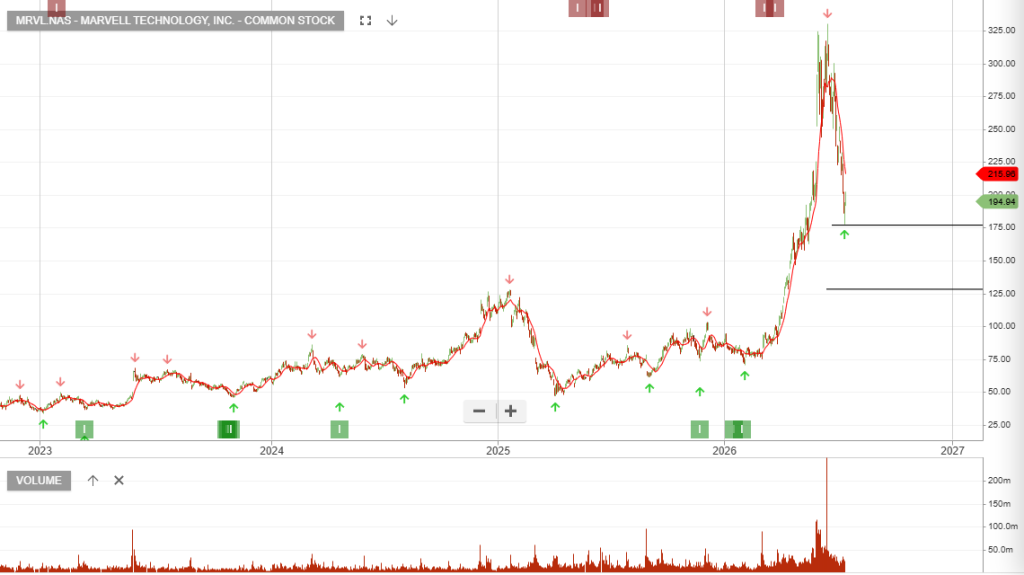
NVE Corp
While NVE is a niche semiconductor player rather than a massive chipmaker, it fits into the broader AI infrastructure landscape via:
- Next-Gen Memory (MRAM): As AI workloads and edge computing demand faster, more energy-efficient non-volatile memory, MRAM technology is highly regarded for its low power consumption and high endurance.
- High-Speed Data Isolation: Their spintronic couplers handle high-speed data transmission with high noise immunity, which is crucial in rugged Industrial IoT (IIoT) applications and server power supplies.
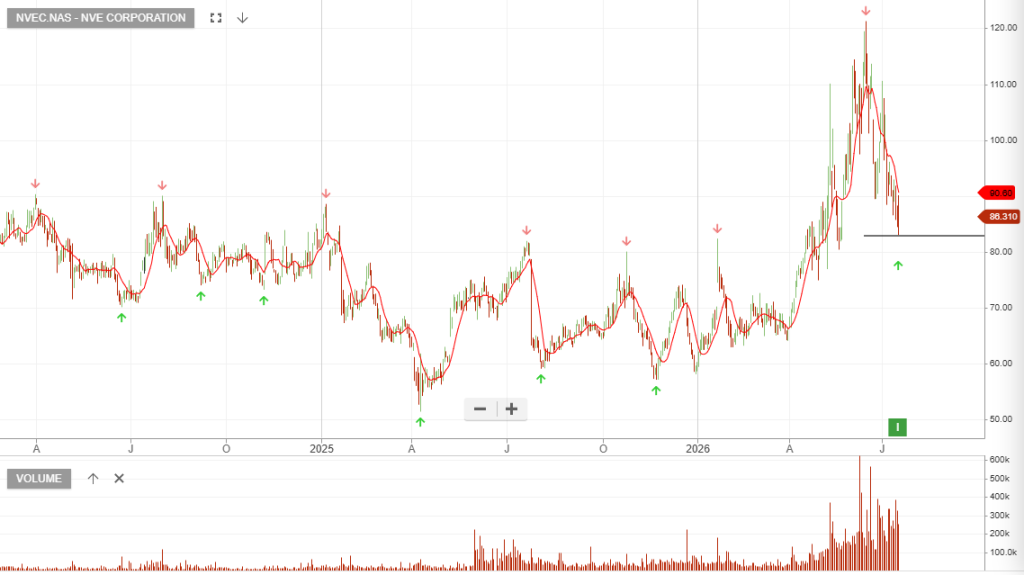
Qualcomm
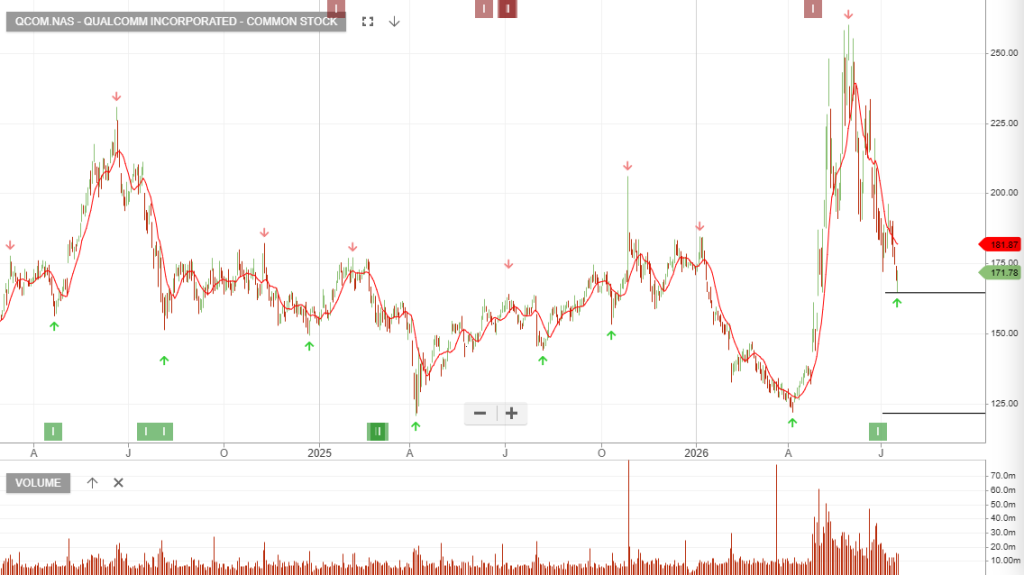
ARM Holdings
Watch Last Night’s US Webinar
Sorry, but this content is restricted to our members.
Please login with your account or register for a free trial. If your trial has expired, then you may renew it here.
If you are having an issue with your account, then please get in touch with us.
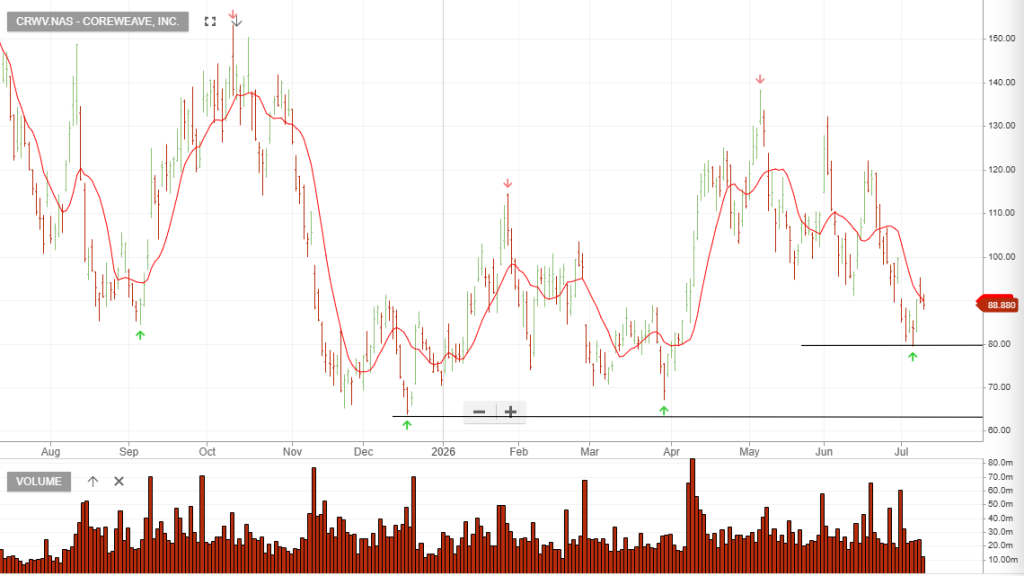
CoreWeave
{NAS.CRWV}
Full-Year FY 2026 Guidance: The company has reaffirmed full-year revenue guidance of $12.0 billion to $13.0 billion (with consensus currently sitting at $12.6 billion). This represents an incredible ~146% year-over-year growth rate compared to FY 2025 revenue of $5.13 billion.
- Management secured over $20 billion of financing this year, with no material debt maturities before 2029 despite elevated leverage.
- Ten customers have committed at least $1 billion each, while the financial services backlog alone has approached $10 billion.
- The stock now trades near 3.5x FY2026 revenue despite consensus expecting revenue to nearly double to $25 billion next year.
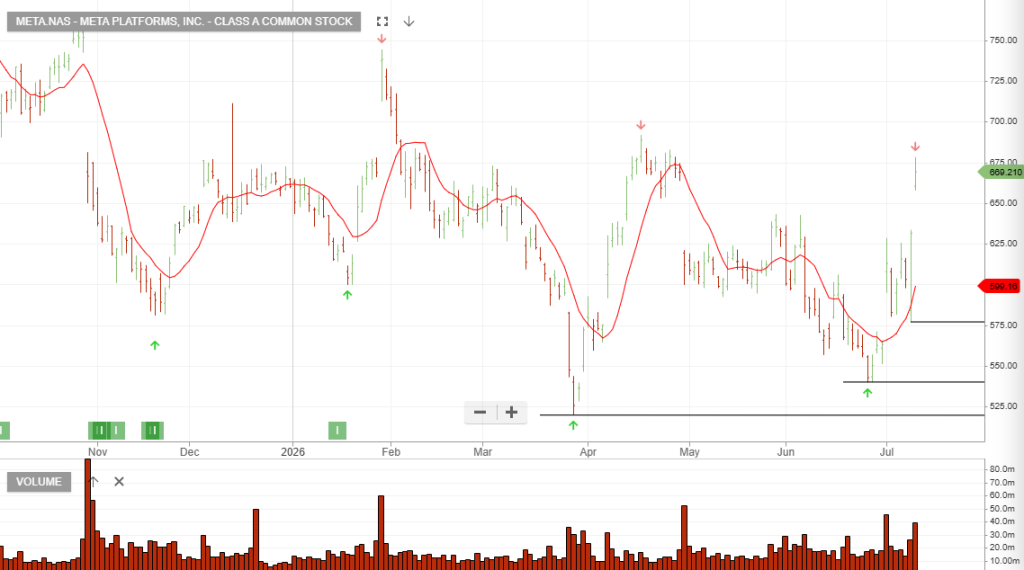
Meta
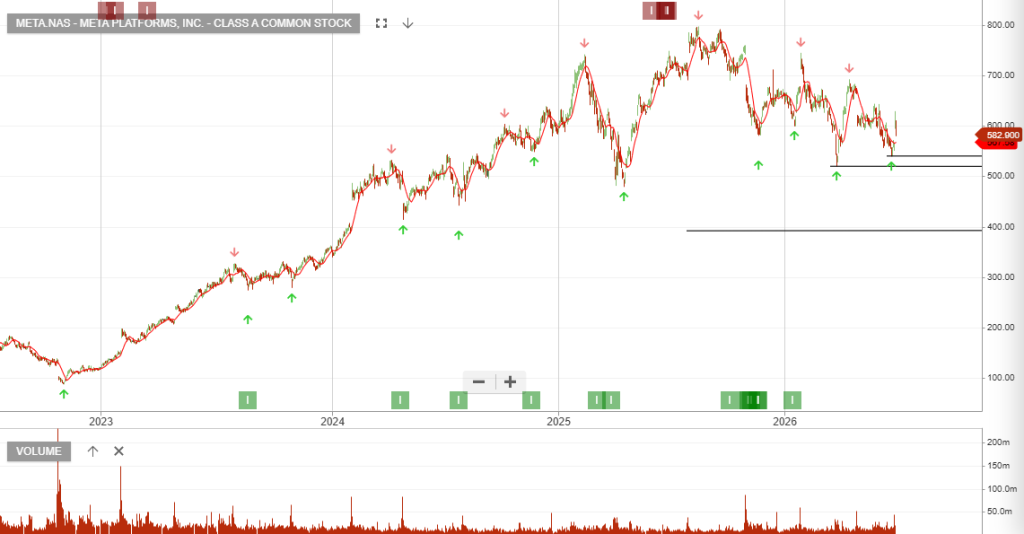
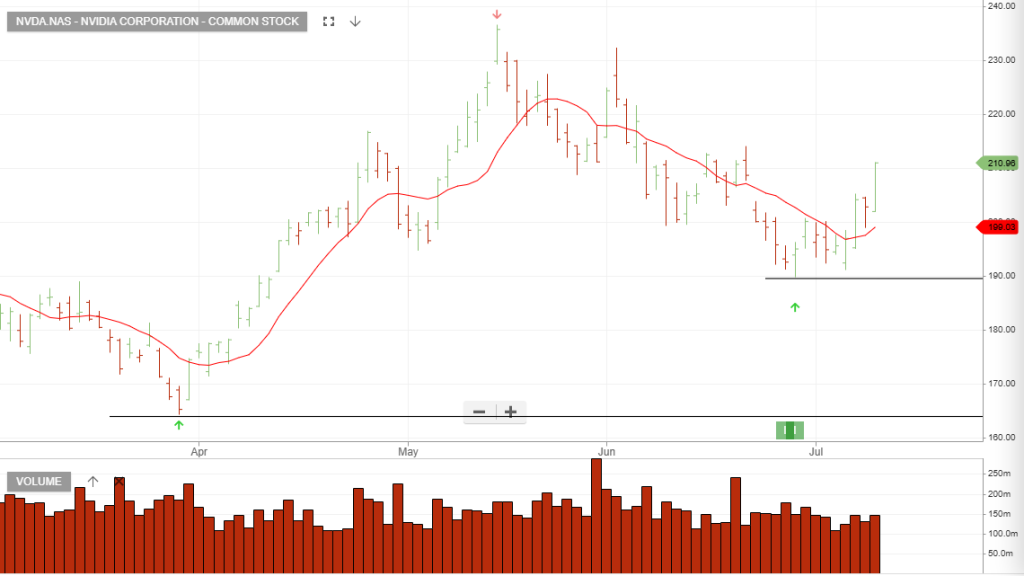
Nvidia
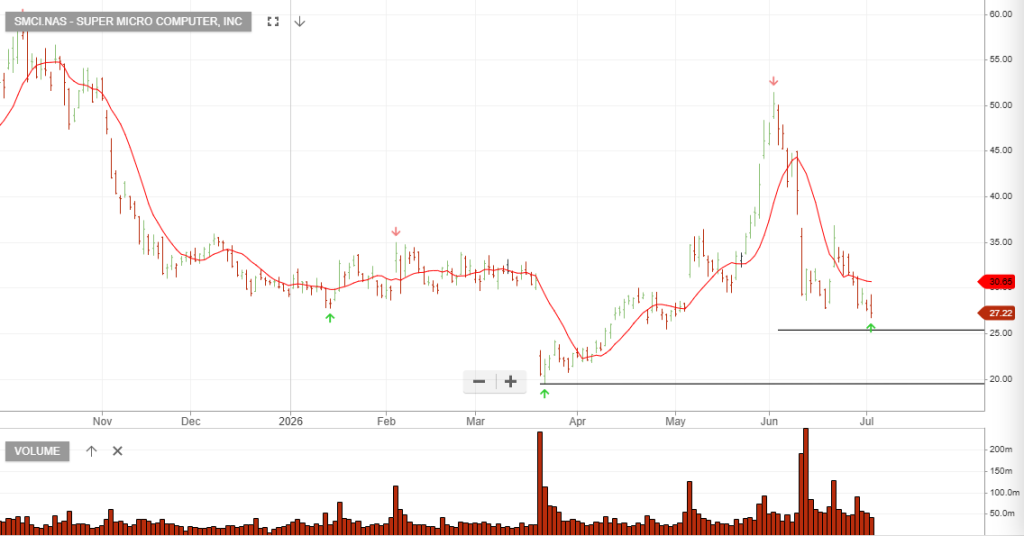
Super Micro
Super Micro Computer announced a new collaboration with Everpure and IBM’s Red Hat to launch Kubernetes Edge AI appliances.
It is intended to simplify edge AI deployments through a package preloaded with software and hardware. Supermicro provides the hardware foundation, Red Hat OpenShift provides the cloud container platform and Everpure’s Portworx supplies the data services.
Targets a Fast-Growing Market: As enterprises increasingly deploy AI outside traditional data centres, demand for secure, scalable edge infrastructure is expected to grow rapidly. The solution is aimed directly at this expanding market
Watch Last Night’s US Edition Webinar
Sorry, but this content is restricted to our members.
Please login with your account or register for a free trial. If your trial has expired, then you may renew it here.
If you are having an issue with your account, then please get in touch with us.

Level 17 Chifley Tower
2 Chifley Square
Sydney, NSW 2000
1300 614 002
Investor Signals Pty Ltd
ABN 44 143 555 453