Shares of Coca-Cola dropped slightly to 42.50 on weaker year-on-year profit guidance even though Q3 earnings were slightly higher.
The beverage maker announced a profit of $1.05 billion, or 24 cents per share, down from $1.45 billion, or 33 cents per share in Q3 2015. Excluding one-off tax items, per share earnings were 49 cents per share, while revenue declined 6.9% to $10.63 billion.
Analysts had forecast adjusted earnings of 40 cents on revenue of $10.51 billion. It was the seventh straight quarter that the firm beat expectations; if only slightly. However, when announcing their 2017 guidance, the company warned of a potential 4% to 7% decline in comparable earnings over the medium-term.
This negative guidance gives scope for a pullback in the share price to the $40.00 area last seen in January of this year.
Boeing shares jumped over 4% to post a new high for the year at $148.00 as the company beat expectations for Q3 earnings.
Despite a decline in revenue, the aircraft manufacturer said earnings rose to $2.28 billion, or $3.60 per share, from $1.70 billion, or $2.47 per share during Q3 2015. Core earnings, which exclude some pension and other costs, rose to $3.51 per share from $2.52 a year ago.
Both figures include a special gain of 70 cents per share, reflecting a tax benefit Boeing received by claiming depreciation on plants and equipment.
Positive forward guidance brought in longer term buyers as the company raised its target for jetliner deliveries for the year to 750 from 740 and lifted its year-end revenue estimate to 95.5 billion from 93.5 billion.
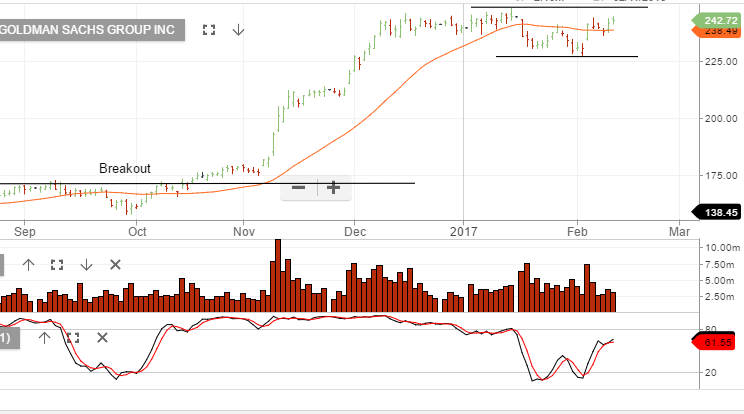
Shares of Lockheed Martin closed 5% higher at $243.00 after the defense contractor beat Q3 earnings expectations.
The company reported adjusted earnings of $3.61 per share, well above the consensus of $2.89 per share. It reported sales of $11.55 billion, up from $10.06 billion in the year earlier period and above the consensus of $11.45 billion.
Lockheed said it expects overall 2016 earnings per share of $12.10 and sales of $46.5 billion, as adjusted for divested business. The company expects ongoing operations to lift 2017 net sales by 7%.
The strong price response was welcomed as shares of Lockheed have fallen 9% in the last three months from the August high of $264.00.
The price of Apple shares traded in a wide range after the company reported slightly better earnings but the lower quarterly results marked the third quarter of year-over-year revenue declines.
The iPhone maker reported earnings of $1.67 per share, just above the $1.66 expected consensus. Revenues came in at $46.90 billion, just shy of the 46.94 billion expected. That’s down from the comparable figure of $1.96 per share on sales of $51.5 billion a year ago.
Apple shares rose briefly to $119.00 in after hours trading, but were last seen down more than 2% and dipping below the mid-September support area at $115.00. The company reported that it shipped 44.8 million iPhones, which is down from 48.04 million a year ago.
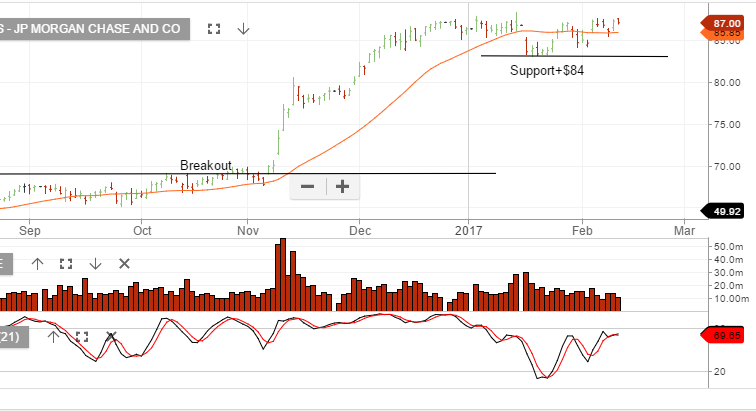
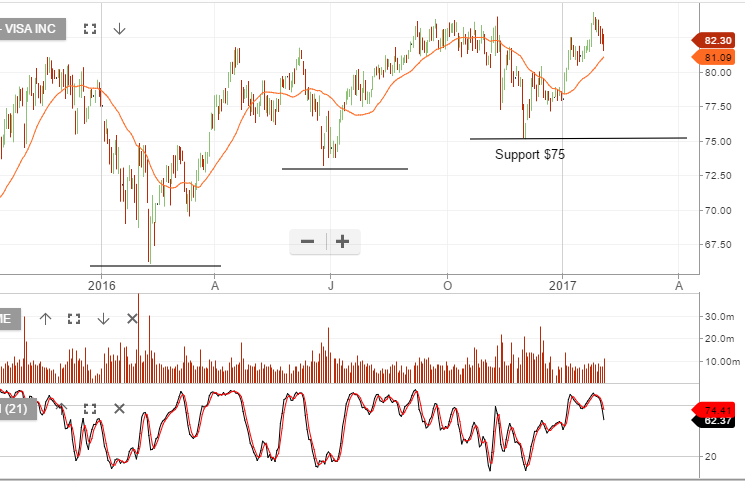
Shares of Visa Corporation were down over 1% in after hours trade after a solid earnings report was followed by weak 2017 guidance.
The credit card provider beat Q4 forecasts of 68 cents by announcing an 18% rise in earnings to 73 cents per share. Q4 revenue increased by 15% to $4.23 billion against the same period in 2015. The better-than-expected Q4 growth was helped by its acquisition of Visa Europe.
However, fiscal 2017 adjusted earnings per share growth was estimated at just over 15% versus a consensus for a 19% increase, which pushed the stock lower. The September low of 81.30 will offer the first key support level.
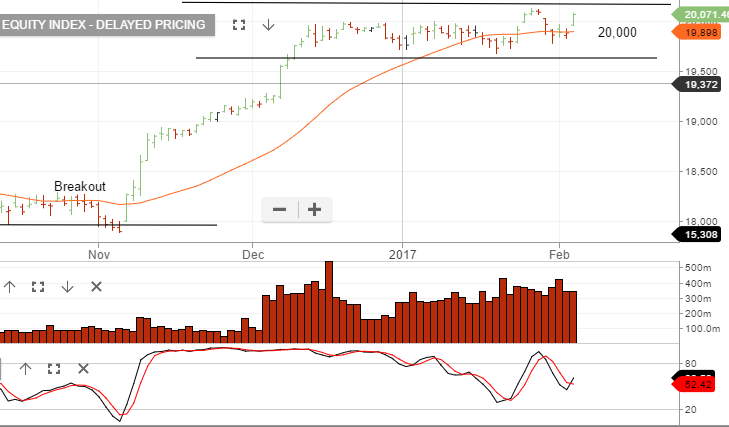
The USD ended on a firm note last week as foreign exchange traders were focused on the divergence of monetary policy between the Greenback and the other G-7 currencies. Over the last several trading sessions, we learned that European Central bank is still open to more stimulus in December, the Australian economy is not as vibrant as the RBA suggests and that the Reserve Bank of New Zealand is thinking about easing again before the end of the year. We also learned that the U.K. economy is slowing at a time when US growth aggregates have been posting mostly stronger numbers for employment, housing and retail spending.
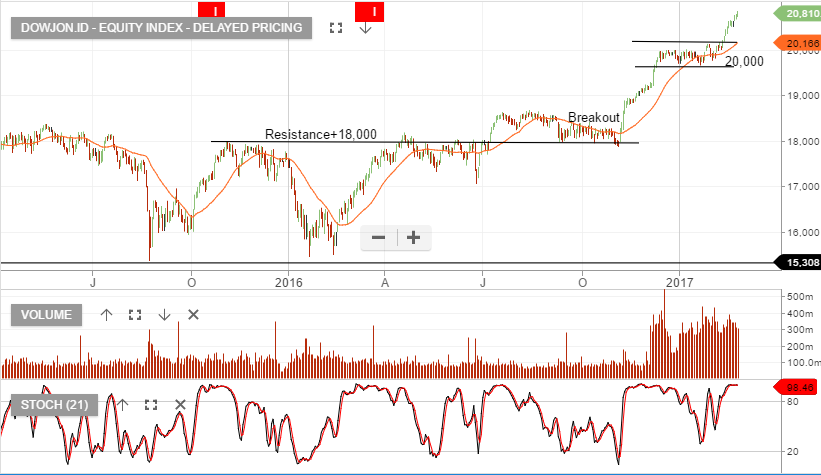
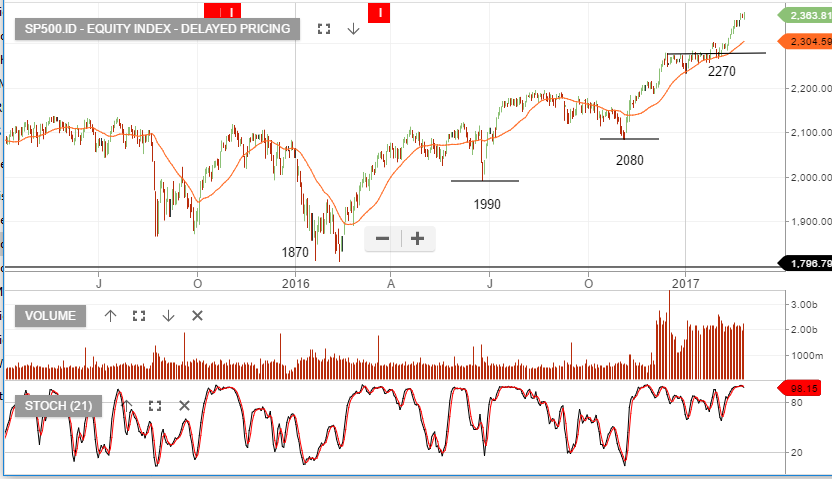
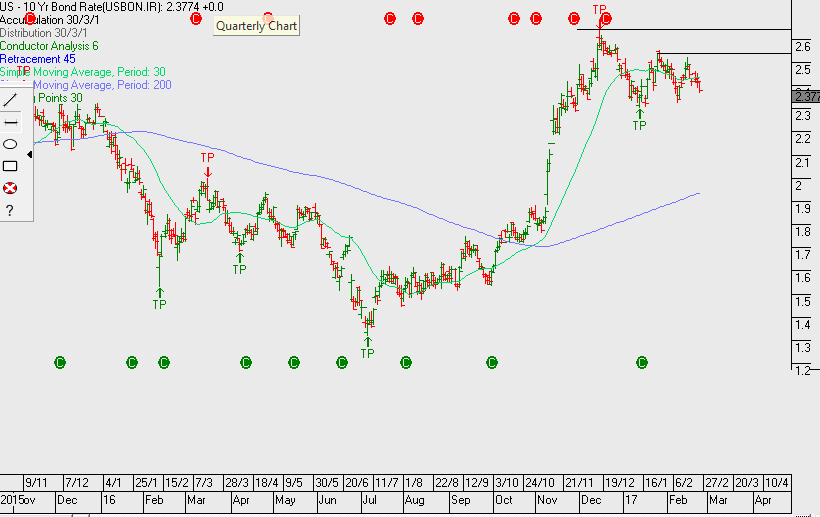
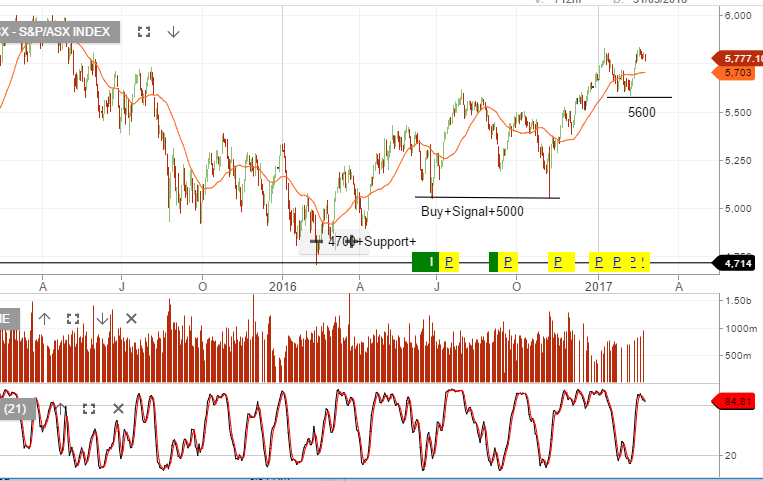
The steady flow of generally hawkish comments from FOMC officials stands in contrast to the dovish language coming from other central banks and has helped the USD Index reach an eight-month high just short of 99.00 at Friday’s NY close. It’s our base case that the likelihood for further interest rate normalization will increase over the next few weeks which will support the USD, keep the SP 500 index in a “buy on the dip” pattern and lift 10-year treasury yields back into the 1.95% area
With only a few first-tier fundamental data points scheduled for this week, It’s worth looking at some of the technical price patterns which have emerged over the last several trading sessions. The most prominent technical pattern is the “Golden Cross” in the USD Index. A Golden cross is formed when the 50-day moving average crosses above the 200-day moving average and suggests a continuation to higher levels. We note that the last time this pattern emerged, the USD actually consolidated for a couple of weeks before moving higher. With US Durable Goods orders scheduled for Thursday and GDP to be released on Friday, the consolidation phase could be much shorter this time.
Since the Euro currency makes up close to 58% of the weighting of the USD Index, it’s not surprising that the same moving average time frames have crossed to the downside in the EUR/USD. This pattern is called the “Deadman’s Cross” and suggests last week’s break of the July trend line will see downside range extension this week.
Shares of Microsoft have jumped over 5.5% higher in after hours trade to post a new all-time high of $60.60 on strong earnings results.
The software giant posted adjusted earnings of 76 cents per share on revenue of $22.33 billion, which eclipsed analysts’ forecasts of 68 cents per share on revenue of $21.71 billion. The $22.33 billion in adjusted revenue is 2.3% higher than the same period in 2015.
Microsoft’s major intelligent cloud division, Azure, brought in $6.38 billion which underscores the firm’s ability to become a major beneficiary of the commercial shift to cloud and digital storage.
Shares of Morgan Stanley posted a new high for the year at $33.00 as the bank joined its Wall Street peers by easily beating Q3 profit expectations. The bank reported earnings of 81 cents per share on revenue of $8.9 billion versus a consensus forecast of 63 cents per share on sales of $8.17 billion.
Like the other Wall Street banks, Morgan Stanley had faced challenges in its fixed income, merger/acquisition and trading operations over the last 12 months. However, those components of the business posted a strong quarter which lifted earnings by over 139% from the 34 cents per share in Q3 2015.
Intel shares dropped close to 6% in US trade after the company gave a slightly disappointing revenue forecast into the end of the year. The chip-maker said it expects Q4 revenue of $15.7 billion against the consensus estimates of closer to $15.9 billion. The company reported adjusted Q3 earnings of 80 cents per share versus analysts’ forecasts of 73 cents per share on revenues of $15.58 billion.
A bright spot in the report came from the growth in the client computing group; which is composed largely of PC chips. Revenues from the client computing group increased 4.5% to $8.9 billion from a year ago Q3 which includes a 4% increase in the price of chips used in notebooks.
Still, the tepid revenue guidance into Q4 was enough to influence investor sentiment and push the share price below $35.00 for the first time in a month. This comes after posting a new 5-year high at 38.10 on October 7th.
Bank of America reported 3Q15 earnings that beat on both the top and bottom line. The outperformance (beating estimates) we’ve seen so far in the earnings numbers across the banking sector are based on forecasts which have been downgraded, or set a relatively low target benchmark .
Nevertheless, we’ve seen nothing so far to suggest that S&P500 average EPS will not meet or exceed the required $30 – $32 per share to support current market valuations.
Bank of America (BAC.NYS) posted earnings of $0.42 per share on revenue of $4.45b, which represented 6.6% gain on the same time last year. ROE dropped to 7.3% which is low by industry comparisons.
BAC.NYS
Sophisticated Investor?
We have special opportunities available for Sophisticated Investors. If you're interested, and qualify, please provide your details below.