ETF Update: Exit The OOO Crude Oil Trade

Despite a larger-than-expected fall in US Crude Oil inventories, the price of West Texas intermediate (WTI) Crude Oil failed to hold the recent gains above the $45.50 level and looks to be rolling over.

The US EIA reported that crude oil in storage fell by 6.3 million barrels versus an expected fall of 2.3 million barrels, which pushed WTI up to an intraday high of $46.25. 

However, news that OPEC producers have not agreed to renew their production cuts has prompted investors to believe that Crude Oil supplies are not going to balance in the near term.

We suggested buying the BetaShare Oil ETF with the symbol, OOO in the $12.35 area on June 22nd. We now suggest closing that position in the $12.75 area and looking for another opportunity to enter the market on a test of the $41.00 level.
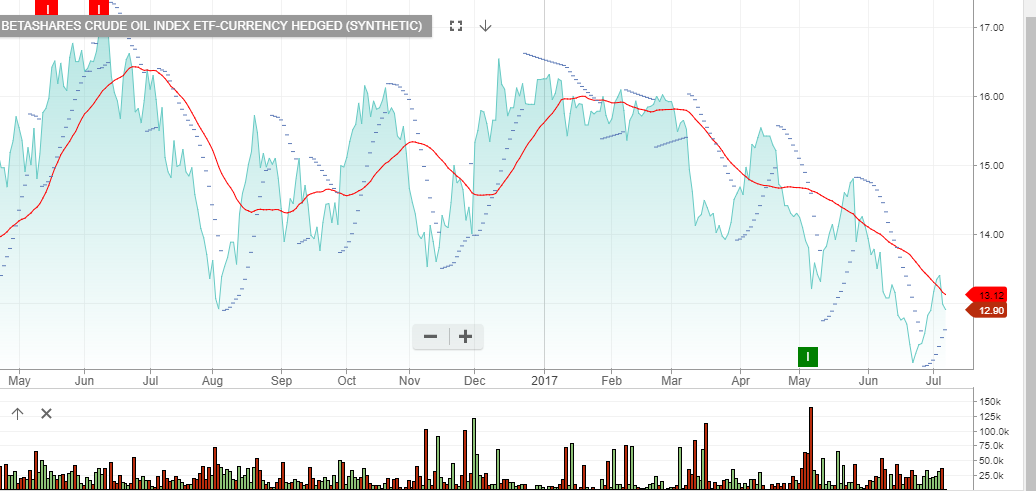
BetsShare OOO  


Real Estate Sector – Now Oversold

As bond yields have pushed higher in recent weeks, following global central banks hawkish tone, we’ve seen capital rotate out of yield sensitive names such as infrastructure and property and  into financials & resources.

The rotation now leaves property stocks approaching an oversold price zone.

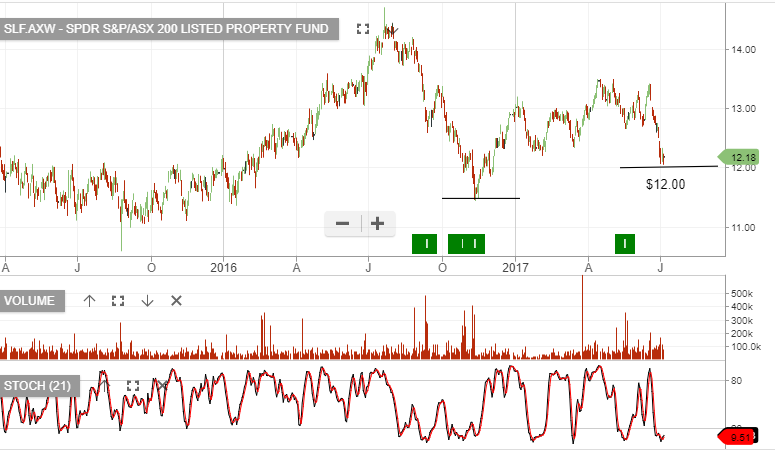
The chart below provides a broad-based picture of the listed property stocks within the ASX 200, via the SLF.AXW (SPDR ASX200 Listed Property ETF).

Our Algo Engine has triggered a buy signal at or near $12.00.

Chart – SLF


ALGO Update: IPL Showing Increased Upside Potential

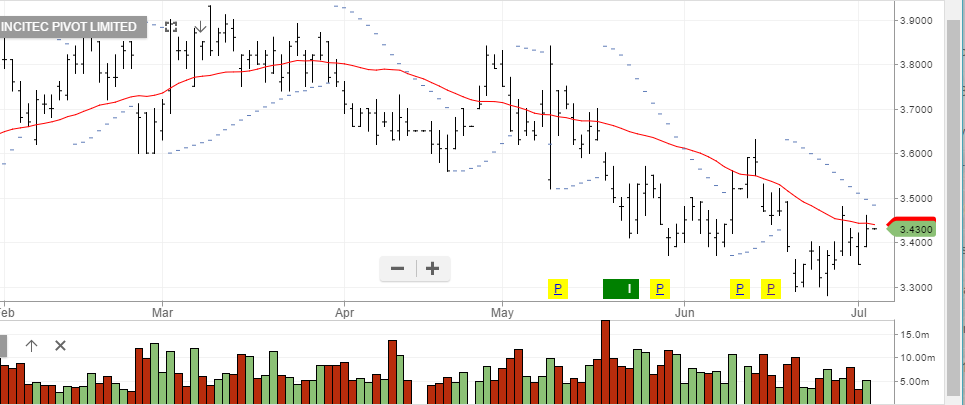
On May 23rd, the ALGO engine triggered a buy signal in IPL at $3.40. Since then the stock has traded in a moderate range of $3.30 to $3.60.

While we view the outlook as broadly positive given the ramp up of the WALA ammonia plant in Louisiana and domestic fertilizer demand, this has been offset by the upcoming change in their CEO and declines in global fertilizer prices.

IPL is currently trading at 30% discount to its North American peers, and at 13x  estimated FY 18 earnings, we see the upside potential into the $4.15 range over the medium-term.

At the same time, we expect the 2017 EPS of 21 cents to rise to 25 cents in FY18, which puts the stock on a forward yield of 4%.

IPL


ALGO Update: Buy Signals For GPT, SYD and TCL

Over the last three weeks, shares in local infrastructure and property trusts have really taken a beating.

Some of the yield-sensitive names have lost between 5 and 10% as Australian interest rates in the 2yr to 5yr tenors have followed global interest rates higher.

One of the major aspects of the recent rise in rates has been the consensus amongst G-7 central bankers that the era of low rates and financial stimulus will be coming to an end.

It’s our base case that the market has gotten ahead of itself with the prospects of sustainable higher yields.

With global equity markets still at elevated levels, a material repricing, or “risk-off” period, in the market would increase the demand for “safe haven” government bonds, which would ease rates lower.

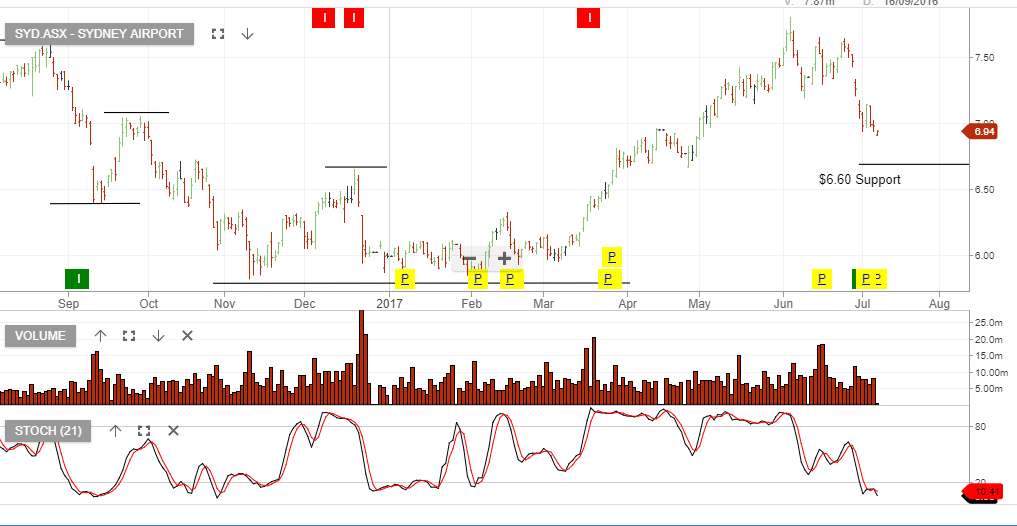
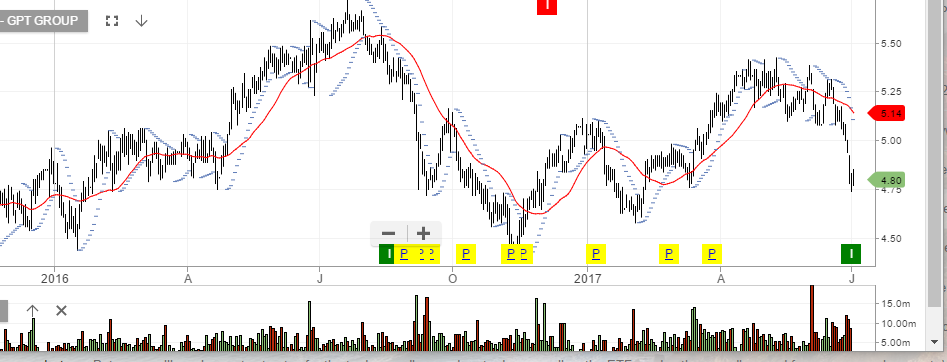
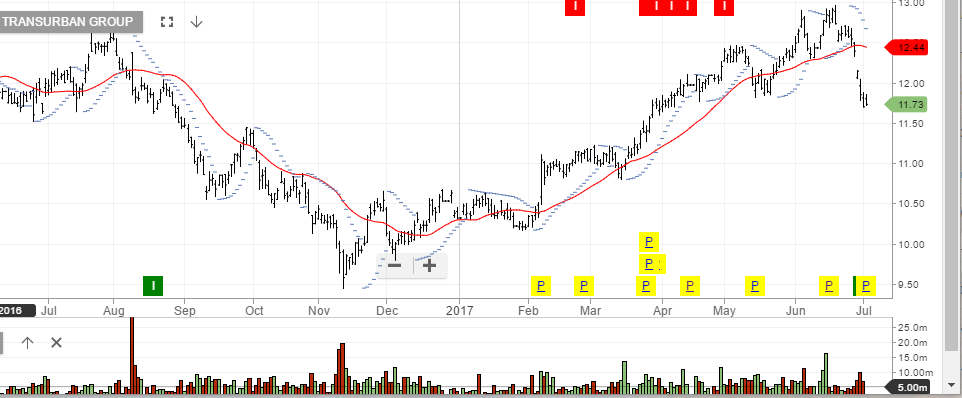
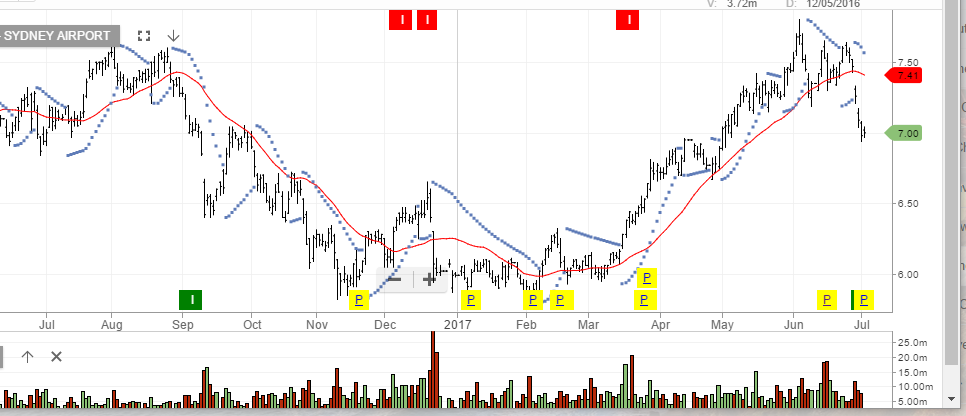
The specific stocks that we are following include GPT, TCL and SYD.

The ALGO engine triggered buy signals in these three names at yesterday’s close.

Given the sharp sell off that these names have seen over the last few weeks, we feel the upside potential is an reasonable trade.

GPT

TCL

SYD

QANTAS: Share Price Reaches High Altitude

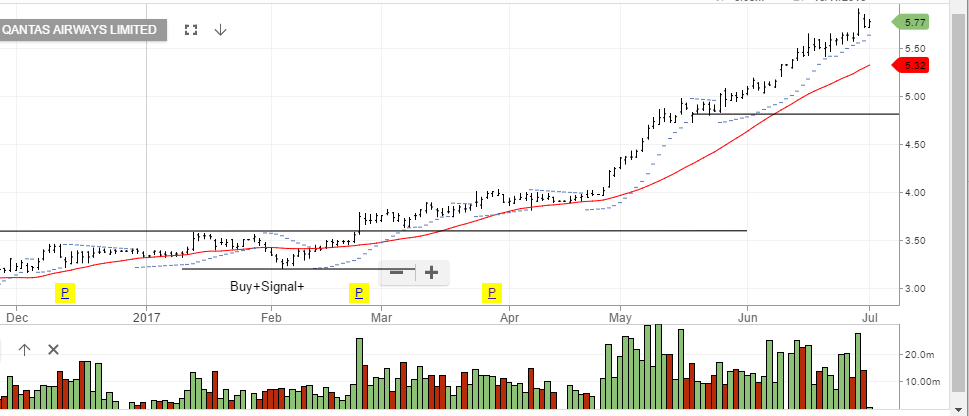
Shares of Qantas reached a 10-year high of $5.90 on Friday as investors respond to several broker valuation upgrades and the rumor of a credit rating upgrade from Moody’s investor services.

One of the reports forecast a target of $7.09 with an expected dividend of 15 cents per share, which would be more than double the 7 cents per share posted in FY 2016.

With internal momentum indicators now in overbought territory, we suggest a price reversion lower over the short-term. We will watch the ALGO engine for new signals and expect initial support in the $5.15 area.

QANTAS


Softness For Housing Credit

The Reserve Bank of Australia has released its financial aggregate data. Over the 12 months to May 2017, total credit provided to the private sector increased by 5.0%.

However, for the first time since 2011, the annual growth in dwelling loan approvals turned negative. This has also coincided with a slowdown in loan size growth.

We’re likely to see softer housing credit growth over the next 6 to 18 months.

The major banks  have responded to the lower housing loan growth by  announcing mortgage re-pricing starting with investor & interest only loans.

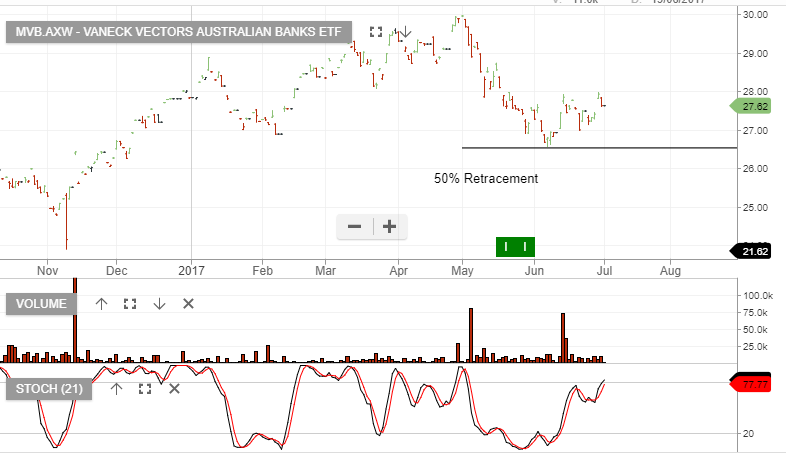
We believe the net-net impact on bank earnings will result in flat EPS growth over the next 12 – 24 months with the unknown risk being the potential pick-up in bad-debt provisioning.

Chart – MVB