Woolworths – Valuation Review

Woolworths has recently sold their petrol business to BP for $1.8b which helps to underpin the groups balance sheet. As a result, we’re likely to see Woolworths accelerate their store refurbishment program.

In late February we’ll see the earnings update from Woolworths and based on consensus numbers we expect $58b in revenue, EBIT of $2.5b with reported profit around $1.5b.

On a forward basis the underlying earnings growth should track around 4% with FY18 EPS of $1.30 and DPS $0.88, this will place the stock on 3.7% yield.

Any rally in the share price following the Feb result, we feel adding a covered call at or near $25 – 26.50 offers a suitable risk reward payoff.

Chart – WOW


ASX – Earnings Review

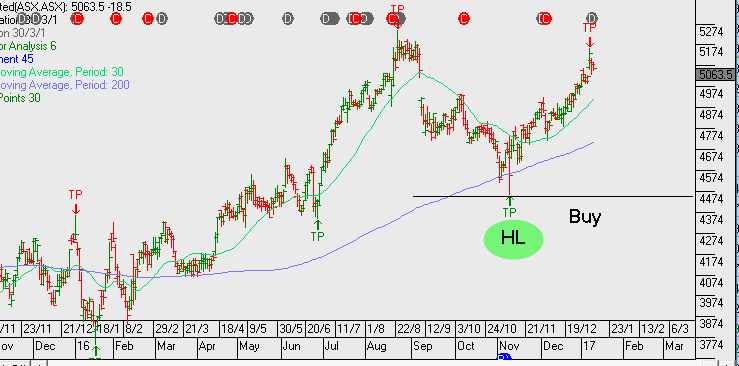
Shares in ASX have performed well since the Algo buy signal in early November.  If we look out 12 months, ASX should deliver revenue in FY18 of $850m and EBIT of $600m. The business is growing at around 5% p/a and management are remaining disciplined on cost control.

From an earnings per shares basis,  FY18 EPS will increase from $2.30 in FY17 to $2.45 in FY18, and DPS will increase from $2.10 in FY17 to $2.20 in FY18. This places ASX on a forward yield of 4.3%.

We think ASX shares are trading at the top end of the valuation range given the compressed yield and moderate EPS growth. The upside still remains the potential of a take-over bid as global exchanges look to consolidate.

Chart – ASX


US Wages and Inflation

The US Federal Reserve officially ended their stimulative policy of Quantitative Easing (QE) on October 29, 2014.

Since then, investors have been following the monthly Non-Farm Payroll (NFP) report for insight about how the condition of the US Labor market would influence US interest policy, the US Stock market and the US Dollar.

Within the NFP report, the three main components are the headline new job creation, the un-employment rate and weekly hourly earnings.

For most investors, the headline new jobs data has been the key metric for gauging whether the FED was likely to lift rates or leave policy on hold.

However, as the US is reaching a full-employment zone and the unemployment rate is nearing its lower bound below 5%, we are seeing a change in the policy implication dynamic towards wage growth and its impact on inflation.

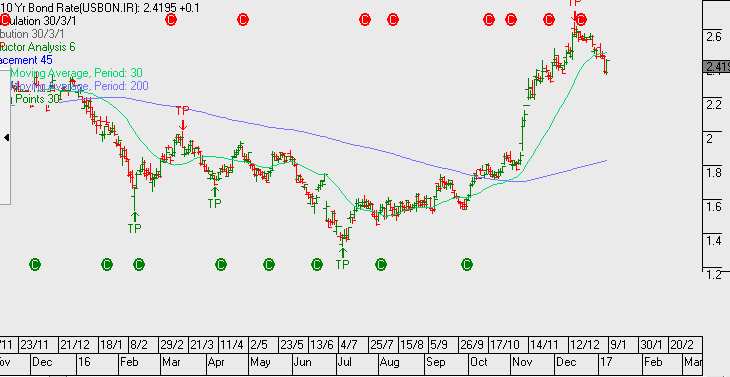
Since the FED first lifted the FED Funds target rate in December 2015, the 10-year note yield has risen from 1.30% to 2.50%.

The FED understands that US wage growth is feeding directly into core inflation aggregates and will likely  shift their policy-making focus away from new job creation to wage growth during 2017.

In last Friday’s NFP report, wages rose .4% for a new cyclical high on a year-on-year basis to 2.9%. This is the fastest pace since 2009. We see the importance of the wage component increasing through the year as the knock-on effect into core inflation is seen in subsequent data sets.

In other words, as we move further into 2017, it’s reasonable to expect investors may be taking positions in the US stocks, bonds and the US Dollar based more on the growth of weekly wages than the number of new jobs created.

On balance, we consider the recent rise in wages as a transitory event which may trigger short term headwinds to the recent stock market rally. Over the longer-term, we still consider the Bull market in stocks to continue with a gradual rise in 10-year yields.

 

Crude Oil Dumps on Iraqi Export Data

The price of West Texas Intermediate (WTI) crude oil dropped over $2.00, or 3.8%, to $51.90 in New York trade as Iraqi exports posted a record high for the month of December.

This is the biggest daily drop in over five weeks as investors are now concerned about Iraqi compliance with the OPEC production cuts agreed to on November 30th in Vienna.

Crude Oil posted its biggest gain since 2009 last year, largely based on the agreement from OPEC and 11 other countries to curb output starting January 1st.

Non-compliance has been a recurring theme in previous OPEC agreements, and the Iraqi export data may be the first sign of a crack in the most recent production accord.

The close below $52.00 in the front month WTI contract is the first trade below the 30-day moving average in over a month and suggests further downside extension below $51.50.

On the ASX, Oil Search (OSH) reached a 2 month high of $7.45 yesterday but will likely trade lower today. Technically, we look for initial support at $7.00 with the Pre-OPEC key support level at $6.40.

Export Surge – First Trade Surplus in 3 Years

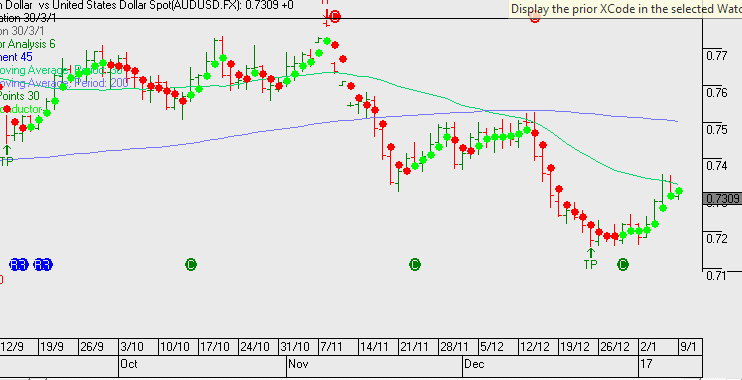
Last Friday, Australia posted its first trade surplus in nearly three years.

The surplus of international goods and services was $1.2 billion for the month of November, which was much better than the market forecast of a $500 million deficit.

The Australian Bureau of Statistics said exports surged 8% in November, while imports were flat. The main drivers for the gain in exports were iron ore and coal, which rose 11% and 25%, respectively.

This is positive for the fundamental picture in the Aussie Dollar. We see solid support in the .7290 area with the scope for a move up to the .7430 level in the near-term 

Chart – AUD

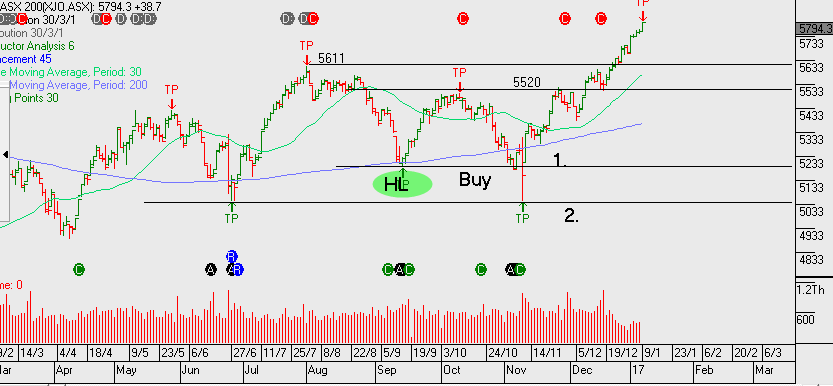
Chart – XJO

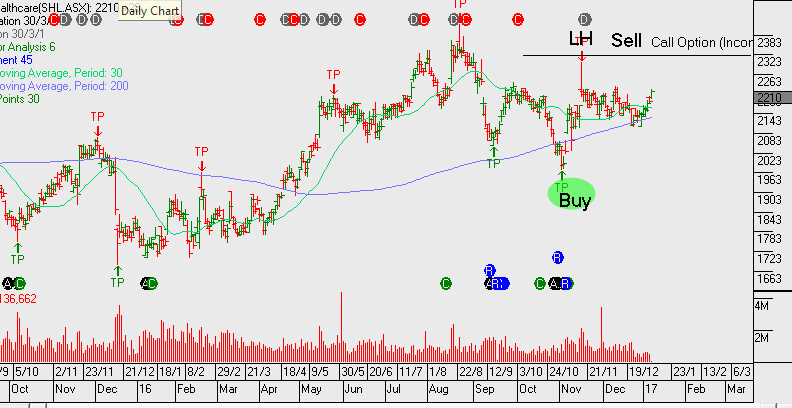
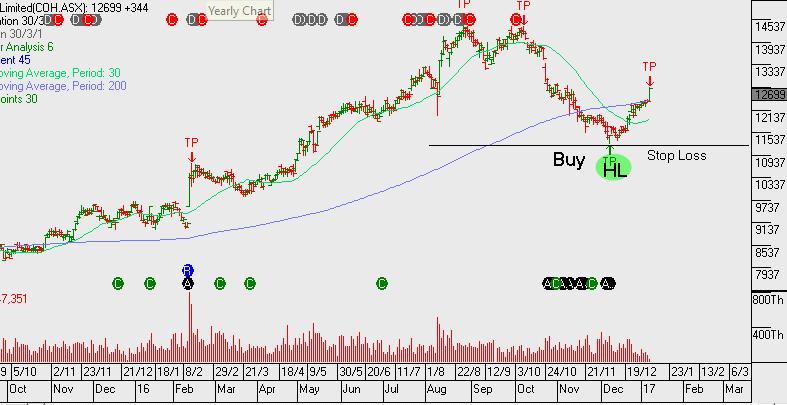
Healthcare Algo Buy Signals

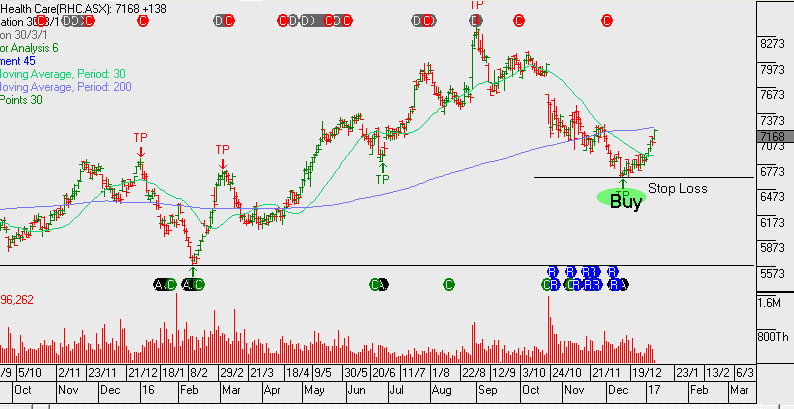
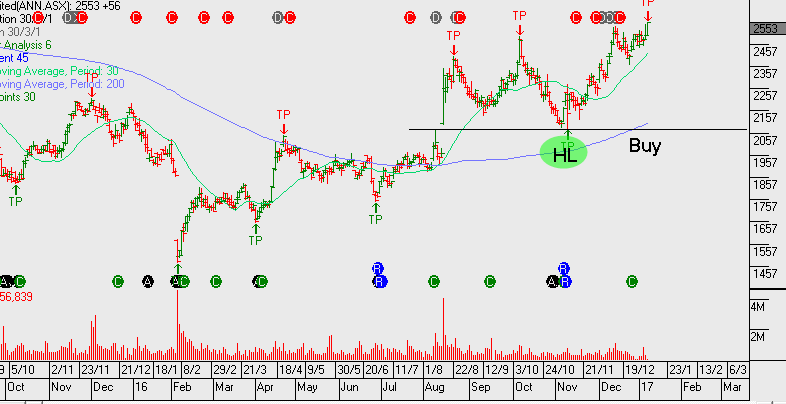
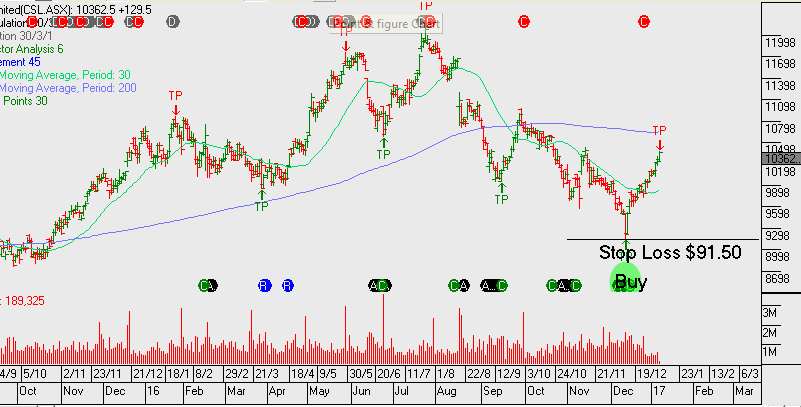
At this point in the market we prefer healthcare names as a sector allocation for new money. Here are the recent buy signals generated by our Algo Engine.

With SHL, CSL and ANN we’ve added covered calls to boost the annualised cash flow to over 10%, whilst still allowing for capital growth if exercised at the strike price of the sold call.


Chart – SHL
Chart – COH
Chart – RHC
Chart – ANN
Chart – CSL

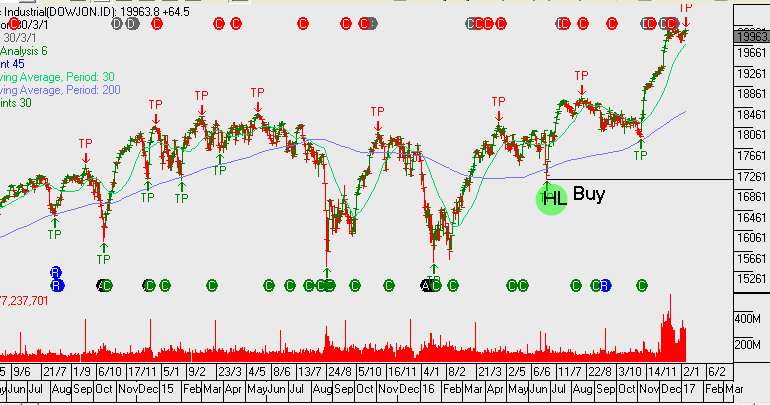
Dow Jones Index – This Warrants A Closer Look

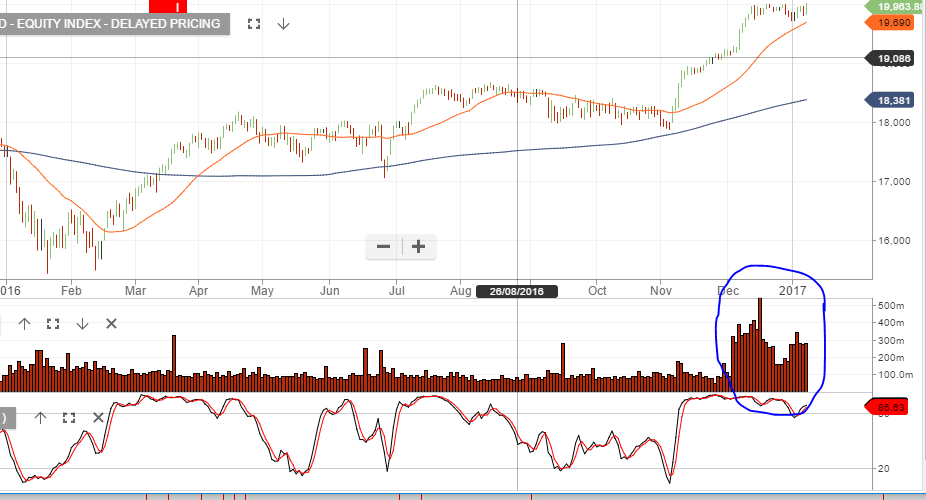
We’re interested in the large pickup in traded volume over the past few weeks in the Dow Jones Index. By any measure the volume is abnormal, even compared to prior end of year volume traded.

The conclusion we draw from this is: whilst ETF’s are helping to accelerate index volumes, it seems a reasonable conclusion that it could be part of a series of indicators which are helping to suggest that we’re near an exhaustion point in the US equity rally. We’ve seen market tops coincide with big volume distribution patterns like this before.

Chart – Dow Jones


Dow Jones – Where is Fair Value?

Both the Dow Jones 30 and SP 500 finished the first week of 2017 in positive territory gaining 1% and 1.5%, respectively.

Many market commentators are suggesting the potential for overbought conditions as the major US stock indexes have added about $2 trillion in share value over the last 8 weeks.

There’s no question that the Bulls are currently in charge. However, with earnings season just a few weeks away, investors need to be cognizant of the index earnings required to maintain these lofty price valuations.

Earnings over the last three years have been in a tight range between $116.50 and $118.00. Based on our calculations, if US companies don’t post EPS growth of 10% and only deliver a flat $120.00 of average annualised EPS, the Dow Jones 30 is worth 16,500 points with 10-year bond yields at 2%.

Although energy and commodity companies should help to lift the average from the prior 12 months, bank earnings should also be up in the fourth quarter. With this in mind, the middle ground may result in 5% average EPS growth ($125 per share), which then supports the Dow Jones Index trading at or near 18,000 points.

Dow Jones


Update on the Yield Trade

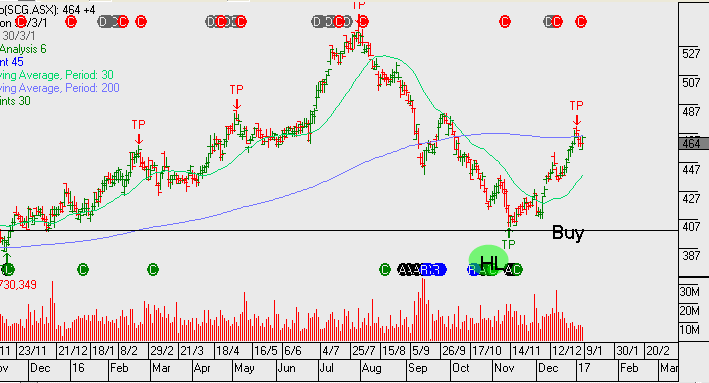
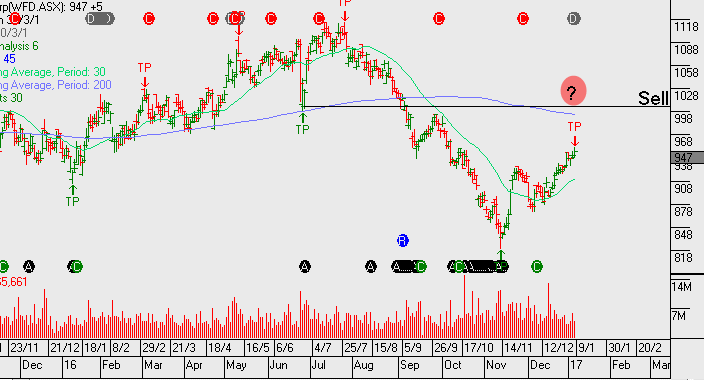
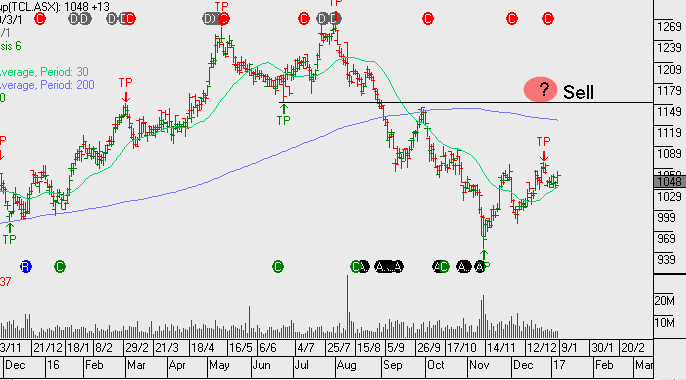
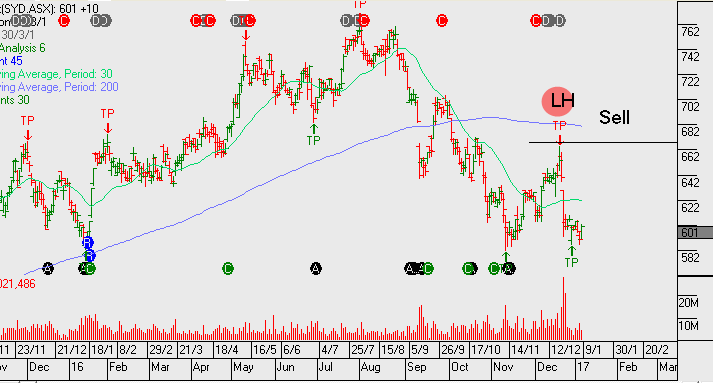
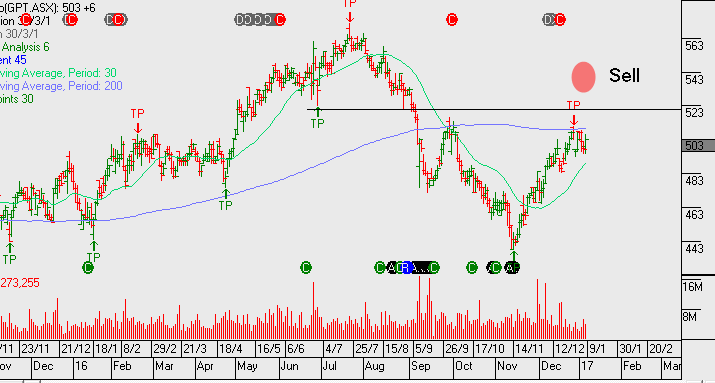
In late 2016 we began highlighting yield names which were oversold and were likely to bounce back coming into the year end. Our preferred names in the yield basket were WFD, SCG, GPT, SYD and TCL. On average, these names have rallied over 10% from their November low.

The consolidation of US yields, (bond prices no longer falling & yields no longer moving higher), along with the oversold condition in our domestic yield sensitive companies, were enough to generate the rally.

From here we feel  these names will remain supported, especially if volatility picks up in the broader market during the Jan – March period. With this in mind, we continue to hold our yield basket and overlay covered calls to boost the cash flow to 10%+ on an annualised basis.

Chart – SCG
Chart – WFD
Chart – TCL
Chart – TCL
Chart – GPT
Chart – US10YR


Tabcorp – Low Risk Income Play

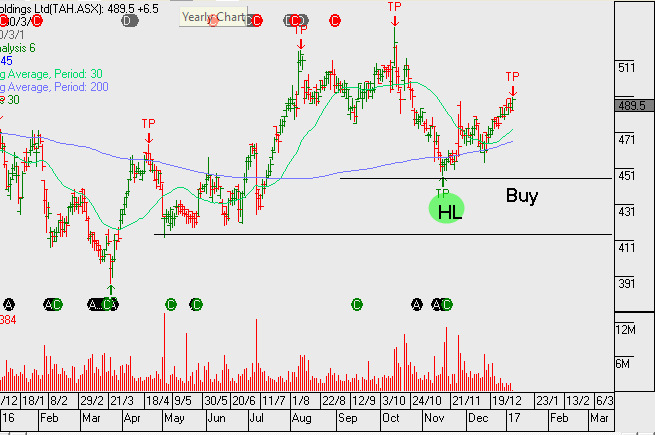
Following TABCORP’s successful bid for Tatts Group, the next 12 months should provide a low risk opportunity to generate 10 t0 12% annualised cash flow from TAH.

The Algo Engine generated a buy signal early in November at $4.50. We remain positive on the stock and continue to acquire shares and sell the May call options with a view towards collecting the February dividend as well.

Chart – TABCORP