Global Macro

Over the past 12 months, the correlation between the EURO and Eurozone (EZ) share market has gone through several different phases. Earlier in the year, the single currency was sold off on risk aversion when EZ equities were showing weakness. A few months later, the EURO was bid higher when EZ stocks fell as fund managers allegedly unwound currency hedges while cutting long stock positions.

However, during last Friday’s LDN session, the EUR/USD tracked the German DAX index with pretty much a point-to-point correlation. As discussed in previous FX UPDATES, the legal and financial pressures on Deutsche Bank (DB), along with other EZ banks, has been a headwind for the EURO but so far hasn’t unravelled the current price or chart structure.

But last Friday was different. As the LDN session opened, the German DAX was pushed below the 10,200 level for the first time since early August. At the same time, the EUR/USD fell to the session low of 1.1160 and was well offered on the crosses. A well timed rumor that the US Department of Justice  (DoJ) was willing to lower their penalty demand on DB down to the $5.0 billion area triggered a 1.5% rally in the DAX and reversed the EUR/USD back up to near-term resistance at 1.1250.

With a full slate of data points from both sides of the Atlantic this week, FX Investors will be watching to see if this EURO-Equity connection of stronger EZ equities driving the EUR/USD higher has any staying power, or if it was just an end of month adjustment.

It’s our base case is that the DoJ rumor was just that and the market will be sensitive to ongoing litigation between the DB and the DoJ. Further, two of the key data points this week, US ISM aggregates and the US Jobs data, are both extremely currency sensitive releases which will drive USD flows.

On balance, we expect both the ISM manufacturing and services reports to bounce back from last month’s readings, which would be USD positive and SP 500 positive. The US Payroll data has been a volatile series over the last six months, but a print near the forecasted number of 170,000 new jobs should be good enough to keep the EUR/USD on a downward trajectory.

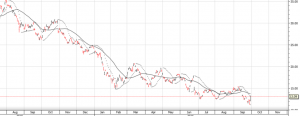
Chart – Deutsche Bank
dbank


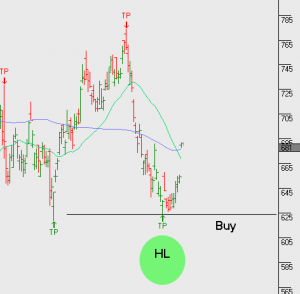
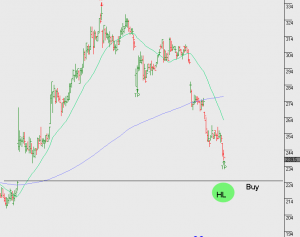
Take Profit on Boral and Buy James Hardie

In today’s post we look at stocks recently commented on that require further attention, as profit taking is in sight or the entry level setups are now looking compelling.

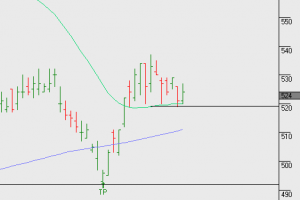
NVT.ASX – Lift trailing stop loss to $5.25 support and retain profit target at $5.40

nvt

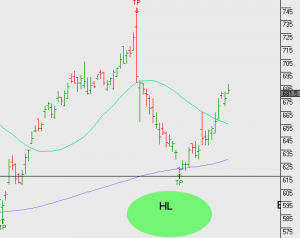
BLD.ASX – We had a buy recommendation on this at $6.20 and it has now rallied 10%+ to $6.85. Take profit on BLD and switch to JHX.

bld

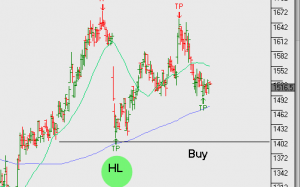
AMC.ASX – We see value in AMC at $15 only when complemented with a covered call strategy. Target is 7% capital growth, plus 2% from Feb div and 3% option premium. We have a six month time horizon on this trade.

amc

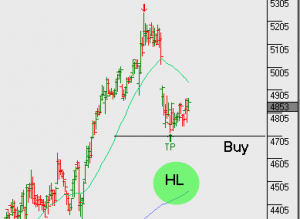
ASX.ASX – Looks better value following the recent pullback and our algorithm engines are flagging a buy point.

asx

The above charts summarise a few opportunities we’re watching. For further detail on our investment ideas, visit the monthly strategy piece or the recent mid week update.

If you have trouble locating the links to either of the above recordings, please email me.

leon@investorsignals.com


Global Macro

Today’s NY close will mark both the end of September and the end of the third quarter of 2016. Often times, these month-end, quarter-end trading sessions can see broad reversion moves within long worn price ranges. With the UK current account data scheduled for release today, could month-end flows lift the Sterling into the weekend?

Doing a straight quarter-to-quarter price analysis, the GBP/USD looks overdue for a substantial recovery. The pair started Q2 of 2016 at 1.4250 and started Q3 more than 10 big figures lower at 1.3225. Over the last couple of months, the GBP/USD has been trading in an inverse pennant formation bound by the 1.2850 level on the downside and finding resistance just under 1.3500.

During the same period, the FTSE 100 has gained just over 4%, which illustrates a combination of over expectations of widespread asset devaluation post-Brexit and the re-pricing of growth assets relative to the lower Sterling.

The UK balance of payment report is first-tier data set and has been heavily influenced by the sharp devaluation of the Sterling since the June 24th referendum. Market forecasts are calling for a contraction of the trade deficit from – £32.00 billion to -£30.00 billion. And while seeing the deficit shrink by 2 billion quid may not appear to be a large improvement, it’s still materially better than blowout numbers predicted by Brexit opponents.

Chart – FTSE

ftseEUR/USD

eurusd

Resmed – Buying Opportunity

Out of the three healthcare buy recommendations, (CSL, SHL and RMD),   made in the blog post back on 13th of September, CSL has increased 10% and SHL 10%+, however, RMD has been slower to recover. With the recent price action in RMD, we’re now more confident that a basing pattern, (or reversal), is beginning to take shape. Therefore, today’s post acts as a reminder that a buy opportunity in RMD remains, with an upside target of $9.00+

Resmed (RMD.ASX)

rmd


Oil Search – Price Bounces Following OPEC Agreement

Oil Search (OSH.ASX) remains an attractive recovery story over the next few months with a potential price target back above $7.25. This target is seen as full value and profit should be taken at this point.

The $6.30 entry level was highlighted in the monthly strategy recording and again in yesterdays mid-week video update.

The current driver of oil prices is yesterdays announcement that OPEC reached an agreement to limit crude output. OPEC sources said the group reached a deal to cut its oil production for the first time since 2008.

Oil Search (OSH.ASX)

osh

Medibank – Is Value Emerging?

Medibank (MPL.ASX) is now trading at a price level that warrants attention. The stock is forecast to pay a fully franked dividend in FY17 of $0.12, placing the stock on a forward yield of 4%+.

We don’t see too much in the way of earnings growth with forecast NPAT in FY17 being similar to FY16, in or around $430m on EPS of $0.16.

The stock is approaching an oversold level and may see a small bounce, otherwise we’re likely to see sideways consolidation at or $2.50 – $2.60 at which time longer term holders should sell covered calls.

For the trader, deeper selling from today’s price will provide an entry level with a likely bounce back to the above stated target range.

mpl


ASX Mid-Week – Video Update

I’ve decided this week to replace the usual multiple individual posts with a quick summary video. I think this does a better job of drawing your attention to where the opportunities are in the market and how to utilise the various Investor Signals’ market commentary services to help enhance your portfolio returns.

Please take the time to watch our quick mid-week video market update so you can keep informed from a timing perspective of the opportunities to focus on.


Global Macro

With global financial markets firmly focused on central bank meetings in the US and Japan last week, it was easy to overlook the bad news delivered to Germany’s largest bank. On September 16th, the US Department of Justice (DoJ) demanded that Deutsche Bank (DB) pay $14 billion in penalties for their role in deceptive marketing practices dating back to 2005. More specifically, the DoJ’s claim is about the way the bank selected mortgages, packaged them into bonds and sold them on to investors.

These bonds are known as residential mortgage-backed securities and very few investors walked away from the DB products without damage.

DB is just one of several banks penalized by the DoJ with Goldman Sachs and Citi-Bank both settling with the DoJ earlier this year for $5 billion and $7 billion, respectively. With that in mind, it’s likely that DB will be able to negotiate a lower number over time. However, over the weekend, German Chancellor Angela Merkel  ruled out any government assistance for DB, which has not only pushed the share price to a 16-year low under €12.00 but also initiated enormous scrutiny on BD’s derivative and financing books.

In short, DB has more than €2.5 trillion of derivative exposure coming due or needing to be rolled over within the year. DB has had a serious reduction in its credit rating by Moody’s and has seen its share price drop 40% since January. The DoJ’s $14 billion demand represents more than 70% of DB’s current market value. Without going into the specific composition of the derivative book, it’s reasonable to believe that DB is probably not on the right side of all of these trades and that refinancing rollovers will put additional pressure on their bottom line.

With respect to the price of the Euro, one must ask the following questions: What is BD’s exposure to other troubled banks in Europe; specifically, the collapsing Italian bank system? And, now that Ms Merkel has ruled out state aid, will BD be able to pay the fine without a depositor bail-in? The ECB chief, Mario Draghi, is scheduled to testify on Monday in front of the Committee on Economic Affairs in Brussels. It’s a fair bet that DB’s stability and exposure will be addressed.

Even without the DB legal mess, the current technical pattern in the EUR/USD looks tenuous.

EUR/USD

euro

Global Macro

While there was never a consensus that the FED was going to lift the overnight target rate going into last week’s FOMC meeting, there were a couple primary dealers who cautioned that the FED might surprise the market. And while a .25% increase might not have much of an impact on the overall economy, it could have had a significant impact on global equity markets. Remember the sharp sell-off that the SP 500 experienced after the last rate hike in December, 2015. As such, we feel it would be helpful to have some idea of when the next rate adjustment is approaching, so that we could plan our investment strategy accordingly.

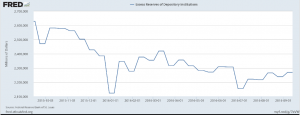
One indicator that might give us some insight as to what the FED is planning on doing, as opposed to what it’s saying its doing, is the change in excess reserves held by banks.  As you can see on the chart, the level of excess reserves fell considerably in the weeks leading up to the first step in interest rate normalization late last year. Starting in early November, excess reserves fell by over $200 billion in advance of the FED’s decision to raise short-term rates by .25% in December.

The FED used its reverse repurchase agreement facility (reverse repos) to drain excess reserves by exchanging Treasury securities on its balance sheet for reserves held by banks, thereby removing liquidity in the financial system which is consistent with a tighter monetary policy. Going forward, we believe it’s worthwhile to follow the repo market for signs that excess reserves are leaving the financial system as a signal that the FED is preparing further interest rate normalization later this year.

Graph of Excess Reserves of Depository Institutions.

excess-reserves