Origin Energy – Searching for Support
Origin Energy looks like it will find buying support in the $6.25 to $6.50 range.
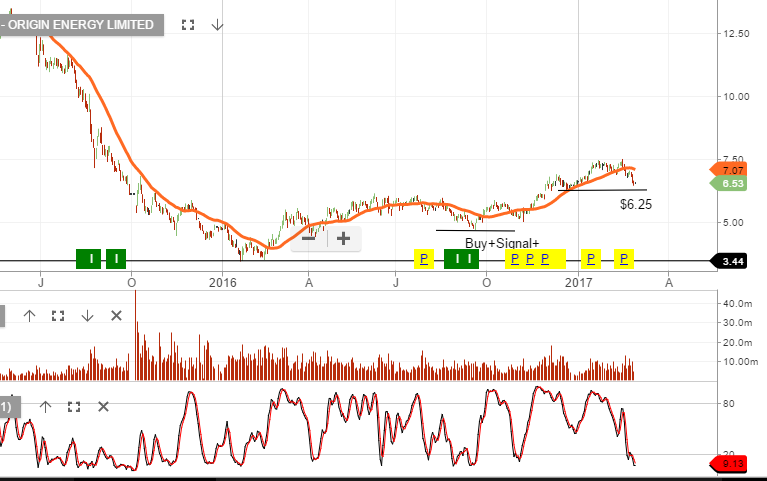
Origin Energy looks like it will find buying support in the $6.25 to $6.50 range.
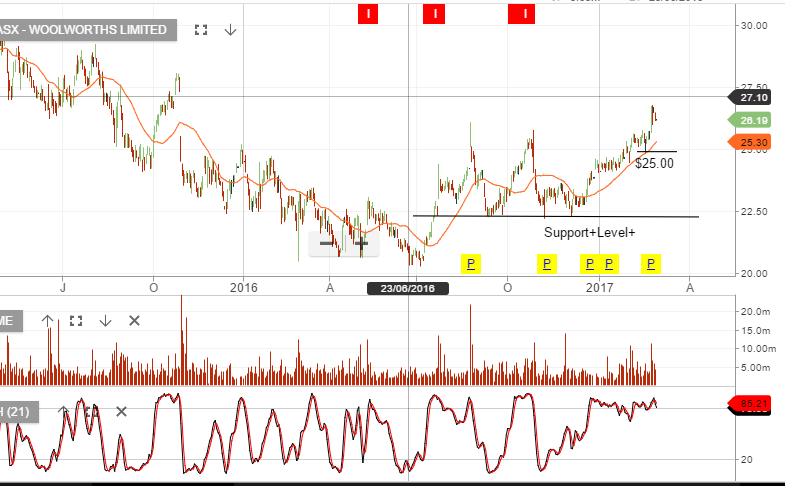
Woolworths trading back to $25.50 looks like reasonable value. We’re buyers on a dip in the share price at or $25.50. We see scope for 5% underlying EPS growth and when complimented with a covered call option, we’re generating 10%+ in annualized cash flow from the dividend and the call option income.
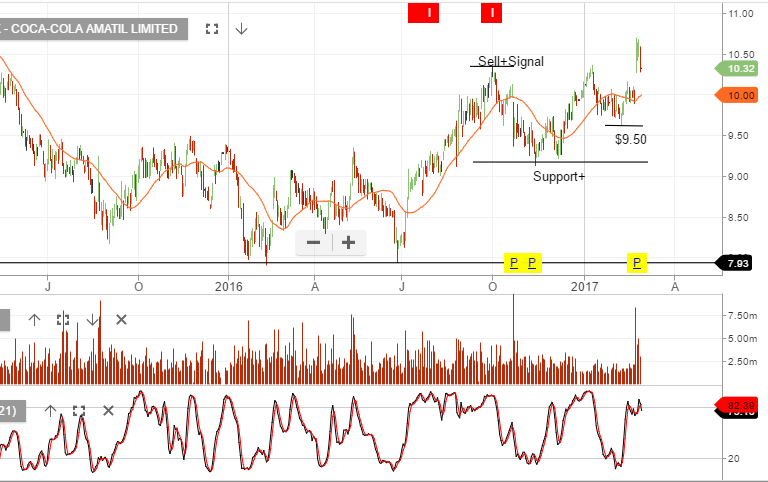
CCL is another name that we’ve been buying the stock at or near $10.00 and selling tight covered call options to generate 10 – 12% annualized cash flow .
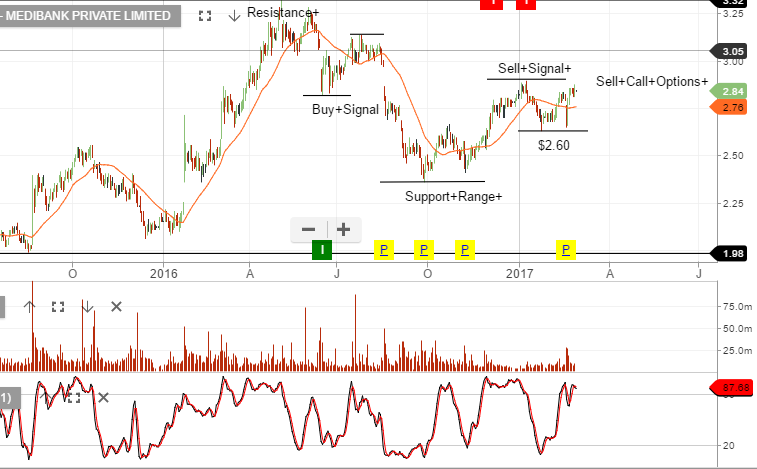
We’ve been buying MPL and selling at-the-money covered call options to deliver an annualized cash flow of 10%+
There’s limited revenue growth, limited profit growth and a 4% dividend yield. However, we see the stock as a defensive income contributor to client portfolios.
In addition to the 10% cash flow from the dividend and option income, we’re allowing for a small capital gain over the next 4 months.
Domestic yield sensitive stocks are looking well supported as global yields in G7 economies retreat from recent highs. The bond market seems to be losing some of the optimism in the”reflation” trade.
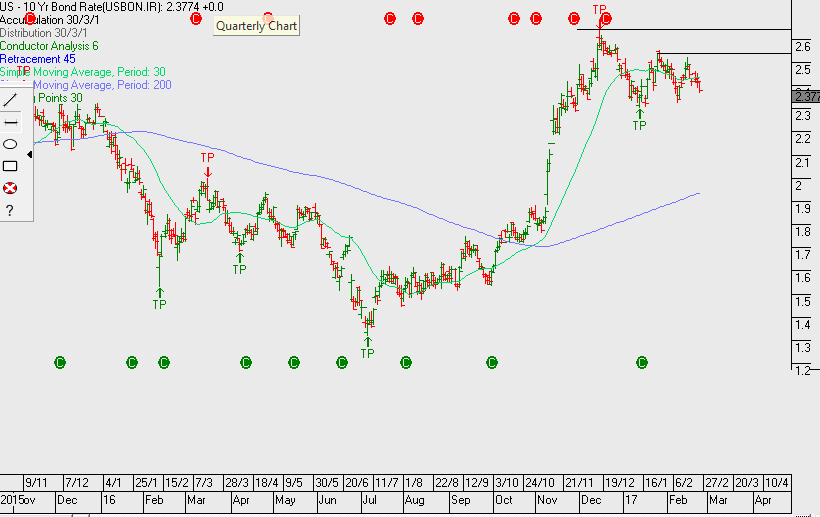
Evidence of the retreat in yields can be seen in the US 10-YR treasuries where the yields are now trading down from 2.61% to 2.31%.
The impact of this is: money is now flowing back to REIT’s, infrastructure, consumer staples and telecommunication stocks.
We’ve been promoting the selling of resources and buying of defensive yield names, for the past few weeks. We continue to see defensive yield names complimented with tight covered call options as the best way to deliver 10-12% cash flow whilst protecting capital.
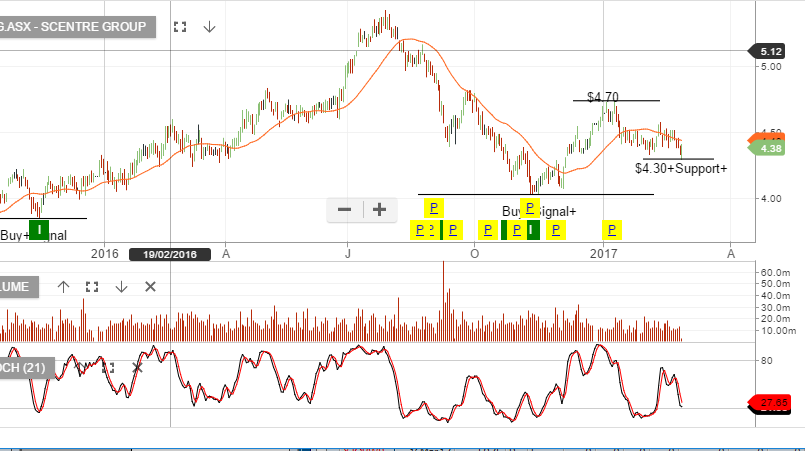
Chart – SCG
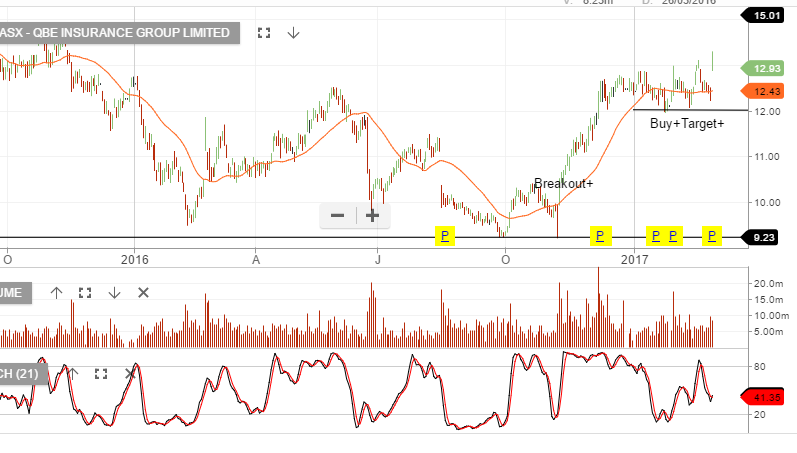
Shares of QBE are up over 5.5% in early trade as the insurance giant reported a 5% jump in net profit, as well as, a $1 billion share buyback scheme.
In the year up to December 31st, the company announced net profit after tax of $844 million, which is up from $807 million over the previous year. Return on equity also improved from 7.5% to 8.1%.
QBE declared it will pay a 33 cent dividend, compared to 30 cents last year.
QBE is fully valued and we recommend selling covered call options to enhance the investment return.
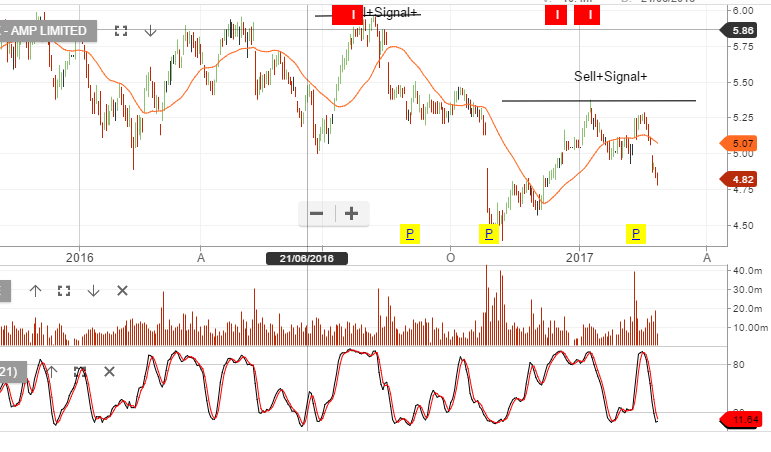
Our Algo Engine generated a short signal in AMP at or near the January high of $5.37. The stock is now trading down 10% at $4.83
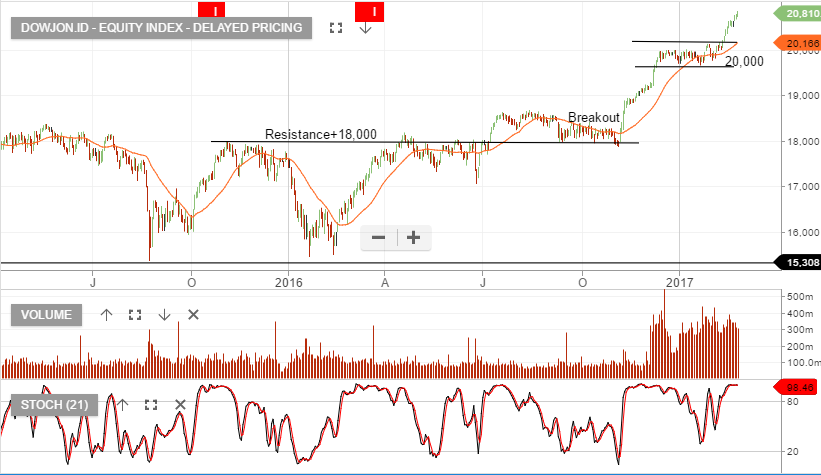
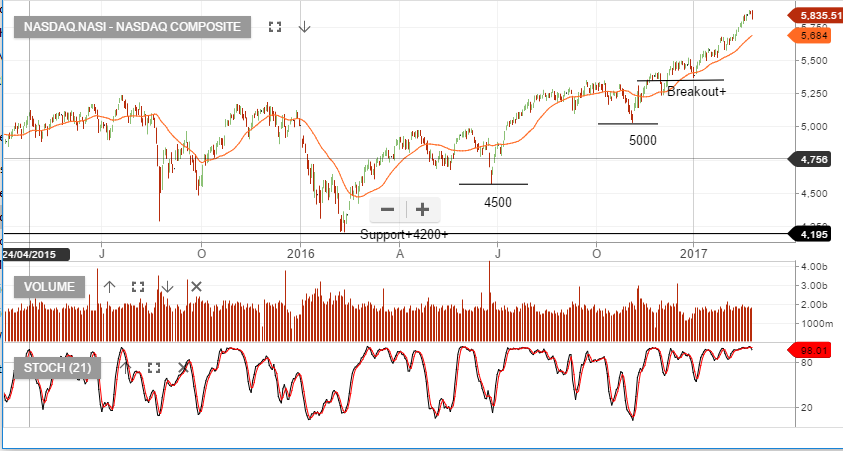
A late push on Wall Street helped US Stocks recover and allow the DOW JONES 30 Index to extend its winning streak to an 11th day.
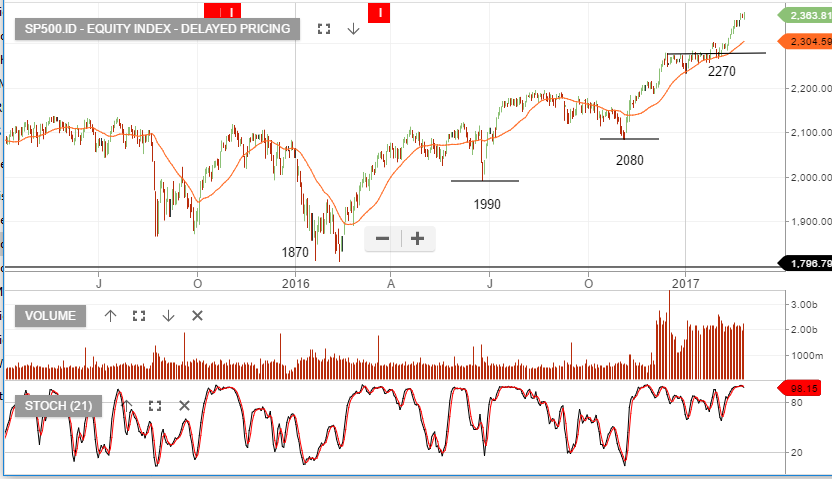
For the week, the DOW rose 1%, the SP 500 picked up 0.7% and the NASDAQ closed out the week pretty much unchanged.
Looking ahead to next week, President Trump will deliver a speech before a joint session of Congress, when he is expected to give more details about his tax plan, trade policies and the direction of health care in the USA.
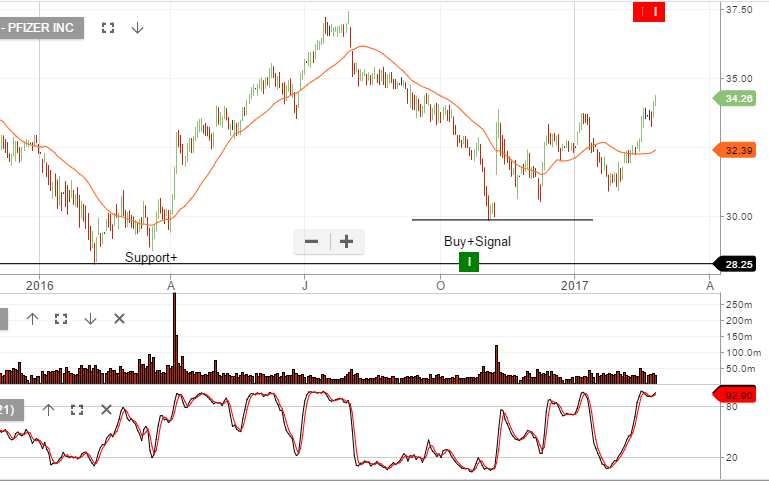
It’s interesting to see that the Investor Signals ALGO engine gave a sell signal for 2 pharmaceutical companies today: Eli Lilly (LLY) and Pfizer (PFE). Those sell signals were posted at $82.85 and $34.25, respectfully.
US Drug companies have shown weakness on Mr Trump’s comments about health care reform in the past and investors will be listening closely to his speech on Tuesday.
A quick roll through the charts of the Dow Jones and the top 30 stocks that make up the index.
This is a great way to see the investment trends of some of the world’s largest companies.
The DOW Jones 30 Index posted its 10th straight winning day in a row overnight. The fact that each one of those 10 winning days was a new record high has not been achieved since 1987.
This most recent leg higher in Dow started on November 8th, after the result of the US election. Since then, the DOW has gained 2,515 points, or 13.75%.
A widely held theme for the US equity rally has been the reflation of the US economy under a more business-friendly administration. This reflation theme was largely based on across the board tax cuts and a country-wide infrastructure construction plan.
The idea being that these new policy measures would stimulate growth and push inflation, interest rates and stock prices higher. Along these lines, the yield on the US 10-year note climbed over 83 basis points, or 6%, from mid-November to late December.
However, over the last several weeks, the US yields have stopped moving higher and the Treasury curve has stopped steepening. In fact, over the last 10 day rally in the DOW, yields on the 10-year notes have actually dropped from 2.48% to 2.37%.
In short, while the DOW has firmed to new highs over the last 10 sessions, the inflation part of the reflation trade is beginning to fade.
From a traditional value-metric point of view, if the recent move higher in US stocks were signalling a new leg higher in valuations, we would have expected the 10-year yields to have traded higher, not lower.
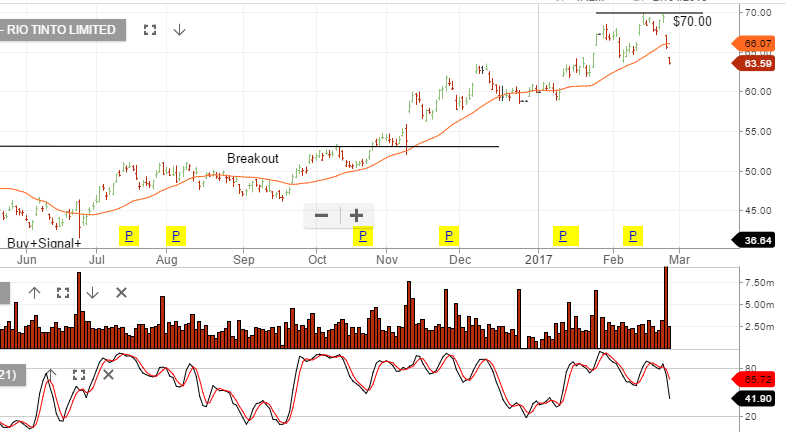
We’ve sold $27 call options over BHP into April and quit all other metals exposure. Our preference for BHP over other resource names is based on our assumption that energy prices will remain supported in the near term.
Three factors will likely support energy prices short term: The Trump administration’s policy will likely be bullish for energy, OPEC and Saudi production cuts and the Saudi Aramco IPO early next year (biggest IPO in history). The IPO will be better received in a supportive energy environment.
For this reason we’ve kept BHP, and sold at the money call options to boost cash flow to 10 – 12%.
We’re not overweight the stock since we see risks building for the market, in general, and Iron Ore prices, specifically.
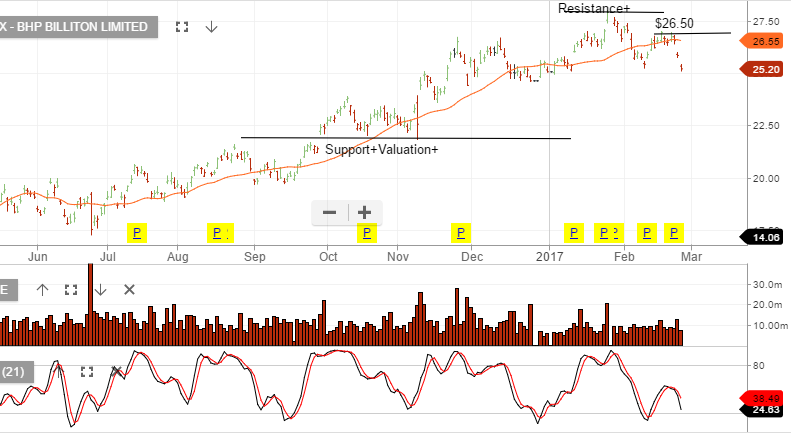
Chart – BHP

Level 17 Chifley Tower
2 Chifley Square
Sydney, NSW 2000
1300 614 002
Investor Signals Pty Ltd
ABN 44 143 555 453