PBoC Surprising Rate Hike

The People’s Bank of China (PBoC) surprised the market by tightening monetary policy on Friday for the first time in almost 6 years.

On the first day back from the Lunar New Year Holiday, the PBoC increased the cost of borrowing across their short-term curve from 1-month to 2-years. This move also raised the overnight deposit rate from 2.75% to 3.10%.

A rate hike on the first working day after a holiday signals the start of a different policy direction away from Central bank stimulus and towards more fiscal and domestic demand policy measures.

With Chinese factory orders rebounding after several years of deflation, Friday’s move reflects  the PBoC’s determination to rein in leverage which has seen rapid expansion in the bond and property markets.

As a result of the higher rates, the Chinese Yuan traded to a 4-month high of of 6.79  against the US Dollar into the weekend.
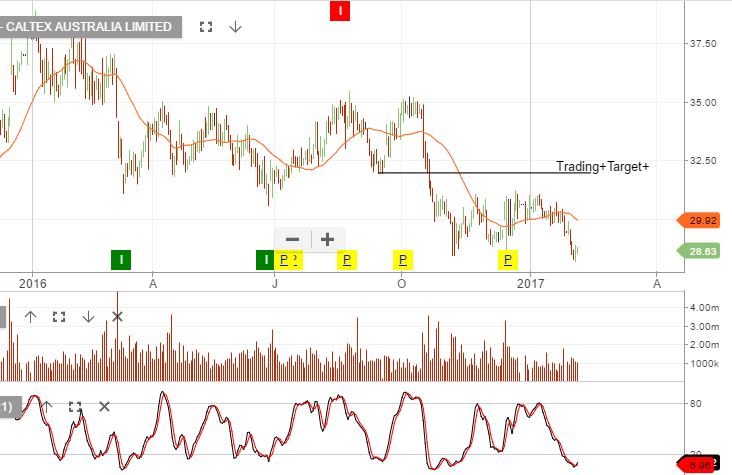
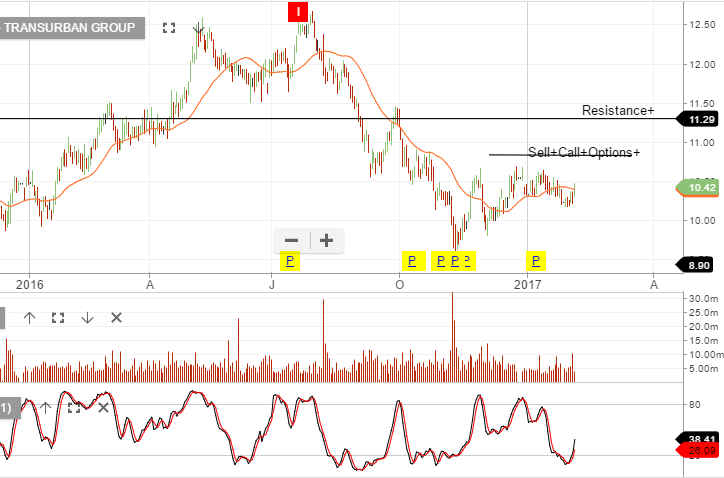
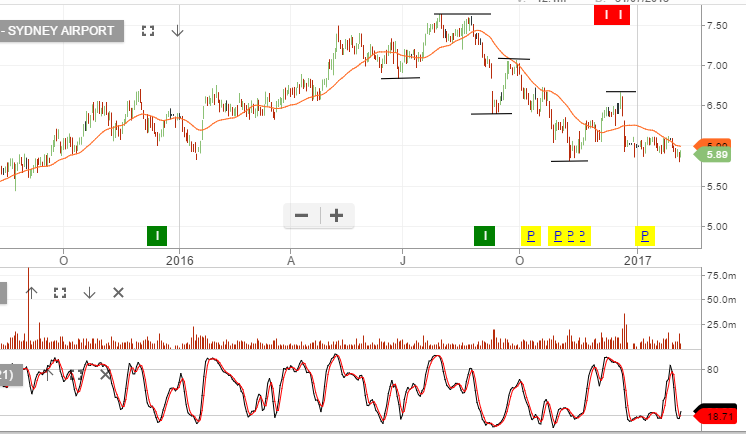
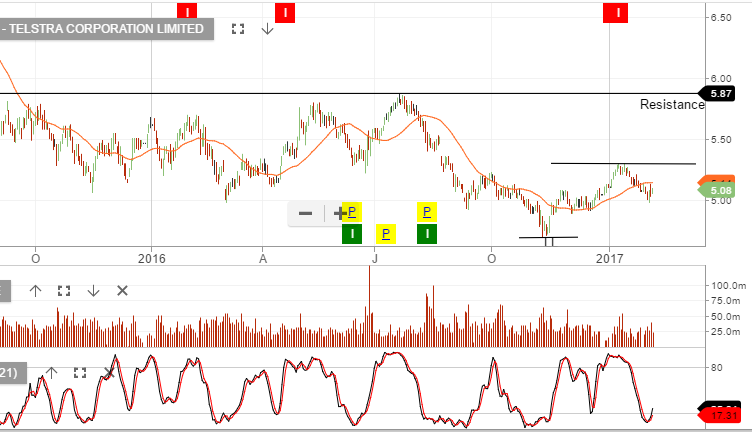
AMC, CTX, SYD, TCL & TLS

We’re allocating funds to defensive names with moderate earnings growth. By adding tight covered call options we’re boosting the cash flow and generating our return on investment (ROI) through a lower risk, lower volatility investment process.

We’re holding small levels of hedging through inverse ETF’s and are mindful of the increasing number of stocks within the ASX 100 and the US S&P100 that are showing fading momentum. High valuations in many names combined with relatively low revenue and profit growth is likely to weigh on share price performance.

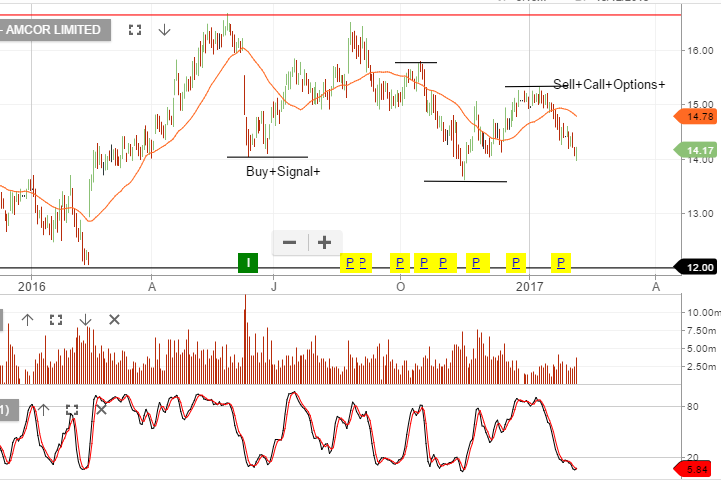
The following names we’re currently buying. AMC, CTX, SYD, TCL & TLS

Chart – Amcor
Chart – CTX
Chart – TCL
Chart – SYD
Chart – TLS


Mixed Payroll Data Lifts The Dow

US January Non-Farm Payrolls increased 227,000, which was well above consensus expectations of around 175,000.

The December revision was little changed at 157,000 from the 156,000 reported last month and the three-month average increased to 183,000 from 148,000 previously.

Unemployment rose to 4.8% from 4.7% the previous month and compared with expectations of an unchanged rate on the month.

Average earnings rose 0.1% for the month and this was well below consensus forecasts for a 0.3% gain. The December increase in average earnings was also revised down to 0.2% from the originally reported 0.4%.

The annual increase in earnings, therefore, slowed to 2.5% from 2.9% previously and was well below the 2.9% expected rate.

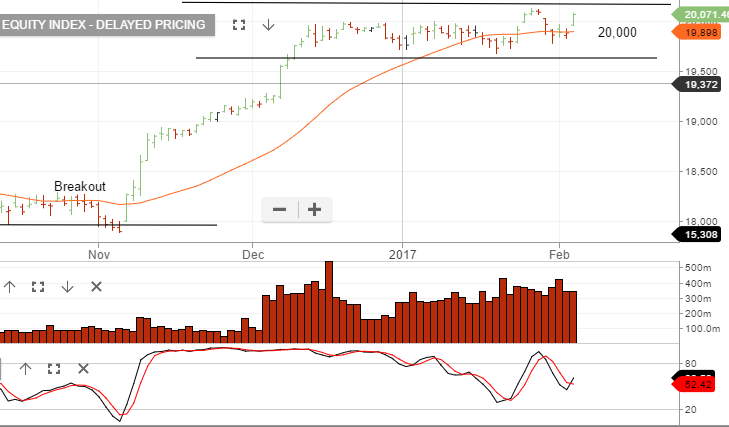
The stronger headline jobs number combined with weaker wages reduced the pressure on the FOMC to raise rates at their March meeting. This is reflected in the Fed Funds futures market where the implied probability of a rate hike fell from 18% prior to the payroll data to 9% by the New York close.

This market sentiment that rates could stay “lower for longer” lifted US Stock Indexes with the Dow and SP 500 gaining just under 1% for the day and the NASDAQ adding just over .50%

Chart – Dow Jones

REIT holdings – How we achieve 10 – 12% cash flow.

The lesson from the GFC when it comes to REITS is to own the best-in-class and ensure gearing levels are moderate. 20 to 35% gearing is okay, 45 -50% gearing is the range that caused problems 10 years ago.

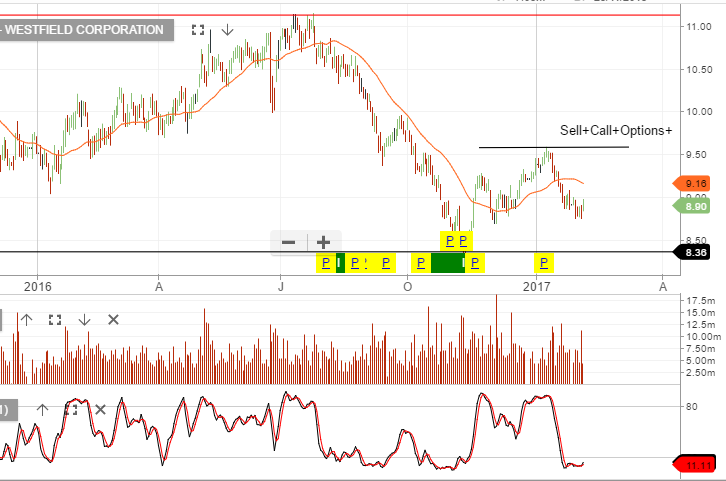
We like WFD combined with a tight covered call option which is delivering 10 – 12% cash flow on an annualised  basis.

Chart – Westfield


James Hardie

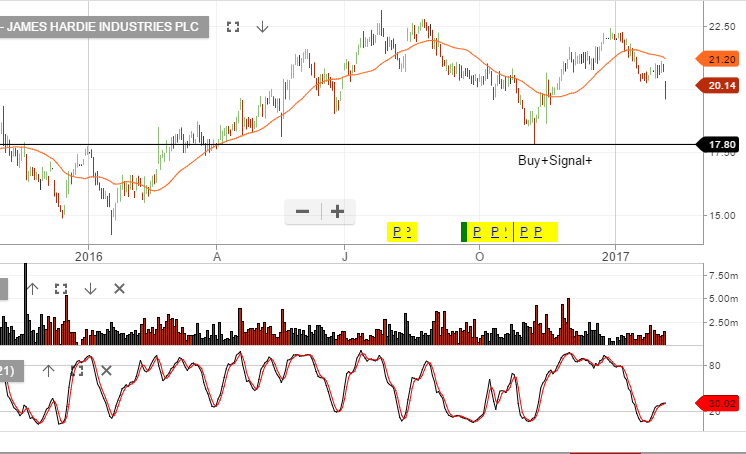
Shares of James Hardie have opened over 3% lower on an announcement that a weaker-than-expected December quarter has forced the company to cut earnings guidance.

Shares traded down to a 3-month low of $19.60 as the the company announced that the group’s net profits fell 6% to USD 52.6 million.

This prompted a warning that earnings for the financial year up to March  would come in at between USD 245 and USD 255 million, versus expectations of between USD 252 to USD 269 million.

Chart – James Hardie

Amazon Shares Lower On Weaker Guidance

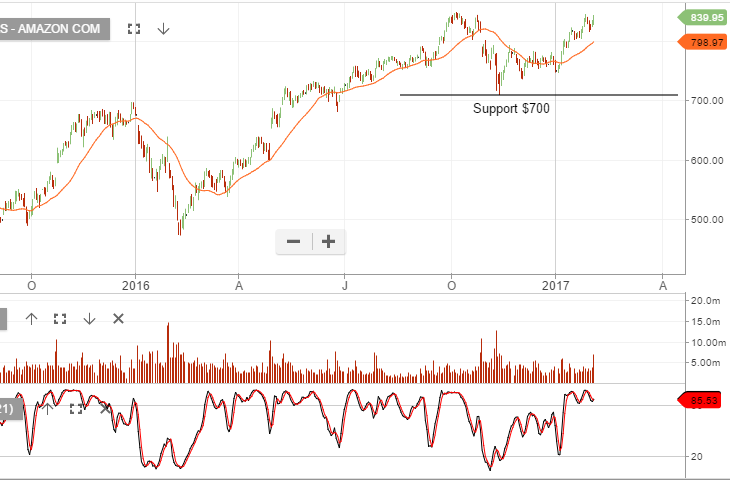
Shares of Amazon are down over 4% to $805.40, in after-hours trade, as negative Q1 revenue guidance overshadowed a solid Q4 earnings report.

Q4 earnings were announced at $1.54 per share versus a consensus of $1.35 per share. Q4 revenues came in at $3.5 billion versus $3.6 billion, which reflects a 47% increase on a year-on-year basis.

The Q4 revenue miss disappointed shareholders, but the Q1 guidance miss is what is really driving the stock price lower.

The company gave Q1 guidance in the range of $33.25 to $35 billion, lower than the expected range of $34.52 billion to $36.95 billion.

Key chart support for Amazon is now seen at or near $700.00.

Chart – Amazon

Visa Hits All-Time High After Q1 Results

Q1 earnings results for Visa Inc. beat expectations on both the top and bottom lines.

Visa posted earnings of 86 cents per share on Q1 revenues of $4.5 billion. Analysts’ expectations were for earnings of 78 cents per share on Q1 revenues of 4.278 billion, the higher revenue number reflects a 25% increase on year-on-year basis.

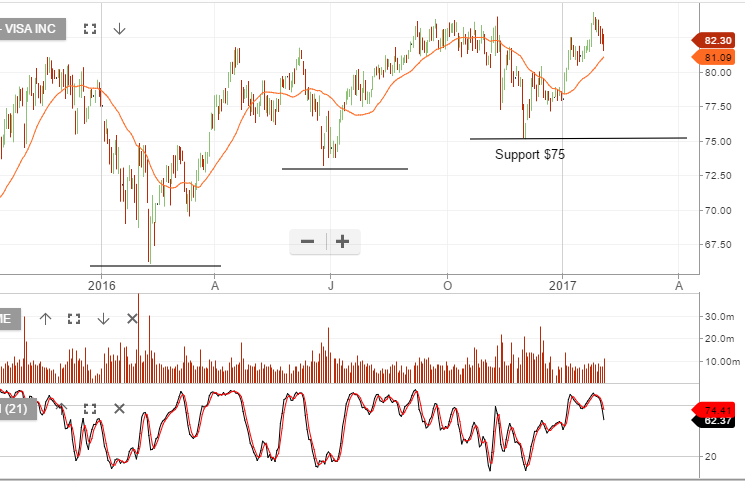
Visa shares have rallied over 3% today to an all-time of 85.40 as payment growth came in at $1.9 trillion, up 47% on a year-on-year basis for the three months ending September 30, 2016.

Looking ahead, Visa affirmed its positive outlook with annual net revenue growth expected in the 16 to 18% range for 2017.

Tabcorp – Value Emerging


Tabcorp is a relatively defensive income opportunity for portfolios, with earnings supported by potential synergy savings after the Tatts integration.

The company continues to progress the merger proposal with Tatts and the ACCC is scheduled to release its statement of issues on the 23rd of February.

By applying a covered call option, we’re able to allow 5 – 10% capital growth from the current price, whilst still generating 10%+ in annualised cash flow from the dividend and call option income.

We expect modest earnings growth into FY18, which will place the stock on a forward yield of 5%. TAH goes ex-div on the 7th of Feb paying out $0.125

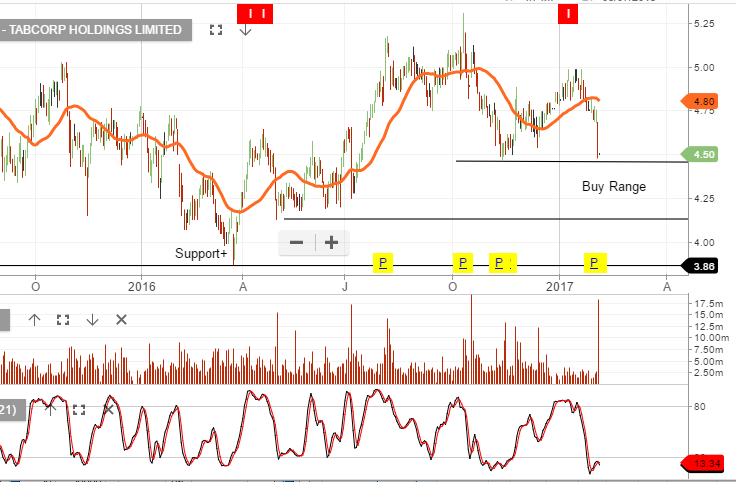
Our buy range for Tabcorp is between $4.20 & $4.50.

Chart – Tabcorp