US Macro

Over the last few months, it’s become evident that FED Chair Janet Yellen, along with other voting FOMC members, have placed more emphasis on the wages and unemployment components of the labor matrix, and less emphasis on the new jobs in reference to their “data dependent” analysis of the overall US economy.

However, after last Friday’s shocking 38,000 new jobs on the headline Non-Farm Payroll (NFP) number, it’s likely that Ms Yellen will make some direct reference to the data miss when she speaks at the World Affairs Council today in Philadelphia at 12:30 NY time.

After Friday’s steep sell off in the USDX, FX investors will be listening for comments which clarify whether the FED chief is looking at Friday’s report as an outlier, and not consistent with the vast majority of economic indicators, or as a signal that Q2 growth will not rebound as briskly as expected.

Our base case has been that a June rate adjustment was not particularly likely given the proximity to the UK referendum and the fact that FED officials have very little stomach for taking controversial positions. However, given the broader economic information set, we are reluctant to rule out a July rate hike and see no compelling reason not to expect the weakness in the May report to be a statistical fluke; which is not uncommon from the Bureau of Labor Statistics.

For example, In March of 2015 the headline NFP number was 84k, in December, 2013, there were 45k jobs created and in April 2012 job growth fell to 75k. In none of these cases did the disappointing headline number signal the end of the economic or labor cycle. In fact, in two of the four examples given, the following month’s headline NFP jobs growth was over 200k.

As a labor economist and experienced FED Governor, Ms Yellen will likely look past the noise of high frequency data and focus on the underlying positive growth signals. From that perspective, very little changed last Friday. Less than two weeks ago, Ms Yellen acknowledged that it might be appropriate to raise rates again in coming months. Without being too specific, if she simply maintains that type general assessment, it would be sufficient to keep the July FOMC meeting alive.

As such, with the ECB still expanding their QE and the Japanese economy still contracting, once the dust settles from last week’s terrible NFP report we expect the USD to re-emerge as the cleanest shirt in a dirty pile and recover last week’s losses.
AUD/USD

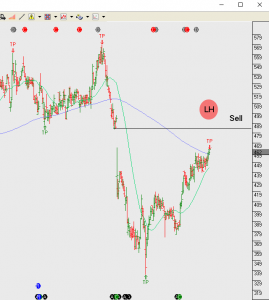
The string of weaker Australian economic data came to an abrupt stop this week as both the GDP and Trade Balance data printed better than expected. And while the internal components of the reports weren’t as strong, the AUD/USD has had a bid tone all week. Our trade suggestion is to sell into the rally.

US Macro

Foreign Exchange investors who were looking for clarity from yesterday’s ECB policy announcement would have been disappointed as comments from Mario Draghi failed to drive the single currency beyond recent ranges. Although the EUR/USD posted a 1 week high of 1.1220 prior to the meeting, the pair gave up those gains after the press conference to settle at 1.1150 at the NY close.

And while the ECB officials didn’t say anything particularly negative about the financial conditions in the European Union, the reiteration of more possible stimulus, expansion of the current QE operations and fears over a “Brexit” vote was enough keep many traders on the sidelines.

Looking ahead to today’s US Non-Farm payroll report (NFP), there is a strong possibility that the recently settled Verizon strike could skew both the headline jobs growth number as well as the average hours worked components of the report.

The Verizon strike affected close to 40,000 workers at the Telco giant, but employment growth should still be strong enough to confirm a tightening labor market and support recent FOMC views that the FED is close to lifting the FED funds target soon.

According to a Reuter’s survey of economists, NFP likely increased by 165k in May after rising 160k in April. The jobless rate is forecast to drop by one-tenth of a point to 4.9%. The same report last week suggested that the month-long strike could slice 35,000 jobs from the headline number and without the strike employment for May would have risen to close to 200k.

The striking workers, who returned to work on Wednesday, were statistically regarded as unemployed since they did not receive a salary during the payrolls survey week.

On balance, it’s likely that as long as the hourly wages data prints in the positive .2% area and the unemployment rate is reported at 5.0% or lower, market participants will accept the report as consistent with a pick up in US growth in Q2 and support recent USD gains. In this sense, we suggest that there could be an asymmetrical response to a better-than-expected headline number.

AUD/USD

The down move in the AUD/USD, which started on April 21st, doesn’t look as though it has run its course. Tuesday’s Building Approvals and Current Account data will be closely watched for a turn in the recent string of weaker data. Both sets of data are forecasted lower and it’s likely that last week’s low of .7140 will be challenged on “as expected” readings.

US Macro

The three week rally in the USD Index continued on Friday as FED chief, Janet Yellen, endorsed the notion of higher US rates in “coming months” and that growth in wages has finally caught up to the growth in the general labor market.

The shift in expectations for the resumption of the FED’s normalization of US interest rates has played an integral role in the recovery of the USD. And while a few FED officials have pointed to the UK referendum on June 23rd as a foreign threat, there have been several recent changes to open market pricing which suggest the FOMC is ready to move on rates sooner, rather than later.

As a rule of thumb, FX traders look at the short-end of the Treasury yield curve to gauge whether the trajectory of rates is suitable for a lift in the Federal Funds rate. In this respect, the implied yield of the August FED Funds futures contract has risen by 15 basis points since May 1st, while the US 2-year note yield has moved 20 basis points higher over the same period.

These data are widely published and fairly easy to follow even for novice investors. However, since the FED began its tapering operations back in October 2014, one of the most fundamental perquisites of the normalization process has been a contraction in the FED’s balance sheet.

The main open market policy tool for the FED to drain excess reserves from their balance sheet is called a Reverse Repurchase agreement, or “reverse REPO.” Since these agreements are transacted directly between the FED and FED approved commercial banks, the data can only be sourced from the Federal Reserve website and after the agreements are transacted.

As a point of reference, from October 2015 until the FED lifted the FED Funds target on December 16th, reserve balances at the Fed fell by $180 billion. Since the end of March 2016, reserve balances have fallen by over $120 billion; largely from reverse repos. And while this is not as large as the decrease that took place before the December normalization, it appears significant enough to claim that the FED does seem to be preparing for an upcoming increase in the Federal Funds target range.

As such, we suggest a long USD bias over the medium and longer term as the divergence of the US rate trajectory continues to move away from the rest of the G-7 Central Bank policies.