ALGO Update: Sell Signal In QRE

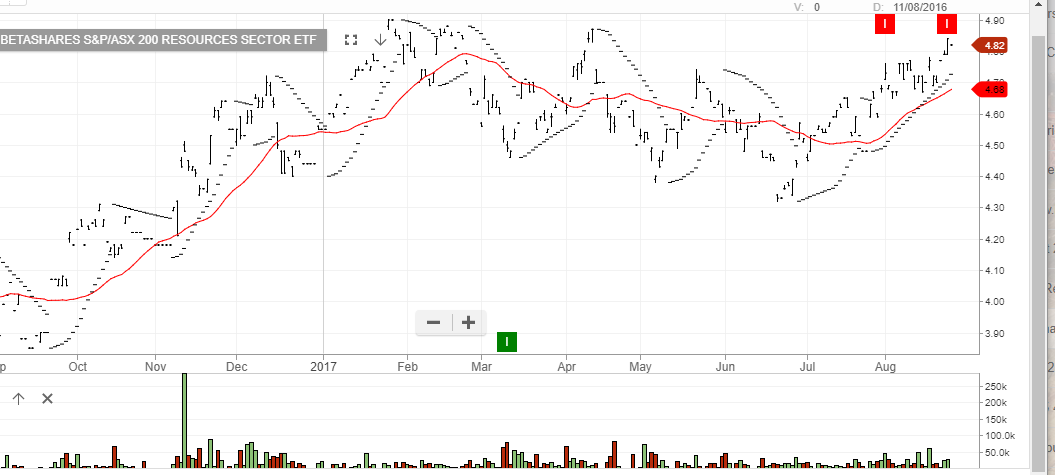
Our ALGO engine triggered a sell signal in the BetaShares Resource ETF with the symbol QRE at $4.85.

QRE is comprised of 10 ASX stocks which include BHP, Bluescope Steel and Caltex. The weighting is such that BHP, RIO and WPL make up over 50% of the ETF pricing.

Frequent blog readers will remember that we had a generally bullish outlook on the resource sector back in mid-March, and advised clients to buy QRE in the $4.50 area and BHP in the $22.50/70 price range.

We now agree with the ALGO engine that the resource names look fully valued overall.

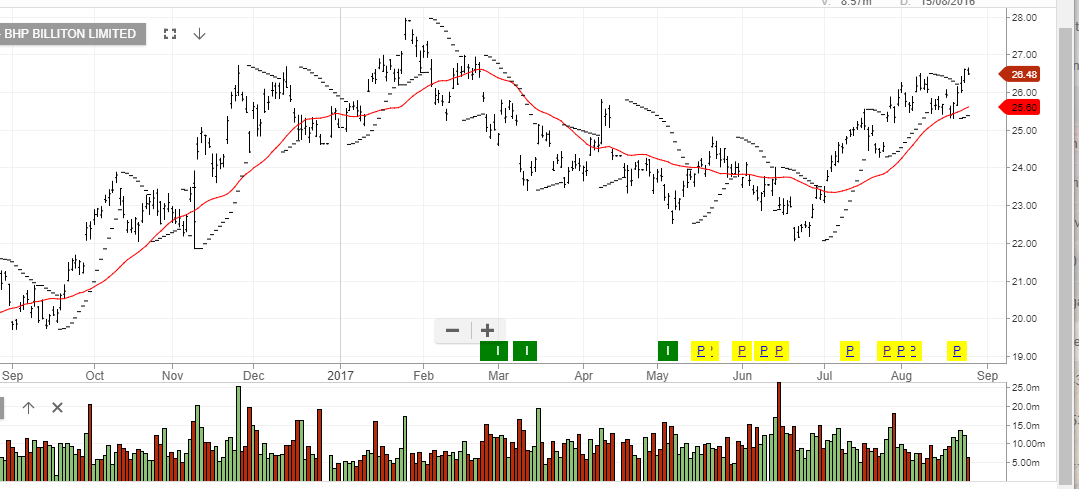
We suggest that investors who are holding BHP can either take profits in the $26.25/50 area, or write covered calls at $26.50 into November to enhance portfolio returns.

BetaShare ASX Resource ETF: QRE


BHP

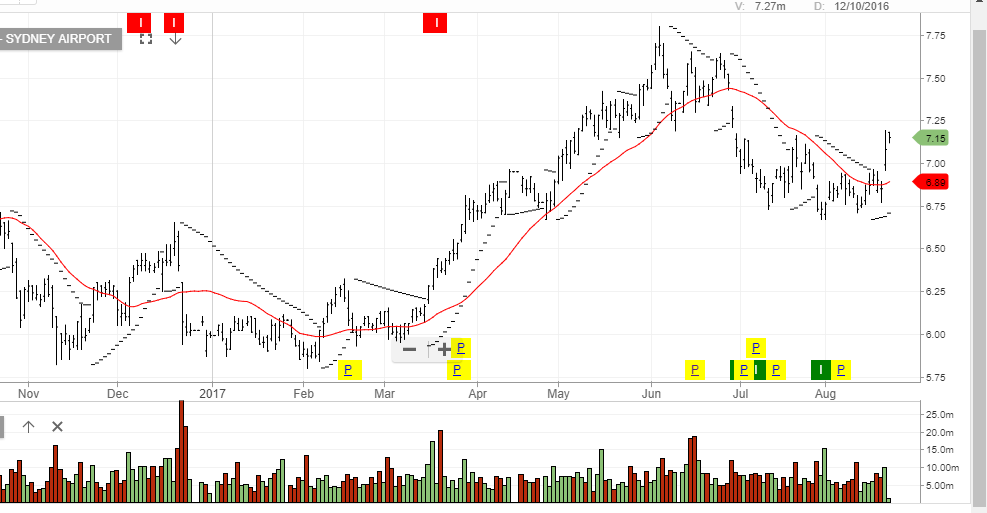
SYD Nears Resistance At $7.30

Shares of Sydney Airports (SYD) are still well bid over $7.00 after the company announced 1H17 results, which included EBITDA of $577 million , cash flow of $383 million and an upgraded dividend guidance from 33.5 cents to 34.5 cents for calendar  year 2017.

This strength  in cash flow and increased dividend puts SYD on a dividend yield of 4.9%.

We expect strong price resistance in the $7.30 area and consider the stock expensive in the $7.30/50 area.

Considering the extended market conditions, in general, we prefer a at-the-money  buy/write strategy for SYD to enhance portfolio returns on a stock with modest upside potential.

 Sydney Airports


OSH Finds Support After 1H Earnings

Shares of Oil Search got as lift yesterday as the company announced 1H17 results, which included an underlying NPAT of USD129 million and a higher-than-expected dividend of USD 4 cents per share.

Total profit increased to AUD7.30 per share. OSH management also tightened guidance towards the higher end of production, and the lower end of costs and capital expenditure for the calendar year 2017.

The company expects the PNG LPG yearly production rates over 8.6 metric tons per annum, which is the top end of the last year’s guidance.

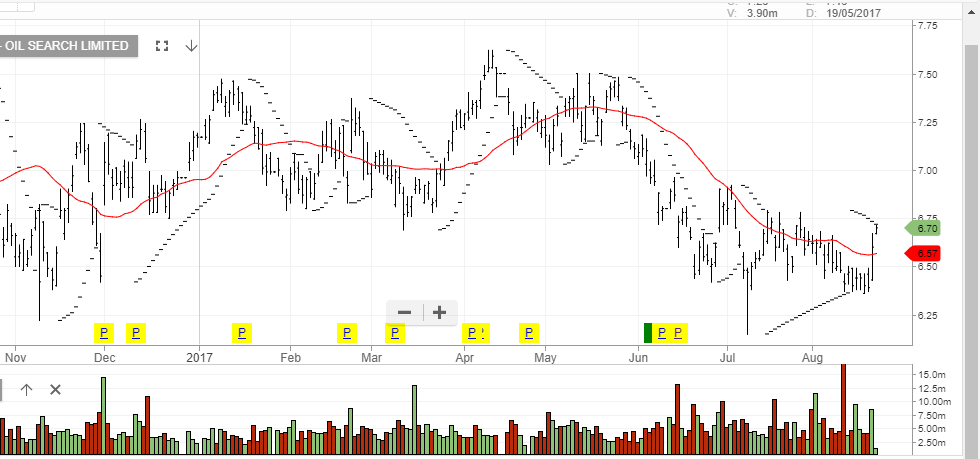
OSH shares have lost over 15% since trading at $7.50 in mid-April.

We see scope for a medium-term lift from the $6.30 support area, but would consider the company a buy/write opportunity at current levels.

 Oil Search


Dark Clouds Forming Over Wall Street

Up until last week, US Stocks had spent the last five months gradually moving higher, without many big daily gains or losses.

They had drawn strength from rising U.S. corporate profits and continued growth in the economy, along with recoveries in Europe and other EM regions.

It’s clear that investors still believe that if the global economy or equity markets ran into serious trouble, G-7 central banks would step in to help, just as they did after the 2008-09 global financial crisis.

Given the historically low volatility measures in the markets, it’s not surprising that on August 7th, a small 52 point rally  (essentially all from Apple Inc) brought the Dow Jones 30 Index to its newest milestone of 22,062.

But this new record high belies the growing unevenness of the index.

Shares of Boeing, McDonald’s and health insurer United Health have contributed more than 700 points of the 1,000 points the Dow has gained since March 1, when the index topped 21,000 points for the first time.

This means that 10% of the components of the Dow index have been responsible for 70% of the overall gains over the last five months.

Meanwhile, Goldman Sachs and IBM, which helped lead the Dow’s surge in late 2016 and early 2017, have come crashing back to earth and are currently the worst performers in the Dow index this year.

A 1,000-point rally in the Dow 30 isn’t what is used to be a few years ago. As the index trades higher, each round-number milestone represents a smaller percentage move.

When the Dow advanced from 10,000 points to 11,000 points in early 1999, it was a 10% rally. By contrast, the move from 21,000 to 22,000 translates to a gain of just 4.8%.

The Dow index is more than 120 years old, and experts and market-watchers constantly debate how accurately it represents the overall health of the market. With only 30 companies in the index, the Dow reflects much less of the broad economy than the Standard & Poor’s 500 index, the NASDAQ or the Russell 2000, which institutional investors pay more attention to.

From a technical perspective, Dow points are also based on the individual stock price instead of the relative value of the company.

So a 1% move for an expensive stock like Boeing or Goldman Sachs, both priced well above $200 per share, will move the Dow Index more than Microsoft, worth around $70 per share, even though Microsoft has a capitalization of more than $550 billion compared to about $90 billion for Goldman Sachs.

This type of internal price dispersion is not limited to the narrow Dow 30 Index. Internal price dispersion has now become apparent in the SP 500 Index, which, as a much broader index, has much more significant ramifications for future share price valuations.

For example, a growing proportion of individual stocks in the SP 500 are now priced below their respective 200-day moving averages, with just a handful of names carrying the index higher over the last few months.

 This widening divergence in leadership, (as measured by the proportion of individual stocks hitting  new highs versus new lows), is not a bullish indicator for US stocks going forward.

The chart below illustrates the percentage of U.S. stocks above their respective 200-day moving averages, compared with the S&P 500 Index. The deterioration and widening dispersion in market internals is no longer subtle and points to price momentum turning lower.
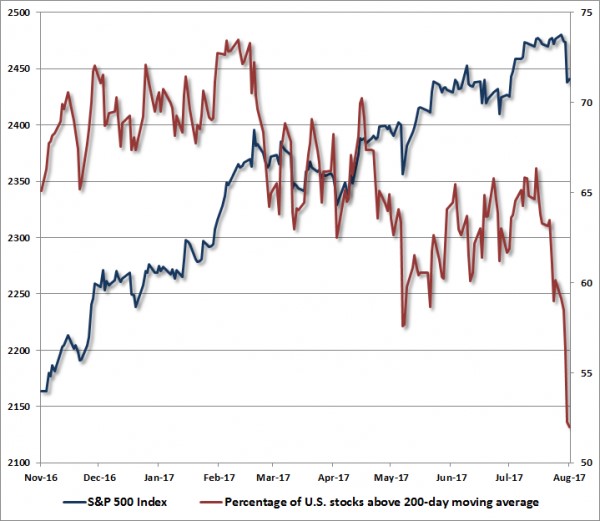
Further, this degree of dispersion suggests that not only is risk-aversion rising, it is also picking up pace.

Across history, this sort of shift in individual share prices, coupled with extreme overvalued P/E’s and over-bullish sentiment, has been the hallmark of major price peaks and subsequent market corrections.

Looking across the financial landscape, we see several other potential triggering events which could signal a material correction in global equity markets. Of these potential market inflection points, five stand out as troubling and worth noting.

  1. Debt Ceiling
  2. Bubble level PE’s
  3. Maximum Financial Engineering
  4. China Asset withdrawal and structured product issues
  5. US credit cycle deteriorating – credit cards, autos.

Within this list, the most severe market event would be the failure of the US Congress to raise the debt ceiling in time to prevent a shutdown of the US Government: this event caused 16% drop in the US SP 500 in 2011, as referenced in our August 14th blog report titled “Black Monday 2011, revisited.”

On August 1st, the US Treasury Department announced that the debt ceiling, (the statutory limit of outstanding debt obligations that the federal government can hold),  must be raised by September 29th.  After lawmakers return from their summer break, that will give Congress 12 working days to pass legislation to get to President Donald Trump’s desk.

If this deadline is breached, it could lead to disastrous consequences for the Federal government, the US economy, and the global financial system. If the debt ceiling is not raised, the US government would lose the ability to pay bills it already owes in the form of US Treasury bills and could lead the US to default on some of that debt.

The possible fallout from a default, according to a recent study by the Treasury Department, would include a meltdown in the stock and bond markets, a downgrade of the US’s credit rating and the undermining of the full faith and credit of the country.

It’s our base case that despite the potentially dire consequences, there is some confidence but no guarantee that factions in Congress, with a variety of competing interests, will be able to come together on a deal to raise the limit.

And even though the US Government has raised the debt ceiling 78 times over the last 57 years, the political uncertainty in Washington is making investors realize that the chances of successfully negotiating the debt ceiling legislation without a Government shutdown are dwindling.

Institutional investors in the US Credit markets have already started pricing in a Government financial disruption as illustrated in the spike in US credit default risk and the inversion in the US T-Bill curve.
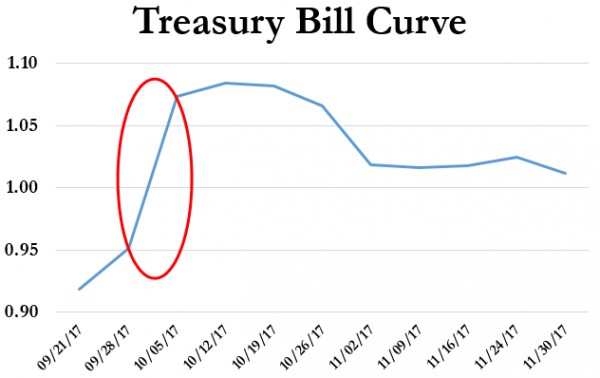
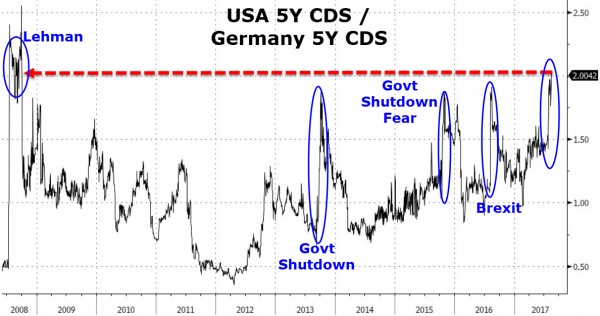
Unfortunately, based on recent  negotiations for Health Care and Tax reforms, the Congress has not proven that it’s lawmakers are motivated to do what’s best for the American people, or that it can get anything done.

What’s more, the debt ceiling debate is likely to become ultra-politicized with special interest spending provisions attached to the final legislation.

This confluence of internal share price dispersion, combined with the backing up of risk aversion in the short-term credit markets, alerts us to a market condition which could lead to profound disappointment for investors.

All of our key metrics of expected market risk/return prospects are unfavorable at current market levels.

Some market commentators have projected that the SP 500 will complete the current re-pricing cycle at an index level up to 60% lower, or in the low 1000 handle. Our research doesn’t point to a level that low, but we do believe the market has scope for a 20% correction over the next three months.

As such, we strongly urge our clients and subscribers to examine all of your investment exposures, and ensure that they are consistent with your actual investment horizon and tolerance for risk.


BHP Rebounds From Last Year’s Losses

Shares of BHP are up over 1% in early trade as the mining giant announced a USD 6.73 billion full year profit and declared a final dividend of 43 cents per share, which lifts the full-year dividend to 83 cents per share.

Higher prices for both Iron ore and Coking Coal helped contribute to the improved performance over the course of the year.

The company also announced that it wants to sell off its US Shale oil assets, as they have not performed to plan.

In our blog update from July 26th, we suggested that investors could sell European-style call options at the $26.00 strike price into November.

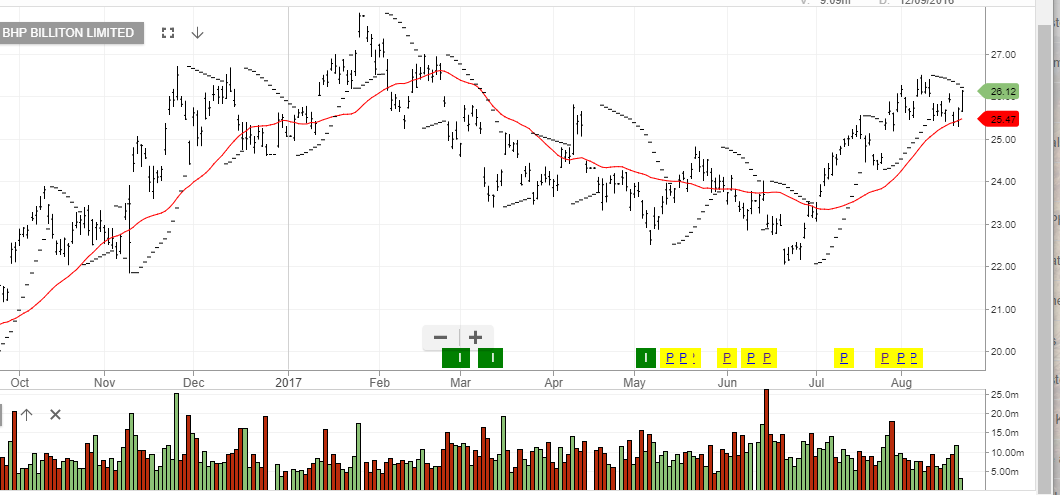
We still see limited upside to BHP above $26.50 and repeat that suggestion to enhance portfolio returns for investors holding BHP shares.

BHP


Fortescue Shares Higher On Positive Earnings

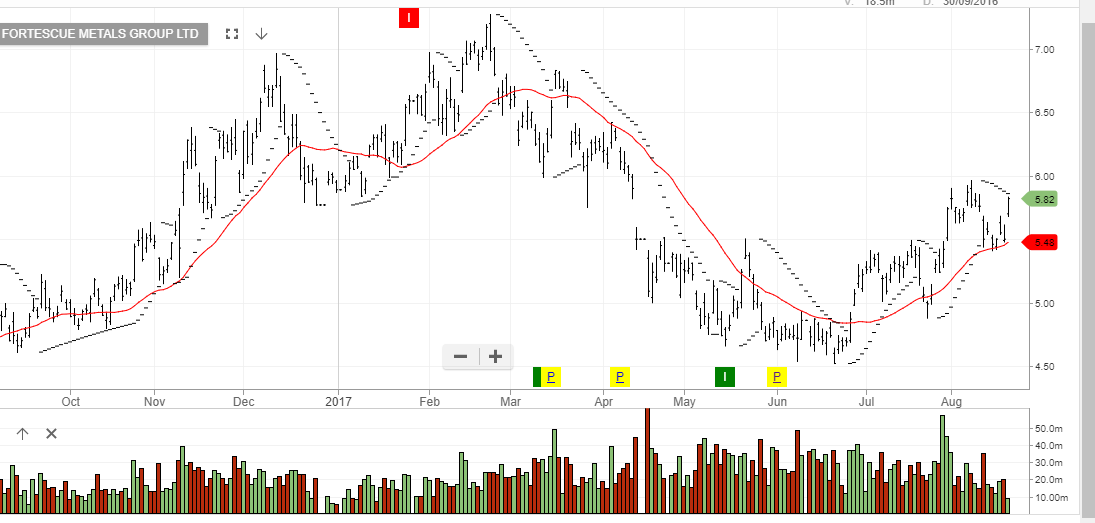
Shares of Fortescue Metals Group opened firmer as the Iron Ore miner more than doubled its net profit to AUD 2.7 billion and pledged to pay shareholders a bigger dividend going forward.

FMG will pay a final, fully franked dividend of 25 cents per share, which pencils out to 52% of the company’s net profit after tax. The full year dividend was announced at 45 cents per share.

Looking into next year, FMG announced it would increase its dividend guidance to a range of 50 to 80% of net profit after tax.

We feel that the share price will run into resistance around the $6.10 level and aren’t buyers at these levels.

While Iron Ore has had a respectable price rebound off the $54.00 low posted in June, we don’t expect a protracted move higher back into the $80/82.00 range, which will temper the profit outlook for FMG.

Fortescue Metals Group


Gold Tops $1300 Intra-day

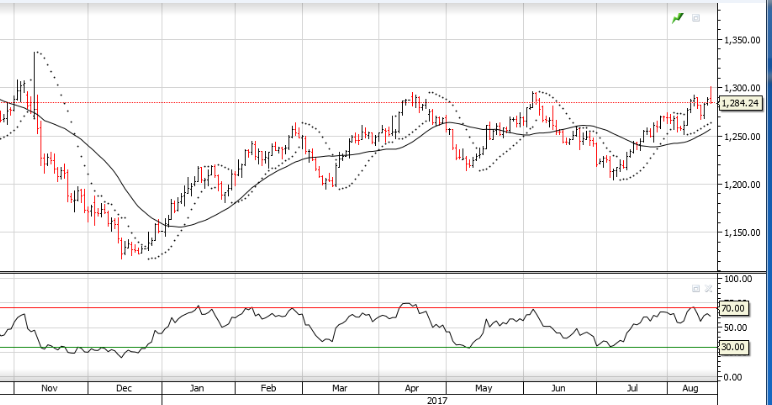
Gold prices touched their highest intra-day level of the year on Friday, temporarily topping $1,300 an ounce before pulling back to settle unchanged on the day.

Gold had traded up to $1,303 for the first time in 2017, getting a lift from safe-haven demand on the back of weakness in global equities, a terrorist attack in Barcelona and concerns about President Trump’s pro-business political agenda.

Despite the late pull back into the weekend, the technical picture in Gold looks constructive. On a “measured move” basis, the break above $1300 points to the November highs near $1340.00 as the next area of resistance.

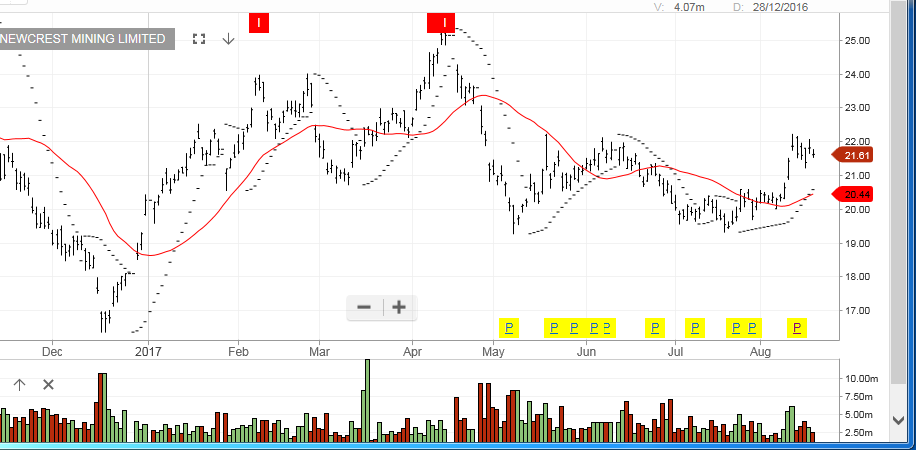
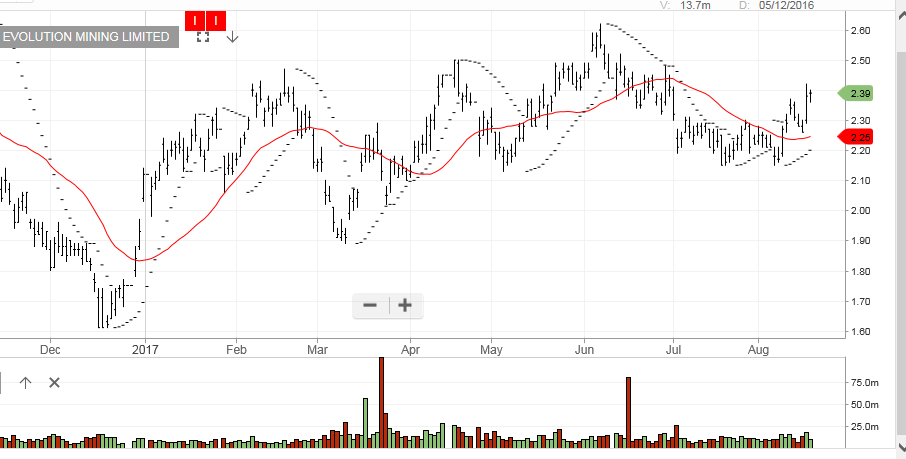
We still prefer the long side of NCM, along with smaller-cap miners EVN, SAR and NST.

Our medium-term price target for NCM is $23.10 and $2.80 for EVN.

Spot Gold

Newcrest Mining

Evolution Mining

Telstra Shares Drop On Headline Profit Numbers

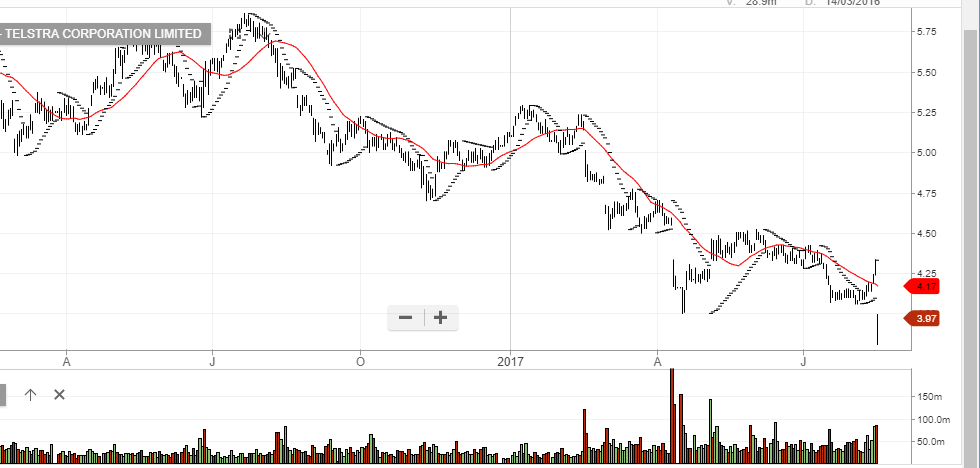
Shares of Telstra have touched a 5-year low near $3.82 in early trade.

Prior to today’s ASX open, the telco giant announced lower profit numbers and a reduction of the current year dividend from 31 cents to 22 cents.

In addition to the ordinary dividend next year, Telstra chief, Andy Penn also announced that the company would return up to 75% of one-off NBN receipts to shareholders via fully-franked special dividends over the next 12 months.

Further, Mr Penn gave an overview of the potential to monetize its NBN payments to support a “capital management” plan to “enhance shareholder returns”, most likely through a series of share buy backs.

With Telstra shares trading at $4.20, a 22 cent yearly total dividend pencils out to a 5.2% yield plus franking credits.

Our base case is that the domestic telco technology sector will continue to show above trend growth relative to peer sectors.

We expect Telstra’s leaner business model will contribute to the company’s profit potential over the next year.

We consider the share price oversold relative to fundamentals and prefer the long side from these levels.

Telstra


ETF Watch: Aussie Dollar Pushed Lower After RBA Comments.

Comments included in the RBA minutes about the level of the Aussie Dollar were the catalyst for the 1.0% drop in the AUD/USD overnight.

The central bank doubled-down on their concerns that the recent rise in the currency has hindered exports and been felt in domestic consumption data.

Internal momentum indicators are pointing lower as the price support level at .7825 was broken in late NY trade.

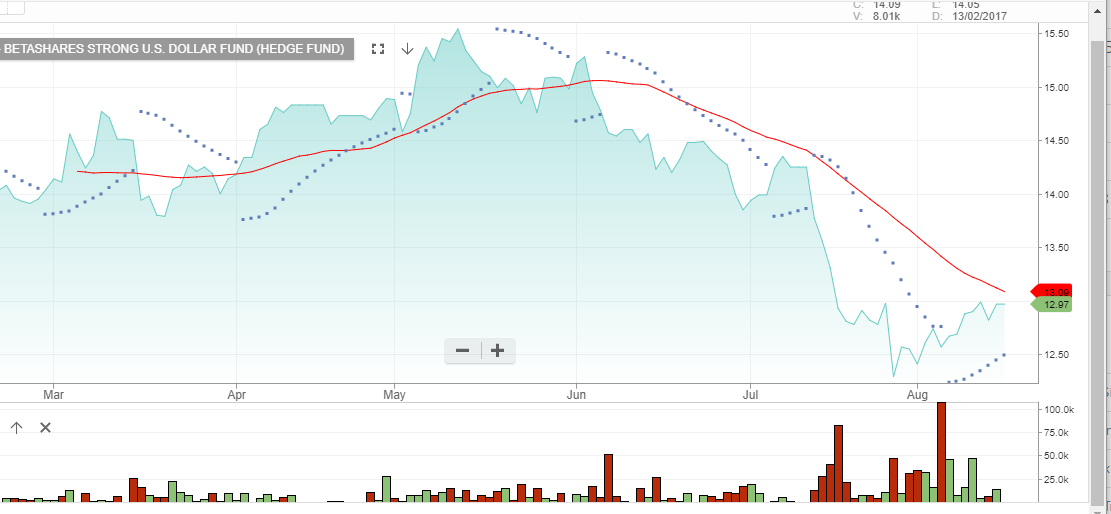
Investors looking to profit from the AUD/USD trading lower can look to buy the BetaShare ETF with the symbol: YANK.

YANK is an inverse ETF, which means the unit price increases as the price of the AUD/USD decreases.

YANK also has a 2.5% weighting, which means a 1% change in the AUD/USD will correspond to a 2.5% move in the unit price.

The current price of YANK is $13.05. We calculate that when the AUD/USD trades back to the January low near .7300, the unit price will trade at $16.75.

BetaShare


ALGO Update: Buy Signal In AMP

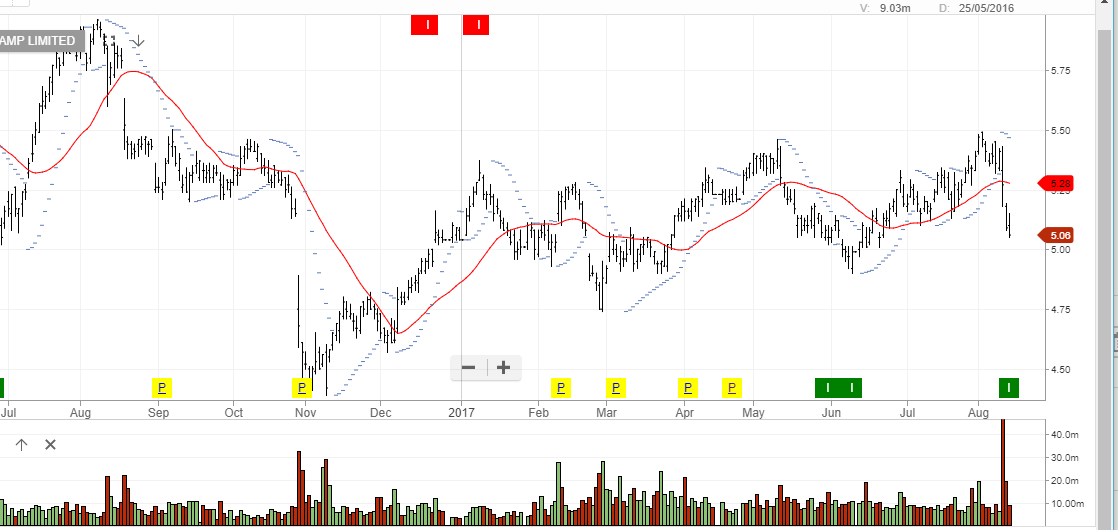
Our ALGO engine triggered a buy signal in AMP at $5.06 going into yesterday’s ASX close.

Since posting a tepid earnings report on August 10th, AMP shares have dropped from $5.45 down to yesterday’s low of $5.05.

The ALGO picked up on the “higher low” pattern since the initial support at $5.00 held and the recent low at $4.90 was not challenged.

Taking into account the earnings report showed revenue up 25% to $7.6 billion, and the interim dividend was lifted 4% to 14.5 cents, we see scope for some capital appreciation in the AMP from these levels.

Investors should look at placing a stop-loss order just under the June 9th low of $4.90.

AMP