US Banks Expand Share Buy-Back Plans

A week after the FED announced that 33 of 34 major US banks had passed their financial stress-tests, the banks have released their revised share buyback and dividend plans.

Analysts had estimated that positive stress-test results would open the way for banks to boost dividends and share buybacks by up to 25%, which could translate to about $30 billion back to shareholders through higher dividends and share prices.

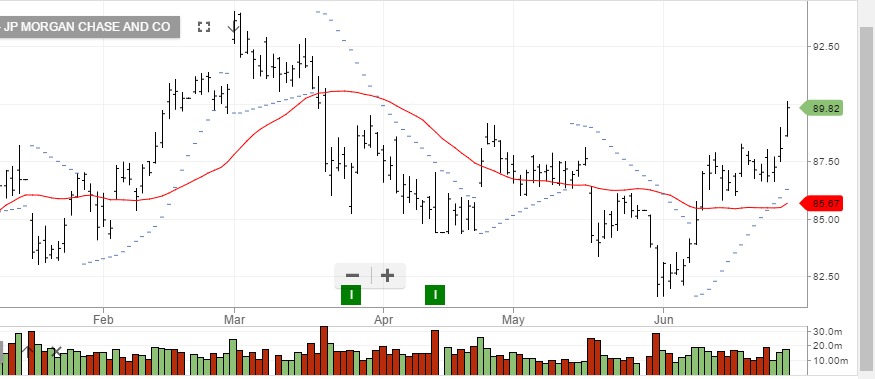
Some of the specific plans include Citi-Group buying back up to $15 billion in shares and increasing their dividend to 32 cents per share, and JP Morgan buying back up to $19 billion in shares and lifting their dividend from 50 cents to 56 cents.

While these announcements were bullish for the share prices today, a longer-term valuation question is: How are the major US banks going to maintain these share and dividend levels?

Against a back drop of lower loan creation, thinner margins and increased bad loan provisions, we’ll track the recent price action and see if the bounce from the recent lows will be sustainable.
JP Morgan


Rotation Out Of Banking Stocks

Since Treasurer Scott Morrison announced a banking levy in the May 9th budget, banking stocks have been sold off across the board.

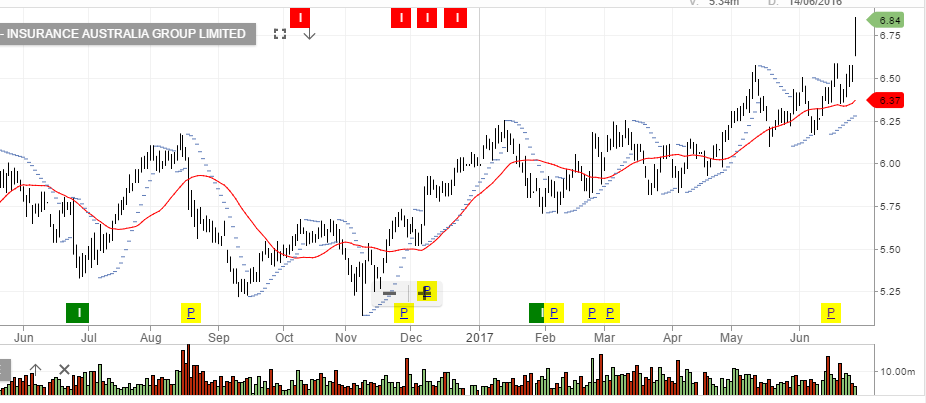
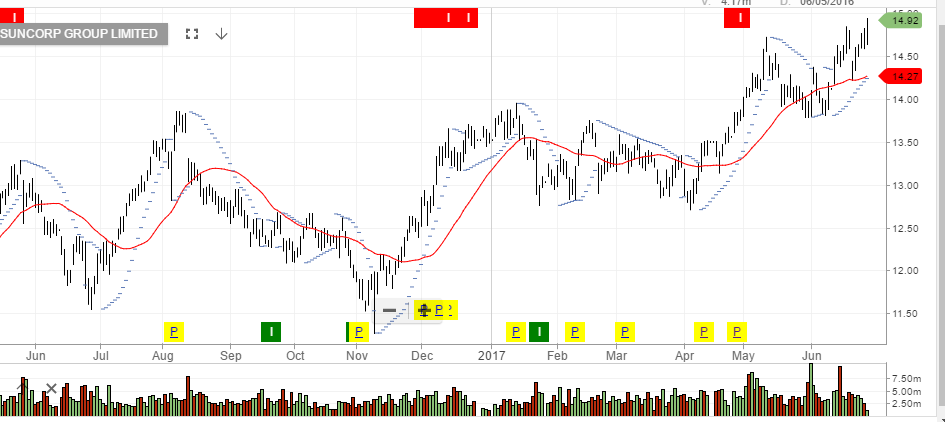
It’s become clear that a fair percentage of this investment flow has rotated into the local Insurance names with IAG and Suncorp both posting material gains since early May.

We hold both of these stocks in client portfolios and they are now up 12% and 8% since mid-May, respectfully.

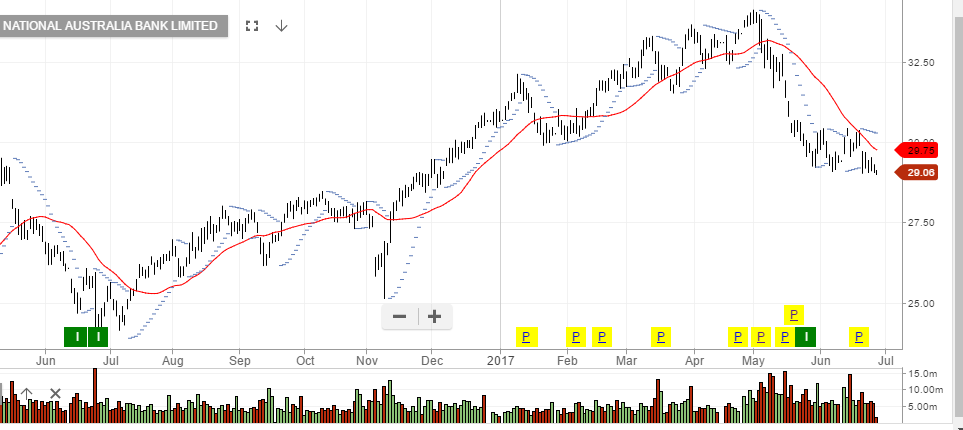
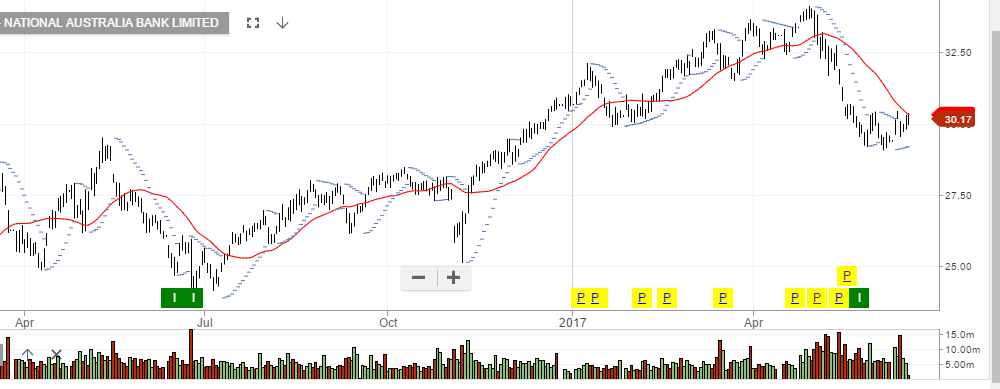
With respect to the re-valuation in the banking shares, NAB has posted a fresh low at 29.00 in early trade today.

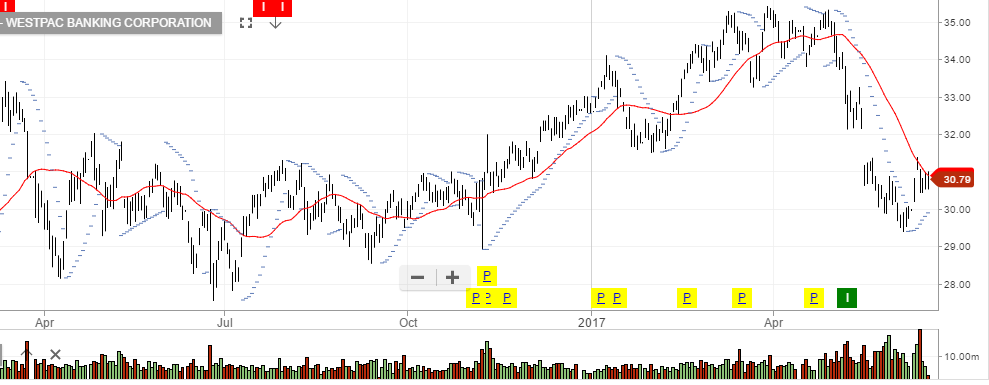
Both WBC and ANZ are approaching the lows posted in early June, while MQG and CBA have held up better but are still pointing lower.

On balance, we continue to expect to see rotation out of the banking names to the benefit of the insurance stocks.

IAG

Suncorp

NAB

US Update: Divergence In Market Breadth

As the SP 500 continues to trade near all-time highs, market analysts are reviewing various metrics to determine whether US Stock prices have more upside, or if they are ready for a downside correction.

One of these metrics is “Market Breadth.” Market breadth is a technique used to gauge the direction of the market by measuring the number of stocks trading higher versus the number of stocks moving lower

“Positive” breadth occurs when more stocks are moving higher than lower and vice versa for “negative” breadth.

The breadth numbers are used to determine whether the market has positive momentum or negative momentum.

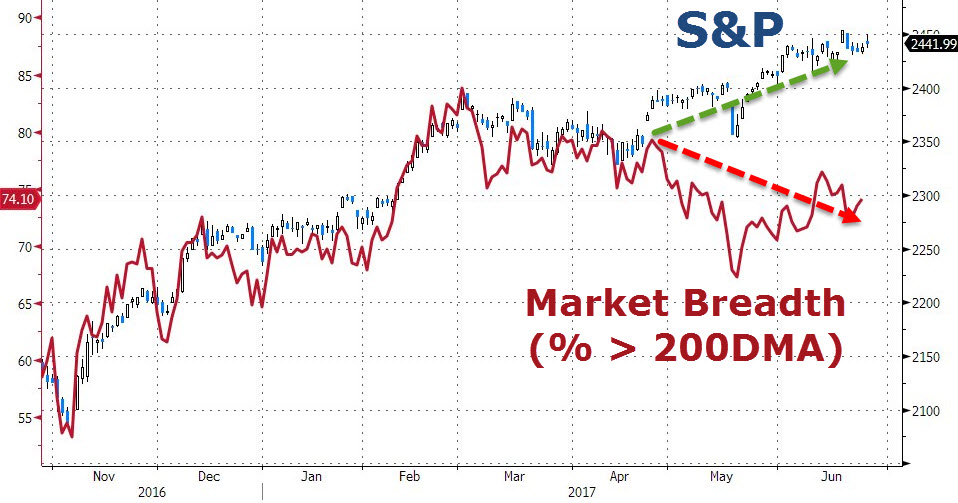
The chart below shows that the SP 500 and market breadth have been diverging since late-April.

To put this divergence into perspective, as of last Friday, nearly 40% of SP 500 stocks were trading below their 200-day moving averages. In addition, 6% of the stocks listed on the NYSE hit new 52-week lows last week.

We will watch these measures closely to see if the current market pricing is resolved to the upside, or if the US Indexes commence a correction lower.

SP 500 vs Market Breadth


Gold Update: Looking For Higher Prices

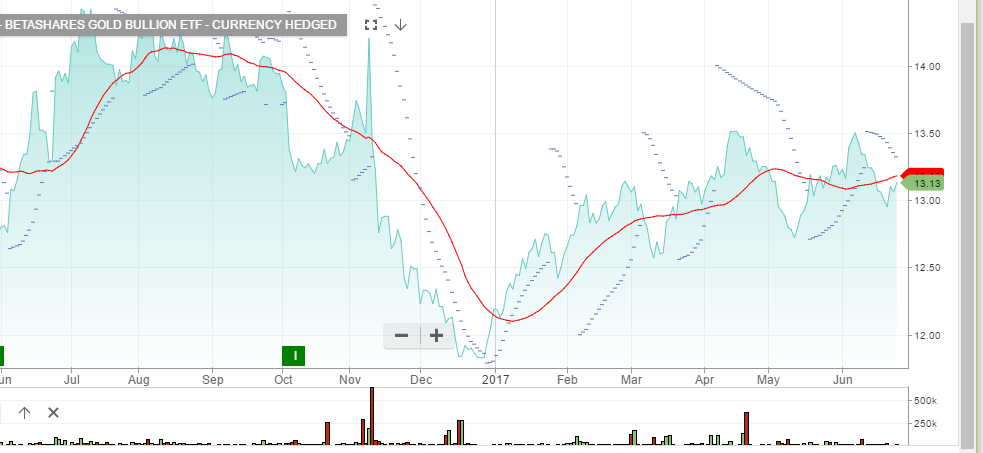
On June 8th, we posted a report on Gold just as the spot price was about to break back above $1300.00 for the first time since last November.

Instead, the yellow metal failed at resistance and has rotated lower finding support at the $1240.00 level.

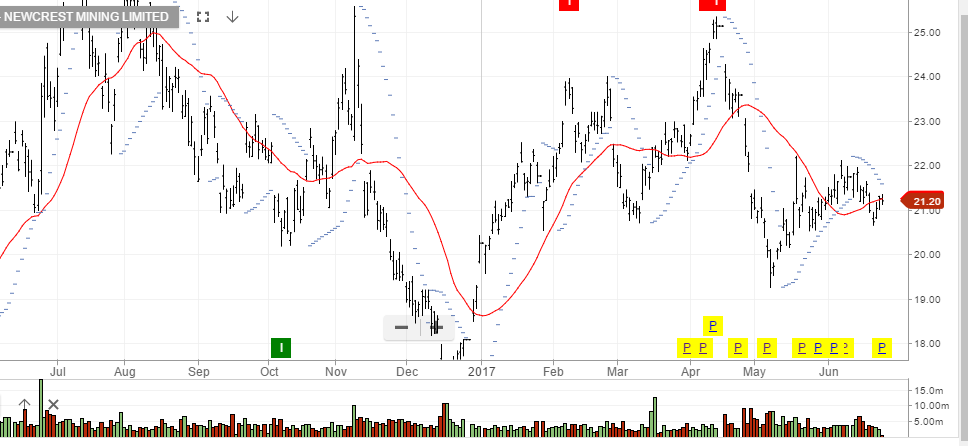
In that same report, we commented on how the share price of NCM was lagging behind the spot price due to supply concerns from the idle Cadia mine in NSW.

At this point, the spot Gold price and the share price of NCM seem more in sync with both slowly moving back above key resistance levels.

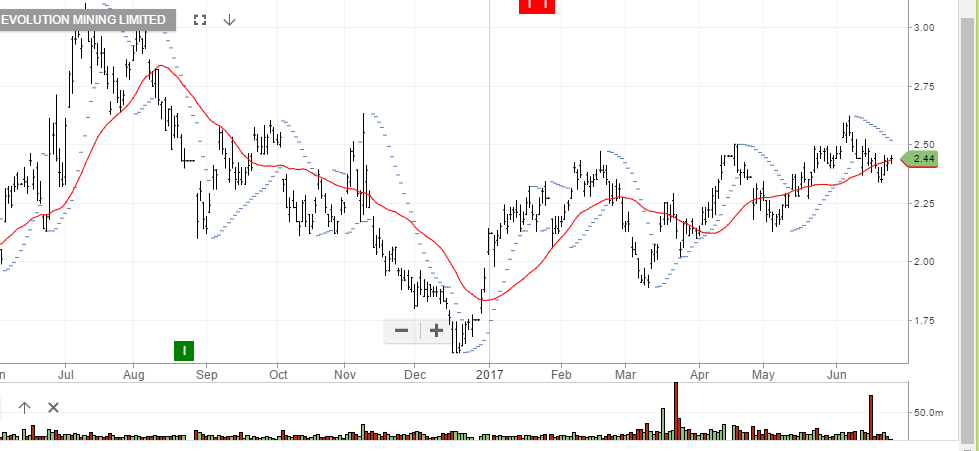
With local stock valuations still very high, we suggest investors look to increase exposure to Gold. We recently took profits in EVN at $2.50 and will look to re-position over the near-term.

We also suggest investors can look to buy the BetaShare Gold ETF with the symbol: QAU.

Newcrest

Evolution

BetaShare Gold ETF: QAU

Downside Risk For MQG

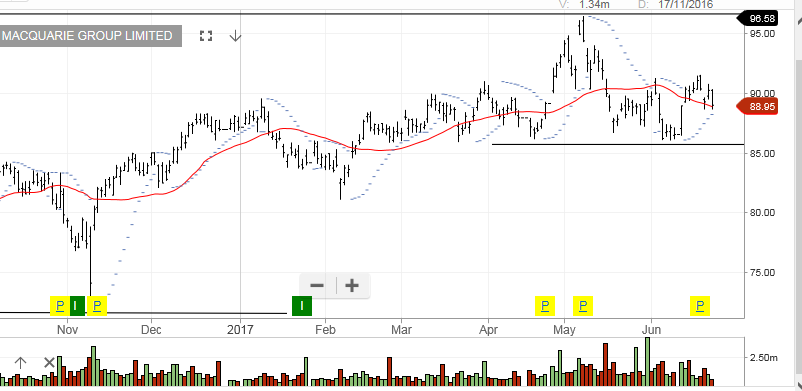
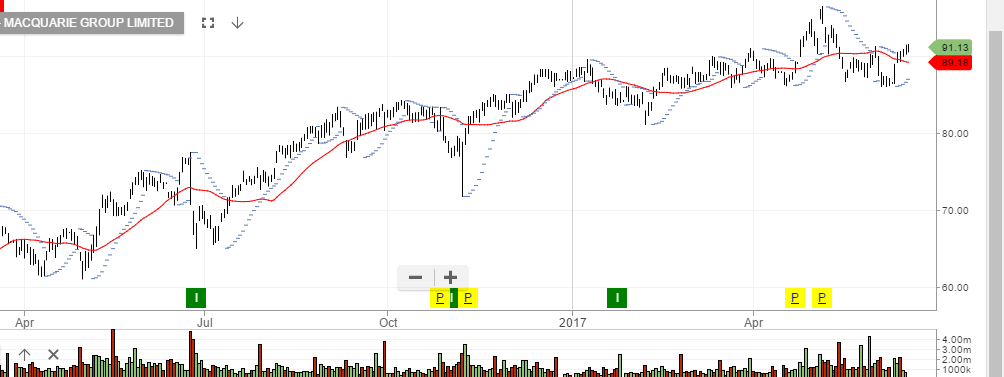
Shares of MQG lost over 2% for the week as internal momentum indicators are now rolling over into negative territory.

In addition to the negative technical picture, MQG faces a major class action suit over allegations some of its investment advisers artificially inflated the price of a small mining company before a sudden collapse wiped out many of its investors.

According to an article in the Sydney Morning Herald, the investment bank’s brokers are accused of deliberately “ramping” stock in Cleveland Mining Group: a Brazilian iron-ore mine project with a potential value of $34 billion that turned out to be a “worthless patch of jungle.”

Initial price support can be found at the June 8th low of $86.05. A break of that level could see downside range extension to the February 9th low of $82.30.

Macquarie Group (MQG)

ETF Update: Buy OOO For A Bounce In Crude Oil

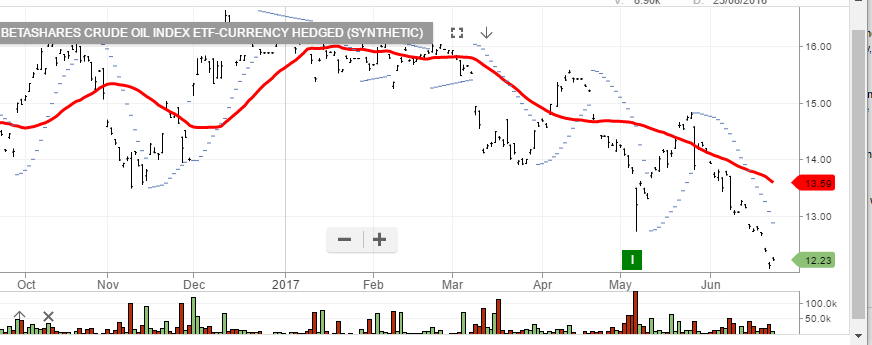
Over the last 4 weeks, the price of WTI Crude Oil has dropped over 20% from $52.00 to just under $42.00.

Increased shale production, more supply from Non-Opec nations and the unwinding of large speculative long positions have all factored into the recent price slide.

However, from a technical perspective, we consider the price risks asymmetrically skewed to the upside from current levels. The likelihood of some sort of weather or politically-base supply disruption should also be taken into account.

For investors looking for a pure-play in a rebound in Crude Oil prices, we suggest looking at the BetaShare ETF with the symbol: OOO. 

Shares of OOO are currently trading at $12.20.

On June 8th, with WTI trading at $46.00 per barrel, shares of OOO traded as high as $14.30. We believe this is a reasonable trade dynamic for a a short-term rebound in the WTI Crude Oil price.

BetaShare ETF: OOO


ETF Watch: Buy BBUS

Against a backdrop of rising interest rates, weaker economic data and political gridlock, the SP 500 is still trading within 1% of its all-time high price of 2451.

The US Federal Reserve has lifted the Fed Funds target three times since the SP 500 posted its pre-election low of 2025 on November 9th of last year.

The tightening of credit conditions combined with lower corporate loan growth has been a trigger for material corrections in US equity markets in the recent past.

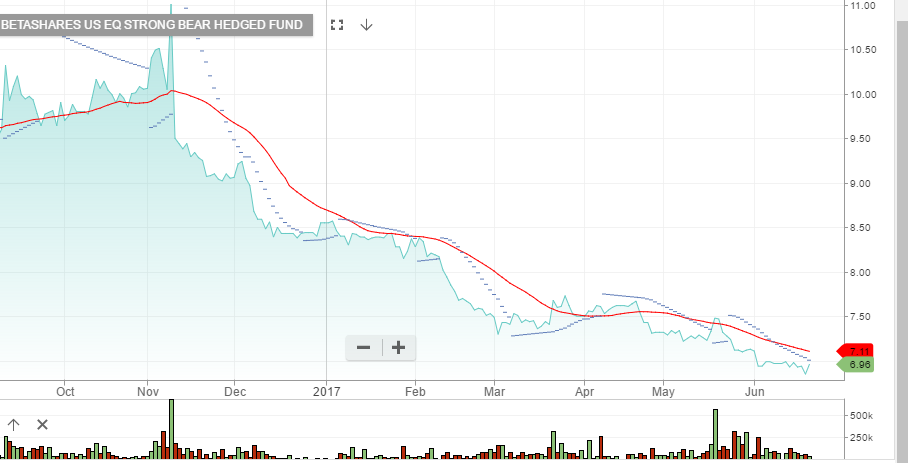
Investors looking to profit from a fall in the SP 500 can look to buy the BetaShare ETF with the symbol: BBUS.

BBUS is an inverse ETF, which means the unit price will rise as the SP 500 Index trades lower.

BBUS is also weighted, so that a 1% move in the SP 500 Index translates to a 2.5% change in the unit price.

The unit price of BBUS is currently near the $7.00 level. We calculate that when the SP 500 trades back to the November low of 2025, the unit price of BBUS will be in the $10.75/ $11.00 area.


BetaShare ETF: BBUS


ALGO Buy Signal For Woolworth’s

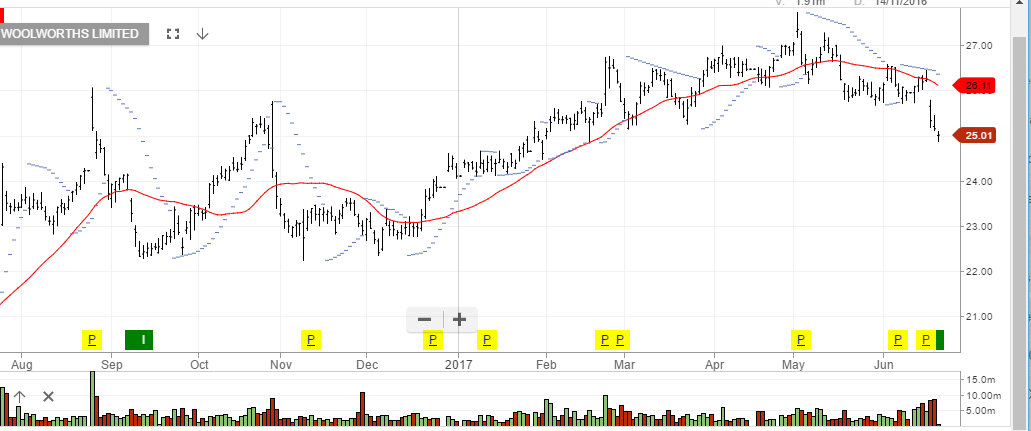
The ALGO engine triggered a buy signal on WOW at yesterday’s close at $25.10.

This is purely a technical signal.  However, with the dividend yield close to 3.8% with the price at $25.00, it looks like a reasonable defensive stock in an uncertain market.

We’re looking for a price recovery to the $27.00 area to take profits or write covered calls to enhance portfolio returns.

Woolworth’s


Caltex Is Nearing The “BuyZone”

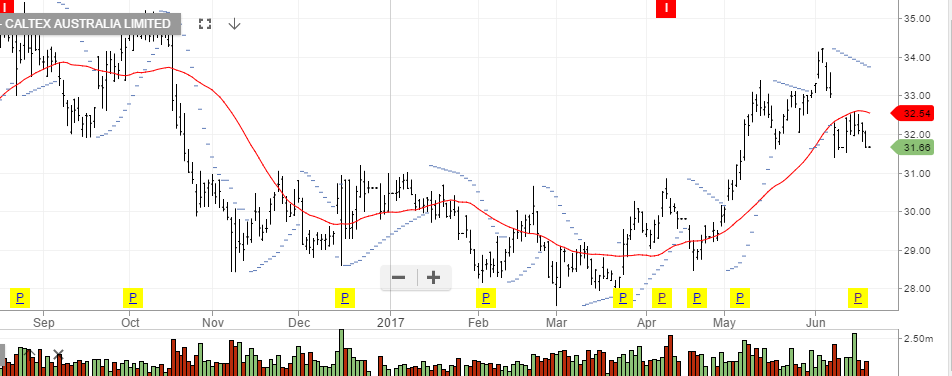
The price of WTI Crude Oil hit a 7-month low of $42.75 in New York trade last night. As a result, shares of CTX have opened 1.5% lower near $31.20.

Last week we suggested that clients take profits in CTX long positions in the $34.00/25 area.

We will look to re-enter long positions for a reversion move higher back into the $34.00 area over the medium-term.

Caltex


Bad News For Aussie Banks

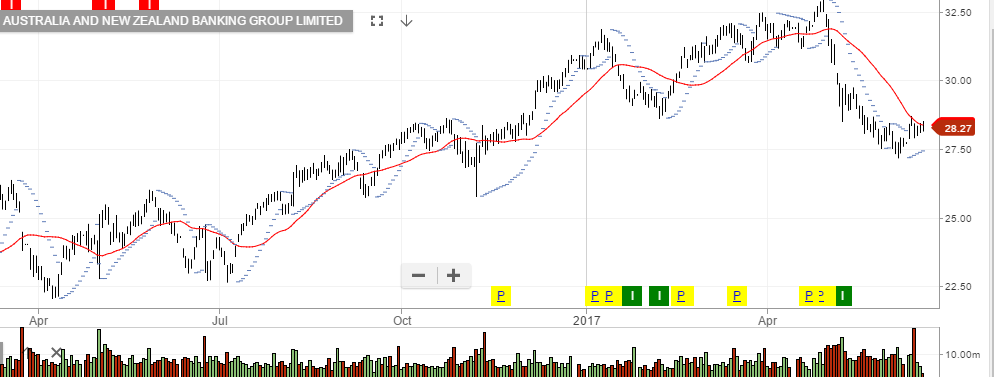
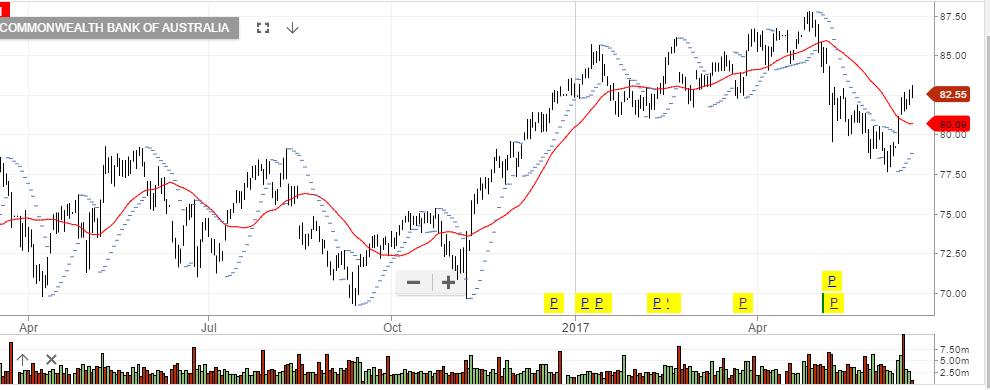
Australian banking names received a double-dose of bad news last night as the Parliament passed the $6.2 billion banking levy and Moody’s downgraded their long-term credit ratings citing risks associated with the local housing market.

Shares in all the major banks have opened lower today with Westpac half-a-percent lower. The banking stocks have posted a rebound over the last few sessions but now look poised to re-test the lower price levels seen in early June.

Our ongoing concern about the banking sector’s current valuations have been: limited growth in the loan generation area, as well as, deteriorating quality of their overall loan exposures.

The banking levy, which commences July 1st, and the prospects of higher funding costs due to the credit downgrade won’t improve the banking sector’s profitability over the longer-term.

ANZ

CBA

MQG

NAB

WBC