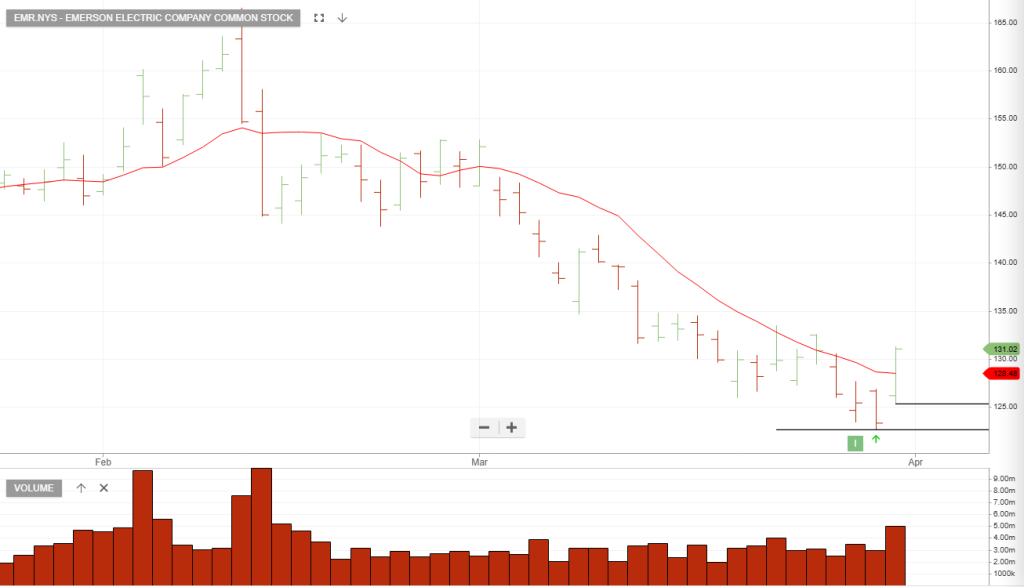
Emerson Electric Company Common a new position in Emerson Electric Co. (EMR) following a buy signal at the $131.02 level. This global technology and engineering leader is currently benefiting from increased capital spending in automation and the global energy transition.
Stop Price: $122.64
Entry Price: $131.02
Dividend Status: Recognized as a Dividend King with over six decades of consecutive annual increases.
Strategic Focus: Recent acquisitions, such as National Instruments, have positioned the firm as a premier player in the industrial software and test and measurement space.
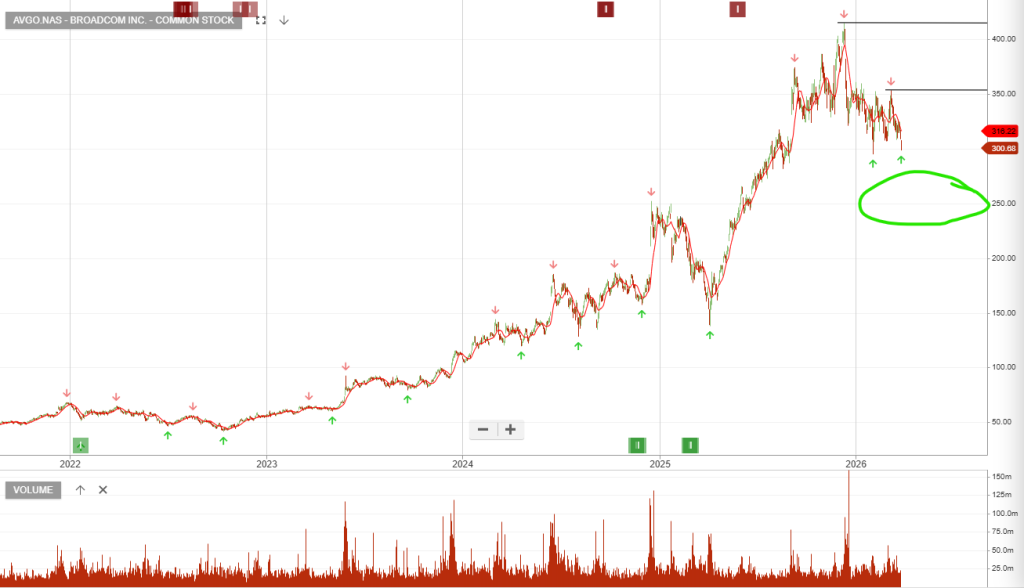
Broadcom Inc. – Common add to watchlist. We’re looking for a switch to Algo Engine buy conditions with the $250 – $300 price range.
Strong Q1 beat across the board: Broadcom delivered Non-GAAP EPS of $2.05 and revenue of $19.31B (+29.4% YoY), exceeding expectations on both metrics.
AI demand is the key driver: Growth was fuelled by custom AI accelerators and AI networking, with AI revenue accelerating significantly.
Bullish forward guidance: Q2 revenue expected at $22B (above $20.4B consensus), AI revenue at $10.7B, and EBITDA margins of ~68%, signalling continued momentum.
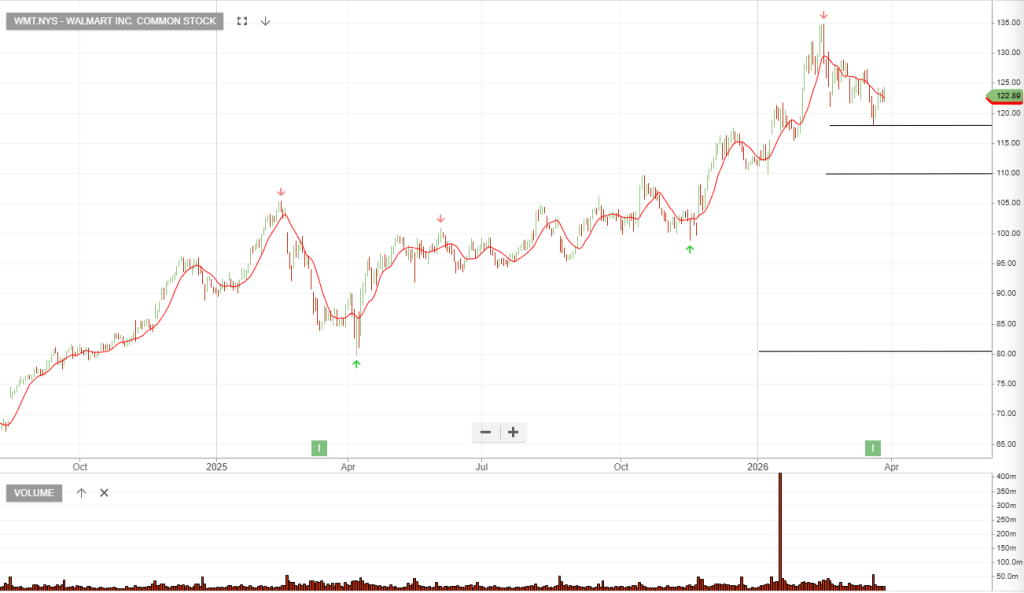
Walmart Inc. Common a new position in Walmart (WMT.NYS) at an entry price of $122.89. We have established a protective stop at $118.020 to manage risk while the retail giant continues to capitalize on its dominant market position and omni-channel growth.
Walmart has demonstrated significant momentum in its e-commerce sector, bolstered by the rapid expansion of its high-margin advertising business, Walmart Connect.
The company continues to gain market share across various income demographics as consumers increasingly prioritize value in the current economic environment.
Recent investments in supply chain automation and delivery infrastructure are expected to drive long-term operational efficiencies and margin expansion.
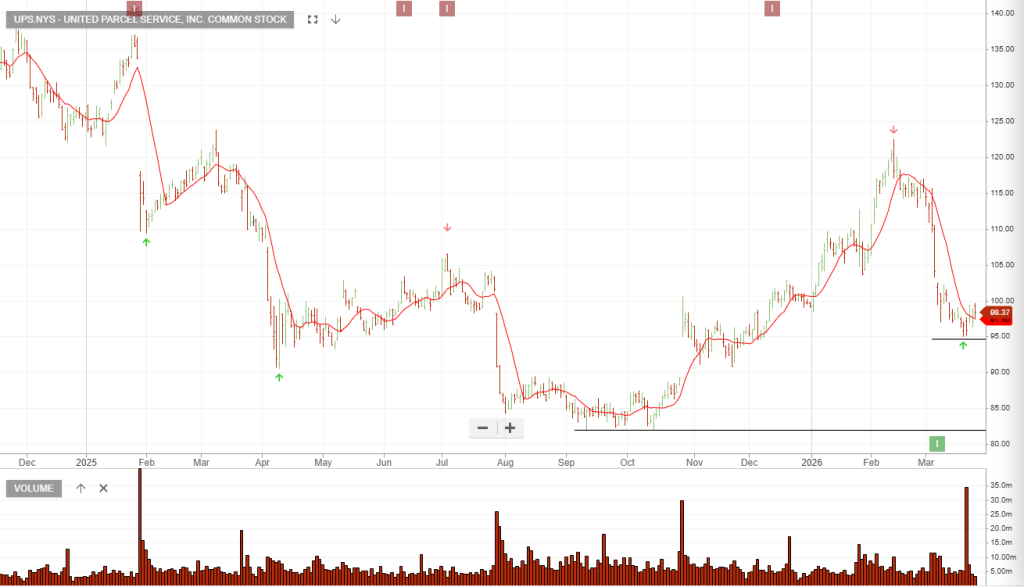
United Parcel Service, Inc. Common a new buy position as the company continues to streamline its global logistics network. This trade targets the transportation giant as it pivots toward higher-margin healthcare logistics and small-business delivery services. Entry Price: $98.44 & Stop Price: $95.01
UPS is currently implementing its “Better, Not Bigger” strategy, focusing on volume quality and network efficiency to drive long-term profitability.
The company remains a dominant player in the global courier market, recently expanding its reach through strategic acquisitions in international growth markets like Mexico.
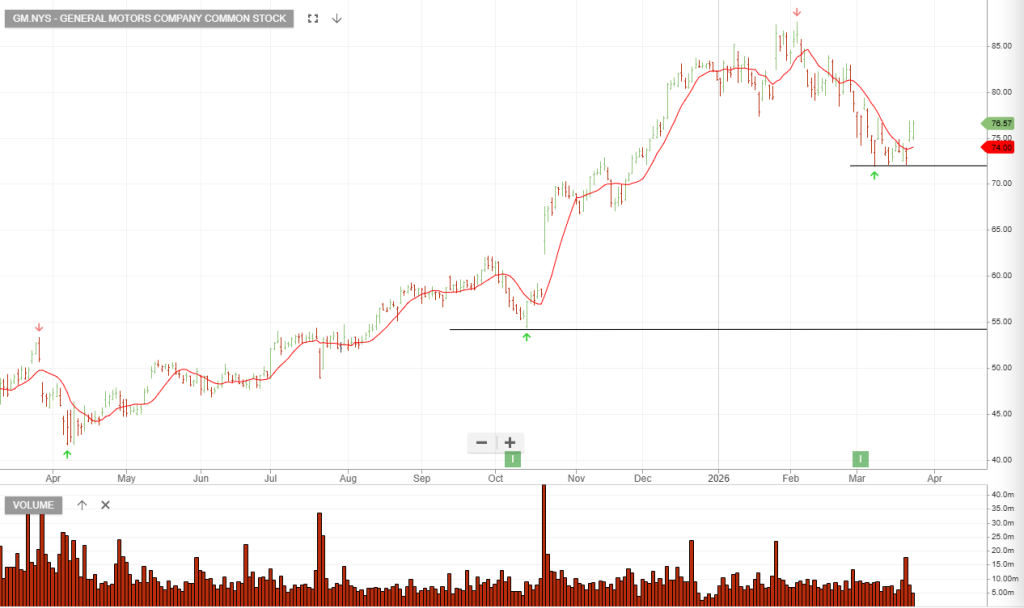
General Motors Company Common a new long position as the automaker continues to demonstrate resilience in its core truck segments while scaling its electric vehicle production. This strategic entry aims to capture momentum as the company leverages strong consumer demand and high-margin internal combustion vehicle sales.
Growth Catalyst: The company is aggressively expanding its Ultium battery platform to support a wider range of next-generation electric vehicles. Entry Price: $75.72, Stop Price: $71.920
Market Position: GM remains a leader in the North American automotive market, driven by its dominant Chevrolet and GMC brands.
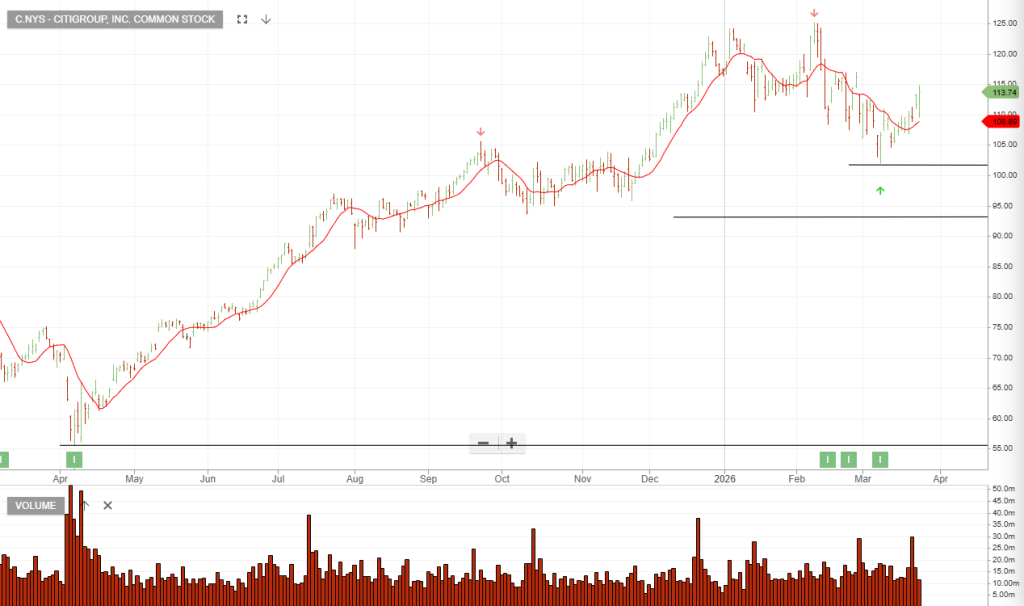
{NYS:C} a new position with an entry price of $108.67. This move comes as the banking giant continues its extensive multi-year reorganization aimed at streamlining operations and improving long-term profitability.
A stop-loss order has been strategically placed at $102.01 to protect capital against potential market volatility.
Citigroup is currently focused on its “Transformation” initiative, divesting non-core international consumer businesses to prioritize high-margin wealth management and institutional services.
The company remains a global leader in treasury and trade solutions, benefiting from a massive network that spans over 160 countries and jurisdictions.
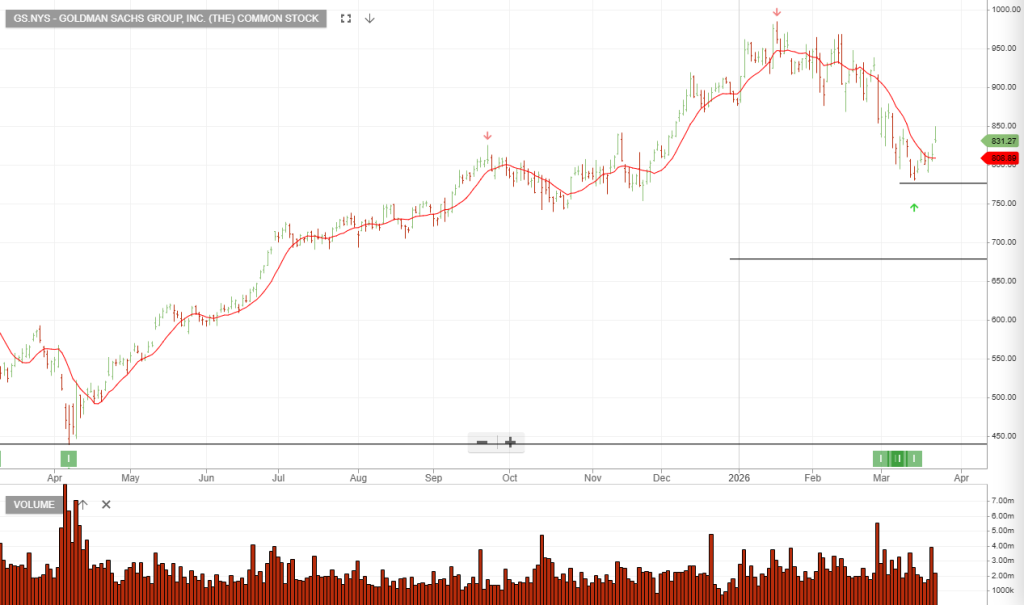
Goldman Sachs reported strong full-year 2025 results on January 15, 2026:
Full-Year Revenue: $58.28 billion.
Full-Year Net Earnings: $17.18 billion ($51.32 per share, a 27% year-over-year increase).
Q4 2025 Results: The firm reported an EPS of $14.01, significantly beating the $11.62 analyst consensus, despite a revenue miss ($13.45B vs. $14.49B expected).
One-Time Impact: The revenue miss was largely due to a $2.26 billion write-down related to the transition of its Apple Card credit portfolio.
Valuation Metrics
P/E Ratio (Trailing): Currently between 15.7x and 17.6x, which is modestly higher than its 10-year
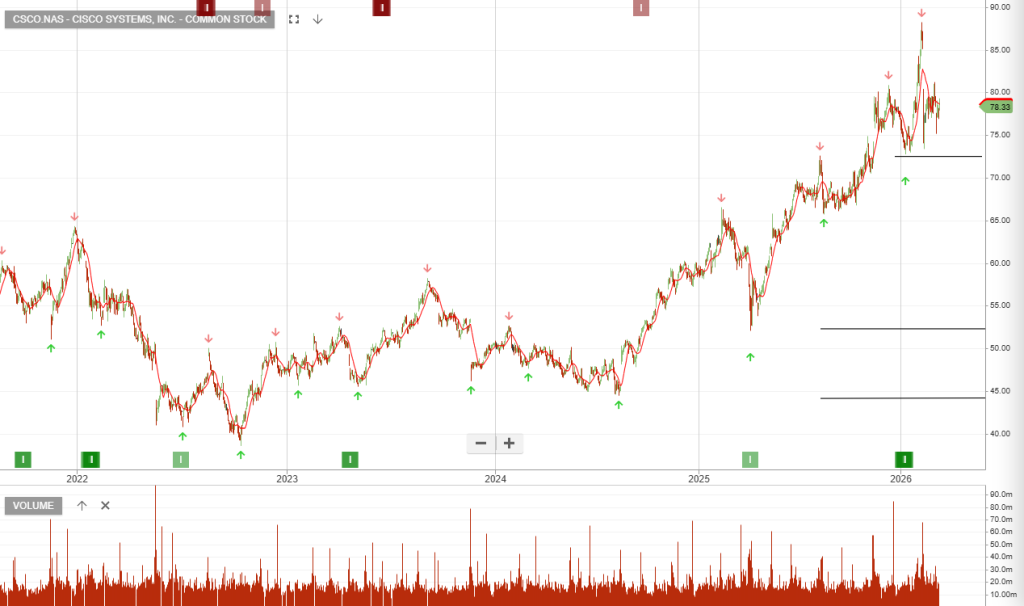
Cisco Systems, Inc. – Common recently reported strong results for its second fiscal quarter (ended January 2024, reported Feb 2026):
Earnings Beat: Reported record revenue of $15.3 billion (+10% YoY) and non-GAAP EPS of $1.04, exceeding analyst expectations.
Guidance: For the full fiscal year 2026, Cisco raised its revenue outlook to $61.2B–$61.7B.
As of March 2026, Cisco (CSCO) is undergoing a major transition from a traditional hardware-focused networking company into an AI-infrastructure and cybersecurity powerhouse.
Here are the key takeaways you should know:
### 1. Recent Financial Performance (Q2 FY2026) Cisco recently reported strong results for its second fiscal quarter (ended January 2024, reported Feb 2026):
Earnings Beat: Reported record revenue of $15.3 billion (+10% YoY) and non-GAAP EPS of $1.04, exceeding analyst expectations.
Market Reaction: Despite the beat, the stock saw a ~9% post-earnings dip (trading around $75–$78) as investors weighed short-term margin pressures against long-term AI growth.
Guidance: For the full fiscal year 2026, Cisco raised its revenue outlook to $61.2B–$61.7B.
### 2. The AI Growth Engine AI is currently the most significant driver for Cisco.
AI Orders: The company took $2.1 billion in AI infrastructure orders from hyperscalers (like Amazon, Google, Meta) in Q2 alone.
Raised Targets: Cisco now expects total AI orders to exceed $5 billion for FY2026.
New Silicon: They recently unveiled the Silicon One G300 chip, designed specifically for massive AI clusters, positioning them as a direct competitor to Broadcom in the high-end networking space.
### 3. Strategic Shift: Cybersecurity & Splunk Cisco is aggressively moving toward a software-subscription model to reduce “lumpy” hardware revenue.
Splunk Integration: Following its $28 billion acquisition, Splunk is being deeply integrated. Security is now viewed as a “native function” of the network rather than an add-on.
Recurring Revenue: Annual Recurring Revenue (ARR) has reached $31.4 billion, with software and services now making up a significant portion of the business.
Backlog (RPO): Cisco has a massive backlog of $43.4 billion in Remaining Performance Obligations, providing high visibility for future revenue.
### 4. Valuation and Dividends For income-focused investors, Cisco remains a “Dividend Aristocrat” in the making:
Dividend: Recently increased to $0.42 per quarter (approx. 2.2% yield).
Capital Returns: The company returned $3 billion to shareholders last quarter ($1.6B dividends, $1.4B buybacks) and still has $10.8 billion authorized for further buybacks.
P/E Ratio: Currently trades at a forward P/E of roughly 25x–27x, which is slightly below the sector median, leading many analysts to view it as undervalued relative to its AI growth potential.
### 5. Analyst Outlook
Consensus: Most analysts hold a “Moderate Buy” rating.
Price Targets: Average targets range between $89 and $96, suggesting a potential upside of 15% to 24% from current levels.
Key Risks: Watch for margin pressure from rising component costs (like memory) and the speed of enterprise AI adoption beyond just the giant “hyperscalers.”
Summary for Investors: Cisco is no longer just “the router company.” It is a massive play on the plumbing required to run AI models and the security required to protect them. The current valuation reflects a transition phase that may offer a more conservative entry point into the AI trade compared to high-flyers like Nvidia.
Sophisticated Investor?
We have special opportunities available for Sophisticated Investors. If you're interested, and qualify, please provide your details below.