ALGO Update: A “Buy/Write” Strategy For MPL

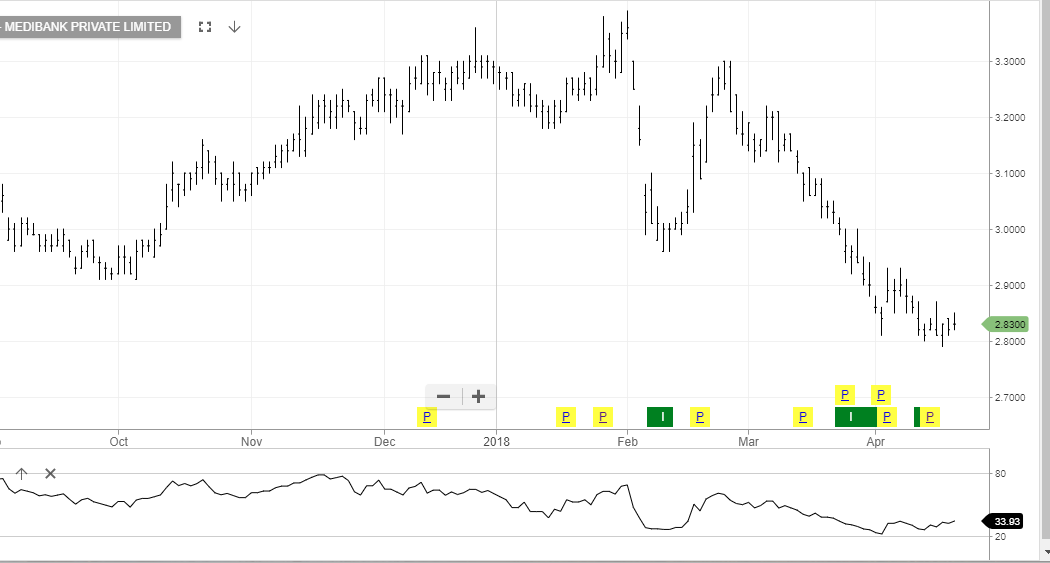
Since trading as high as $3.25 a month ago, the share price of MPL has dropped over 13% to hit an 8-month low of $2.79 this week.

There have been several market reports citing increased political pressure for lower premiums and lower profits for domestic health care providers.

MPL reported a first-half net profit of $245.6 million in February, up 5.9% from the previous corresponding period with an interim fully-franked dividend of 5.5 cents per share, 4.8% higher than the previous corresponding period.

Our ALGO engine triggered a buy signal on MPL at $2.81 on April 13th.

We suggest buying MPL at current levels as a “buy/write” strategy.  More specifically, looking to sell $3.00 Call options into December for 10 to 12 cents.

This will allow for some capital appreciation and investors will collect the 6.75 cent dividend on September 6th.

Medi-Bank Private


Aristocrat reports its 1H18 result on 24 May

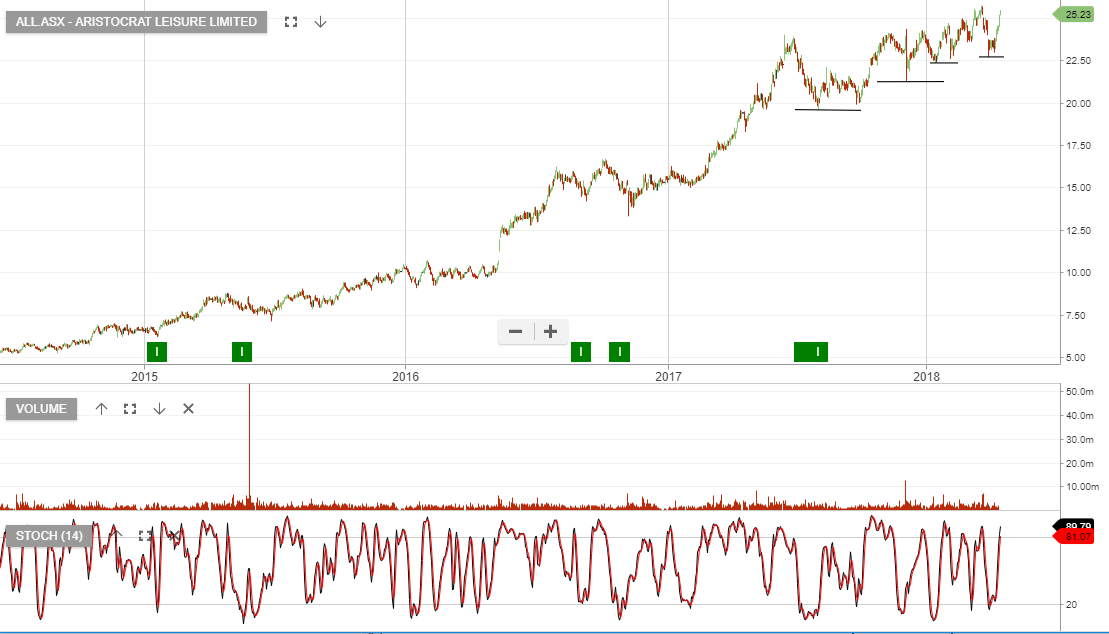
Aristocrat reports 1H18 earnings on the 24th of May and we’re forecasting net profit after tax to be up 20%+ to $330 million.

Earnings growth is underpinned by strength in the North America and Digital businesses. If we assume year-over-year 20% EPS growth, ALL trades on FY20 dividend yield of 3%.

We consider ALL expensive, however, momentum continues to favour the long-side with investors advised to run a stop-loss below recent higher low formations.

Aristocrat

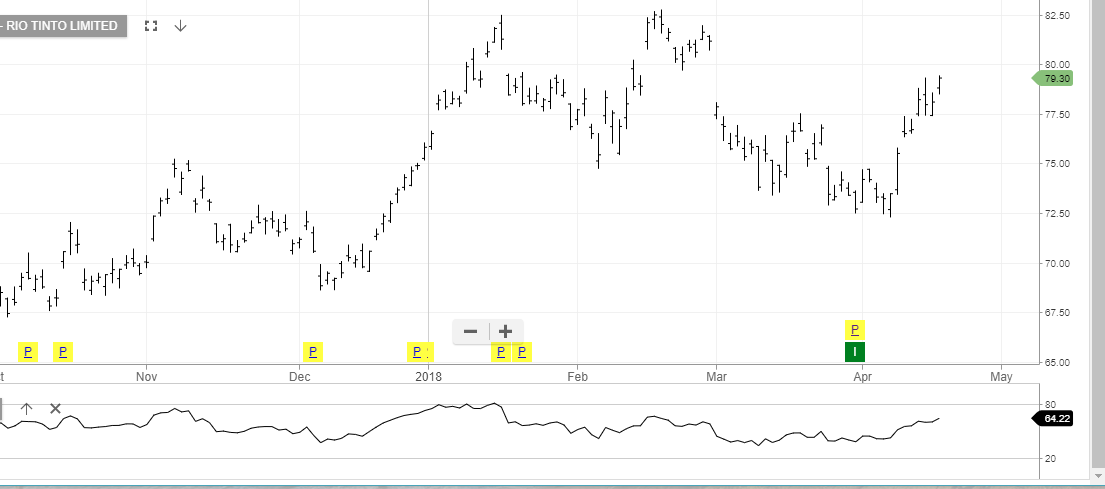
RIO – 1Q18 Fully Valued After Production Results

RIO reported mixed 1QY18 quarterly production results. Solid result from Pilbara iron ore, with production and shipments of 80+million tonnes in the quarter. This is equivalent to the top end of 330- 340 mt shipment guidance for the full year.

Copper production was largely in line and aluminium was mixed.

Capital management capacity remains high, with US$5bn in divestment
proceeds expected to settle in the next 12 months.

Resource market strength is likely in the last stages of the current rally and investors should look at selling call options or locking in outright gains.

Rio Tinto


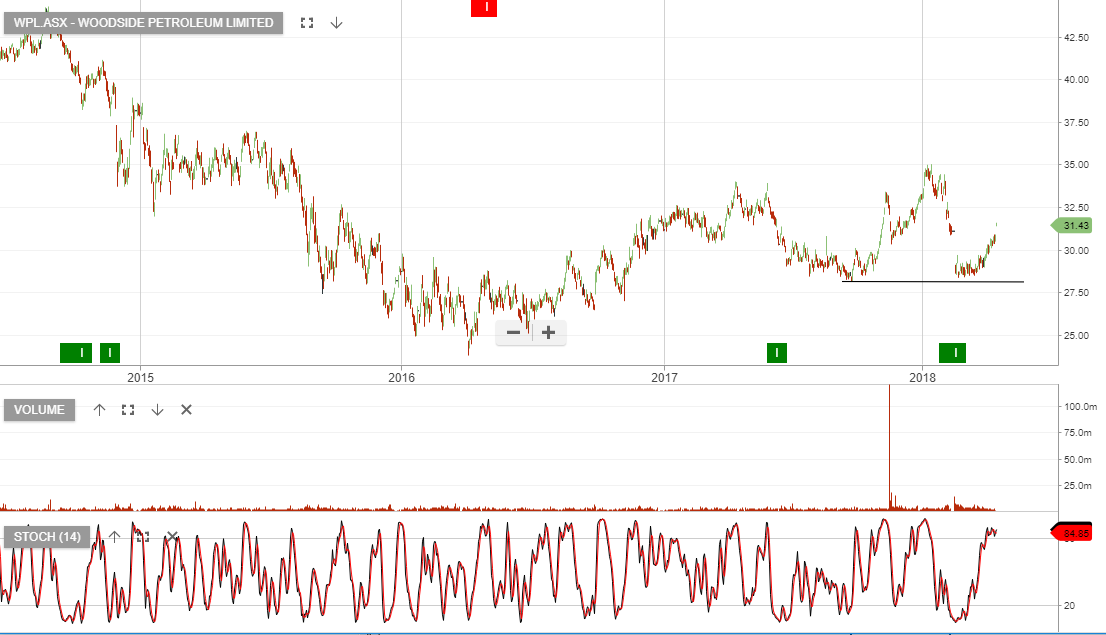
Woodside Petroleum – 1Q18 production

1Q18 revenue for WPL was slightly softer than expected at US$1.169 billion.

Expansion of the WA-based LNG operations will provide longer-term growth, especially given the strength of fundamentals supporting LNG.

Post the acquisition of Exxon’s interest in Scarborough, WPL now holds a 75% stake with partner BHP holding 25%.  We expect BHP to be a natural seller of its remaining interest.

Woodside Petroleum

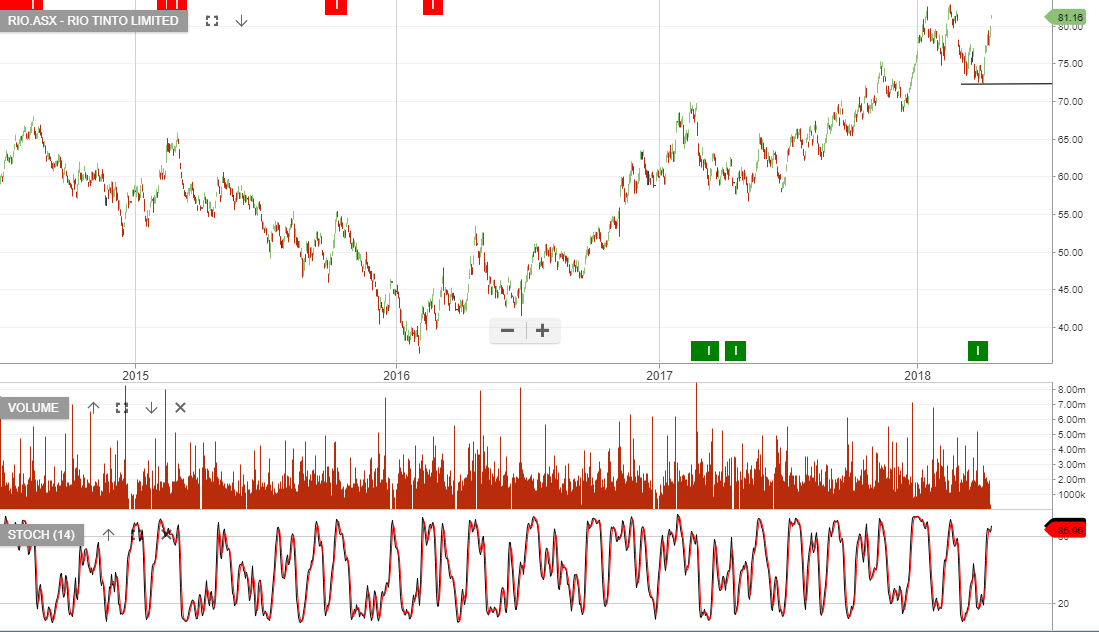
RIO Gets A Lift From Pilbara Exports

Shares of RIO are up over 1.5%, and have reached a two-month high at $79.40 as the mining giant announced solid growth in shipments across their mineral lines.

The company announced that shipments of Iron Ore from their Pilbara mines rose by 5% along with increased shipments of copper and bauxite.

Our ALGO engine triggered a buy signal in RIO on March 29th at $72.30.

And while the internal momentum indicators look positive, investors should be aware of a potential “triple-top” pattern in the $82.50 price area.

Rio Tinto


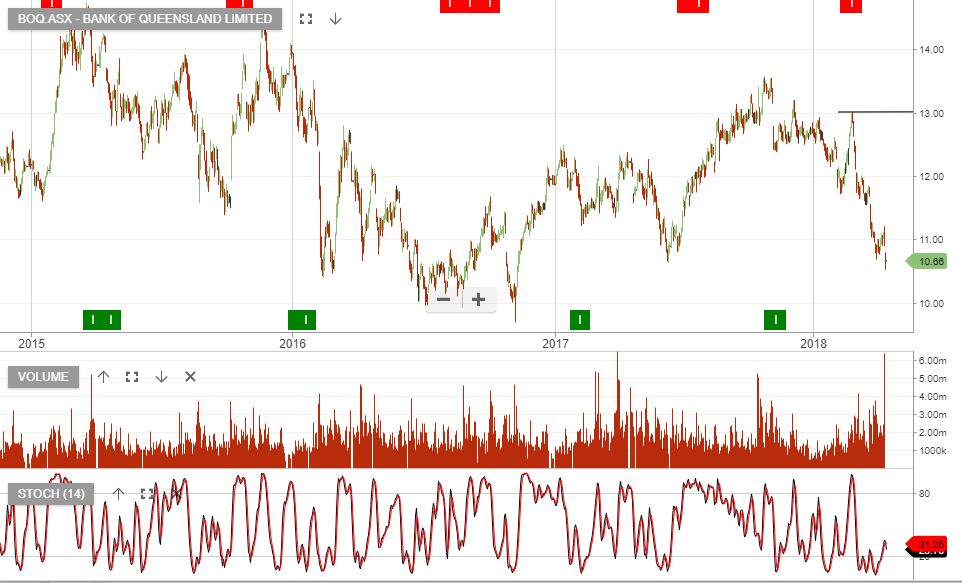
Bank of Queensland – Earnings review

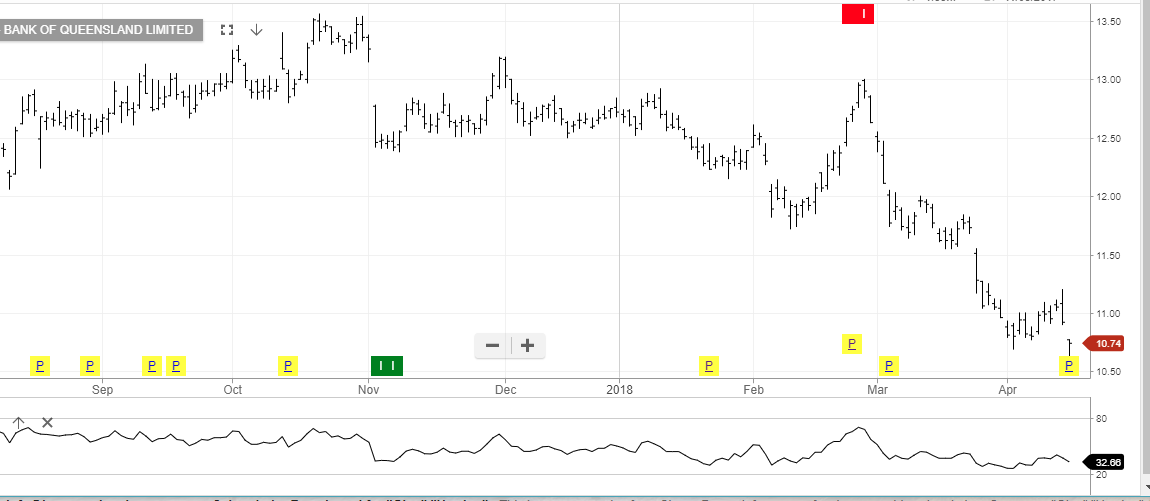
Our Algo Engine generated a sell signal back in February when BOQ was trading at $13.00. The stock closed yesterday at $10.66.

Bank  of Queensland 1H18 earnings missed consensus by around 5%. Net profit after tax came in at $182 million and would have been much lower, if it was not for lower than expected bad and doubtful debt provisioning.

The result highlights quality concerns over underlying profitability.

With the stock trading on a 7%+ fully franked dividend, sell-offs will be met with some buying interest.

However, earnings headwinds and a down-turn in the credit cycle, suggests future “short” or sell signals from our Algo Engine are the preferred directional trades.

BoQ


BoA Slips Lower On Weaker FICC Growth

Bank of America reported a 34% rise in first-quarter profit last night, topping Wall Street estimates, as the bank benefited from higher interest rates and growth in loans and deposits.

However, BAC under-performed in fixed income, currency and commodities (FICC) trading because of a decline in bond issuance from corporations.

Trading revenue was up only 1%. Equities trading revenue, excluding items, rose 38%, while revenue from trading fixed income fell 13%.

BAC’s trading results mirrored those of rivals JP Morgan and Citigroup; revenue from stock trading rose at both the banks, but weakness in bond trading crimped total trading revenue growth, which is why their share prices remain soft.

To a large degree, the local banks face the same headwinds but with the added risk of the Royal Bank commission.

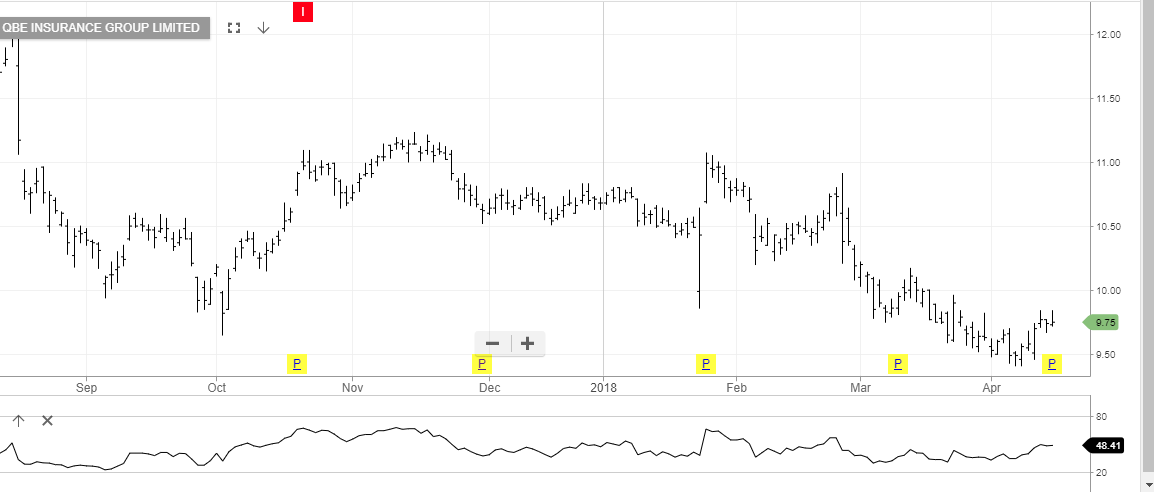
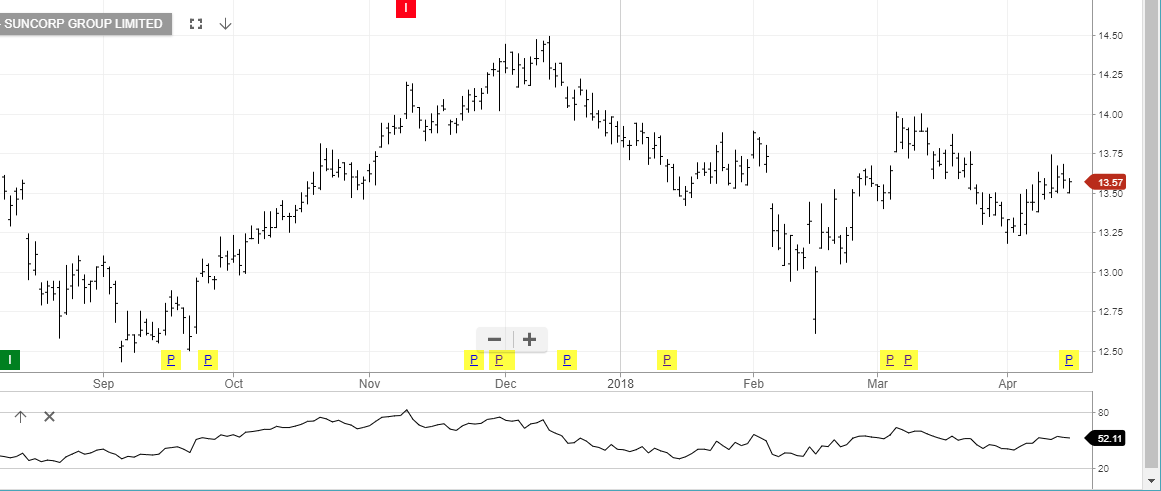
Hearings from the commission are back on this week with QBE and SUN included in the questioning over insurance related business practices.

Our ALGO engine triggered a sell signal late last year in both QBE and SUN at $10.40 and $14.05, respectfully.

We remain cautious of the local banking names and see the risk continue to be skewed to the downside, especially in the regional names like BOQ and BEN.
QBE
SUNCORP
BoQ
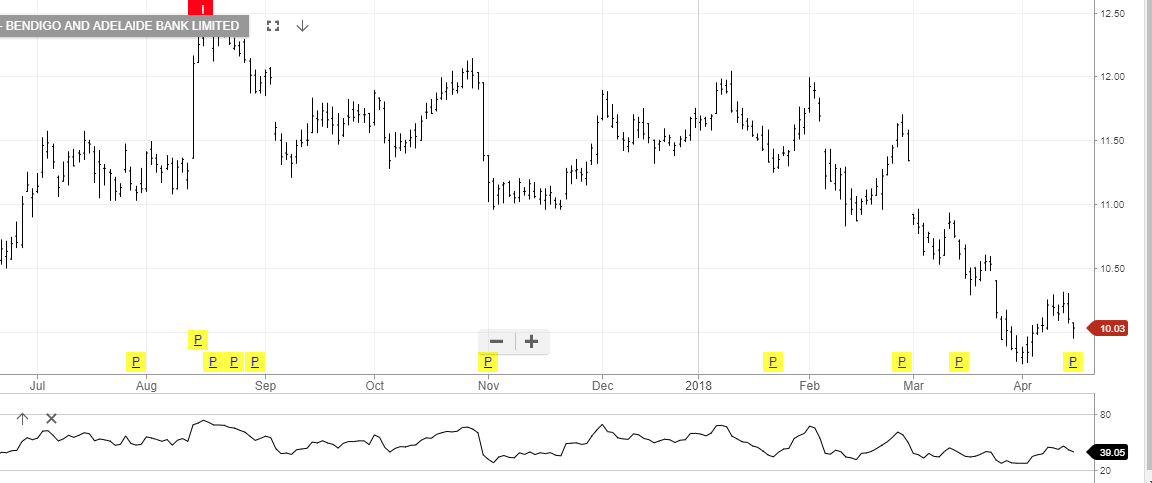
Bendigo Bank