Global Macro

The BoJ also announced that they would maintain its JPY 6 trillion a year purchases of equity exchange traded funds (ETFs), but widened the distribution to include the broader TOPIX index and Nikkei 400 securities. Both of these indexes, along with the Nikkei 225 gained over 2% on the day and all closed above their 30-day moving averages.

The USD/JPY initially fell to 101.00 before rallying to just under 103.00 and then unwinding back below 101.00 in the lead up to the BoJ press conference. During the press conference, BoJ chief Haruhiko Kuroda stressed that the central bank has ample room to expand monetary stimulus such as deepening negative interest rates and accelerating asset purchases.

Mr Kuroda also said the central bank “would not rule out the possibility of considering new ideas or taking drastic measures if necessary to achieve its 2% inflation target”…….which seems to indicate that they are just making things up as they go along.

The FED’s decision to hold the Fed Funds target rate unchanged was complicated and not unanimous. While FED chief Janet Yellen said the case for normalizing rates has strengthened, the “consensus was not there.” Three regional FED presidents voted to lift rates, which was the largest dissent in three years. In the dot plots, three of 17 policymakers did not see a rate hike this year and it seems like Ms Yellen chose to keep the FED Board of Governors united by standing pat.

In the FED statement, the forward guidance indicated that rates would rise this year provided the labor market continued to improve and no new risks emerged. Some market commentators think this translates into an increased chance of a November rate hike. However, there is no historical precedent for a rate hike one week before a Federal election and the CME Fed Fund futures put the odds at just over 12%.

On balance, we expect the level of Central Bank fatigue to increase in coming months and financial markets to respond to more data driven and technical influences. In this respect, we would expect to see US Labor and consumption aggregates improve while similar data sets in the UK, Japan, Europe and Australia continue to trend lower. As such, our base case is that the USD Index will grind higher towards the 97.00 handle, US stock indexes will remain supported and US yields will have an upward bias.

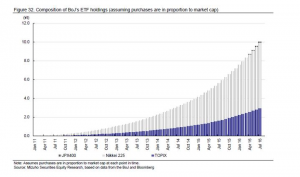
BOJ ETF Holdings.
etf


XJO Index Watch – Key Levels you Should be Tracking

Following last night’s decision in the US to leave rates unchanged, yield stocks will begin their recovery as we forecasted. See our list of stocks and entry levels from the post dated the 2nd September for further details on specific holdings.

Our base case is for the market to remain stable and quality oversold names will revert back to higher price levels . In addition, our strategy includes earning income from companies with limited but stable earnings growth using covered calls.

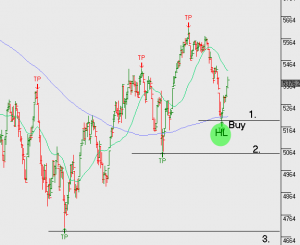
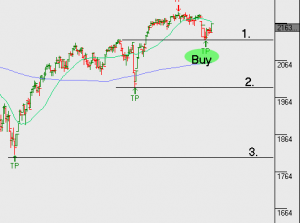
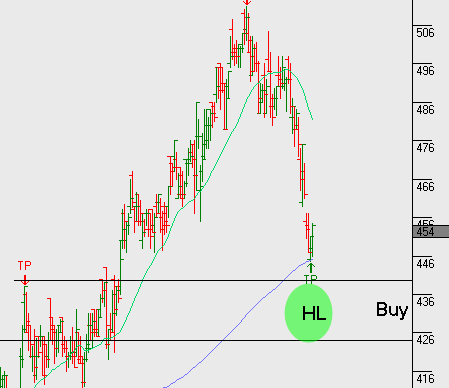
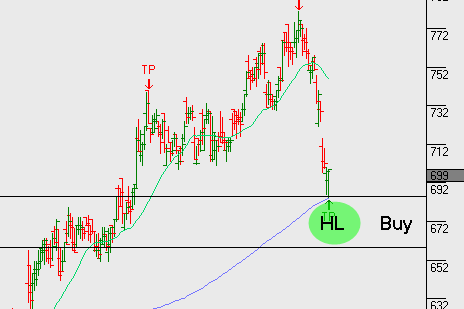
Below, I’ve identified key technical levels to watch in both the XJO and the S&P500 as a mechanism for remaining long the market with a bias toward buy side opportunities. Should the indexes reverse and trade below these levels, we shift our thinking to a more balanced view and begin identifying short trades to help balance the risk in client portfolios.

I’ve used simple numbering 1, 2 & 3, (in charts below), to identify the key breakdown levels that warrant a shift in strategy. To recap, we remain almost exclusively  exposed to long positions, with a balanced allocation across asset classes, and hold around 20 preferred names within the ASX top 50 index. In some cases we’ve allowed 5 – 10% capital growth in certain names over coming months. In other names we’ve sold tight covered calls to maximise the income from dividends and call option income.

If the market reverses through the first of our levels, (indicated by 1), we will start shifting our focus to short signals identified by our algorithm engines; which will then start to neutralise the long portfolio bias. When and if this happens, I’ll update you via the blog, otherwise, we continue to hold our “buy on the dip” position.

For more details you may wish to revisit the monthly strategy video posted earlier this week.

XJO 200 Index

xjo

S&P500 Index

sp500


Qantas Short – Lock in Profit

Qantas (QAN.ASX) short was flagged on the blog post dated 25/08/2016, when QAN was trading at $3.58. The stock is now trading $3.11. Time to cover the shorts, buy back and lock in the profit.

Interesting and worth noting, Qantas has traded lower in the face of a company share buy-back program being announced, record profit, increased dividend and oil prices trading lower. On reflection of these matters, (that should have normally helped the Qantas share price), one could draw the view, that this could be a short worth revisiting on the next bounce or rally higher.

Our algorithm engines will continue to track for future short side signals.

qan

TPG Telecom FY16 Earnings Result

TPG Telecom (TPM.ASX) FY16 result is at the bottom end of their guidance. FY16 underlying EBITDA was A$775m versus guidance for A$770-785m.

FY17 guidance has come down from consensus expectations of A$885m to now guiding in the range of A$820-830m EBITDA.

This is a weak result relative to their recent history of beating guidance and market expectations. Reflected in the markets 17% sell-off today!

TPM declared a $0.07 final dividend.

tpm

September ASX 50 – Monthly Strategy Video

The big news in the market has been the recent repricing of risk. Yields in the treasury markets have ticked higher and we’ve seen selling across the board in equities, especially in defensive yield names. The ASX recent profit results failed to exceed the market’s low expectations and with a flat outlook for FY17 and forward PE multiples approaching 17x, it’s hard to build an argument that value exists, even after the recent market correction.

We’re cautious that the abnormal rate environment is the cause of inflated market valuations, rather than strong company profitability. Nevertheless, a combination of selective asset allocation, opportunistic investment timing on both the long and short side of the market, (using our proprietary algorithm signals) and the use of derivatives to enhance the returns from companies with a stable earnings outlook, provides an attractive investment case versus mainstream alternatives.

Watch the latest ASX Top 50 Monthly Strategy Recording to find out more.

Click the link below to start viewing the recording:


Macquarie Outlook Remains Stable

Macquarie (MQG.ASX) FY17 profit should be $2.1b up around 5% on the same time last year. FY17 earnings per share (EPS) $6.00 and dividends per share (DPS) are forecast to be $4.10, placing the stock on a forward yield of 5%.

There are no algorithm signals present and therefore, our short term synopsis of MQG is that the stock sits at fair value and subject to any large shift in volatility, the stock is most likely to consolidate and move sideways at or near current value.

mqg

Global Macro

The global financial markets appear to have entered a range bound phase based on two basic information sets: comments made by central bankers last week, and how that will effect the two central bank meetings scheduled for next week. The last 24 hours included rate decisions from the Bank of England (BoE), the Swiss National Bank (SNB) and a full slate of economic data from the US, but none of these risk events had much impact on G-7 currency rates.

If there was any market consensus from yesterday’s trading session, it was that the recent US economic data points have been soft enough to keep the FOMC from lifting rates next week, but not weak enough to push the USD Index much below the 30-day moving average at 95.30. The Fed Funds futures are showing less than a 20% probability of the Fed Funds target moving higher after next Wednesday’s FOMC meeting.

Interestingly, the USD/JPY, which makes up 14% of the USD Index price, has also traded down to its 30-day moving average at 101.80 after breaking above near-term resistance at 103.30 on Wednesday. The USD/JPY moved higher on expectations, of more aggressive stimulus measures from the Bank of Japan (BoJ) at their meeting next Wednesday.

However, counter-comments from other BoJ officials about the next policy move show there’s growing splits and indecision within the central bank about which types of stimulus mechanisms could be used, and to what degree. Considering that the primary goal of the BoJ’s open market operations has been to increase growth and inflation, while simultaneously weakening the JPY, their track record this year has been abysmal by every metric.

Recent Japanese inflation data has shown a consistent drift lower over the last five quarters, Industrial production and CAPEX have shown slight ticks higher (albeit from a historically low base) and the USD/JPY has been in a protracted down trend since posting a high of 121.60 in late January. All of this adds up to FX market internal indicators and options pricing showing the lowest expectations of the year that the BoJ can create a positive result.

Despite aggressive buying by the BOJ of Japanese listed securities and in particular through ETF’s, the Nikkei 225 has failed to develop a bullish technical pattern. At present, the pressure appears to remain to the downside and it’s only a break through resistance at 17,400 that would change the 12-month old bearish price structure. Both the Hang Seng (Hong Kong) and the Shanghai Composite (china) appear to be breaking-out and outperforming on  a relative basis.

Nikkei 225 Index

nikkeiHang Seng

hang-sengShanghai Composite

shanghai

Property Trust – Watch List Opportunities Update

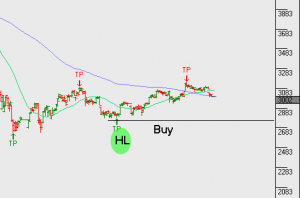
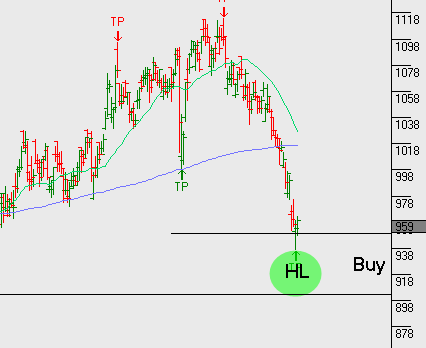
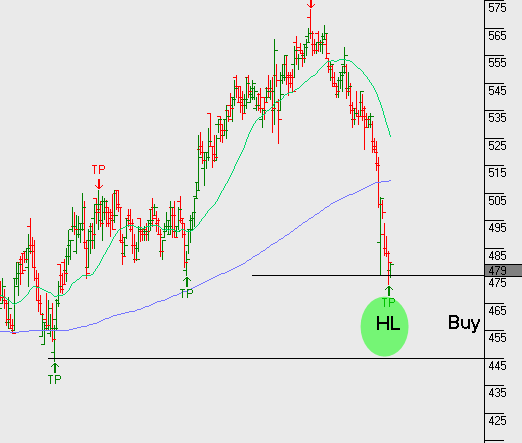
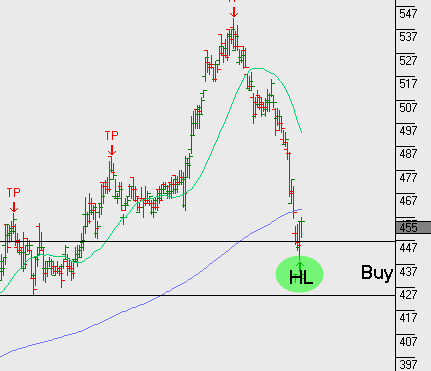
On the 2nd of September, we made a blog post highlighting a group of stocks to place on your watch list. Among these were a number of property trusts and their indicated buy zones. Since then, as anticipated, we’ve seen bond yields move higher and selling in defensive yield names continue. We’re now at a point where a number of the names on our preferred watch list are in the “go zone”.

This post revisits the property trust names, however, there’re other sectors too that are now showing multiple buy-side signals from our algorithm engines.

Westfield (WFD.ASX)

wfd

GPT Group (GPT.ASX)

gpt

Scentre Group (SCG.ASX)

scg

Stockland Group (SGP.ASX)

sgp

Goodman Group (GMG.ASX)

gmg

US Yield Curve & S&P500 Technical Support

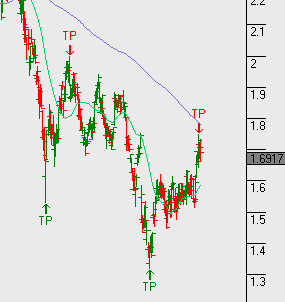
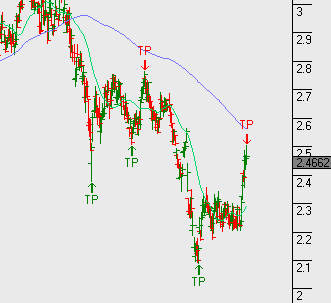
On September 7th, the SP 500 posted an all-time high close at 2184.00. At the same time, the US 10-year notes were yielding 1.53%, the US 30-years were yielding 2.23% and the 2-year notes were yielding .75%. Over the last five trading sessions, the SP 500 has dropped as low as 2118.00, or just over 3% from the 2184.00 high. Over the same period, the 10-yr yields have climbed to 1.68%, the 30-years to 2.46% (both 10% higher) while the 2-yr note yields have remained unchanged at .75%.

When the US yield curve enters a phase in which longer dated bond yields rise, while the shorter dated yields remain unchanged, it’s called a “steepening yield curve.” Many market commentators consider a steepening yield curve a fundamental negative for stocks since higher yields on longer dated paper suggest the US Federal Reserve will further normalize the Fed Funds rate; which will push Treasury yields even higher. Along this line of thinking, current Dow theorists believe that the market could reach a “yield inflection point” whereby stock investors will sell shares and switch to the guaranteed returns offered with Treasury securities.

US 10 Year Bond Yields

10yr

US 30 Year Bond Yields

30yr

S&P500 Index

sp500

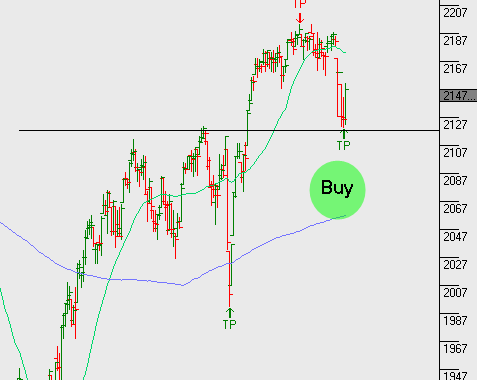
It’s worth noting last night’s reversal in the S&P500, from the support level indicated by the horizontal black line. This reversal may signal the rise in bond yields will soon exhaust. As a result, equity markets may then resume their rally higher. However, during times of economic expansion, both equities and bond yields can move higher in tandem. That’s just not been the case in recent times!