Weaker Housing Data Could Drag On US GDP

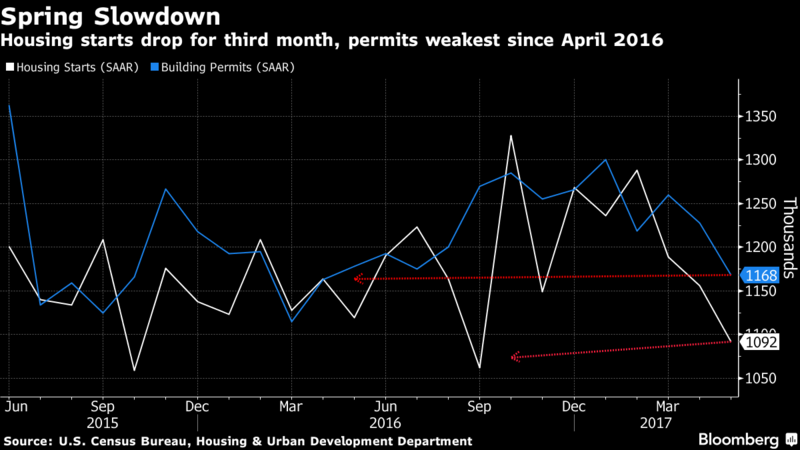
Prior to the market open on Friday, the US Commerce Department announced that Housing Starts fell fort a third straight month in May and has reached the lowest level of new home construction in eight months.

This development, along with a drop in Consumer Sentiment and Building permits, suggest that general construction has declined broadly during 2017 and could be a headwind to economic growth over the second quarter of the year.

This slowdown may have earnings implications  for the US divisions of Boral and James Hardie.


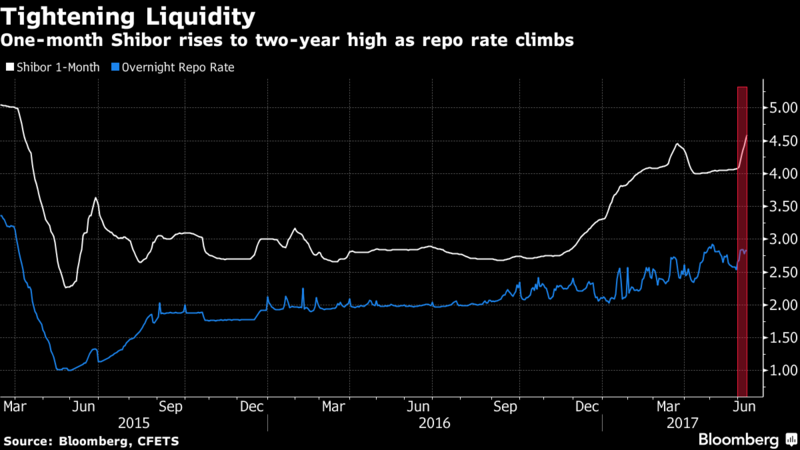
SHIBOR Spikes Higher

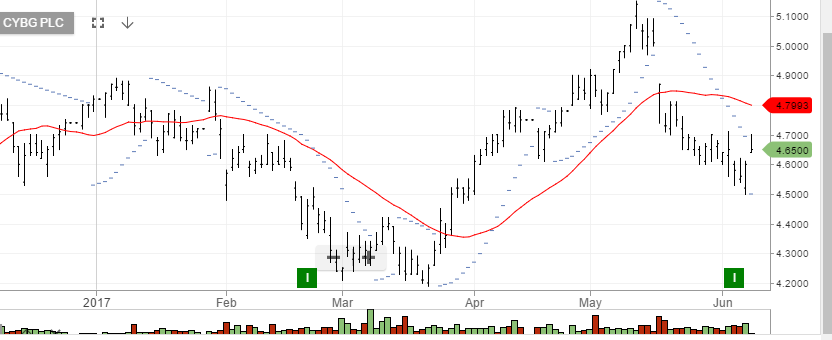
SHIBOR refers to the “Shanghai Interbank Offered Rate”. On Friday the one-month rate stood at 4.65%, the highest in over two years.

To put this in perspective, one-month rates in the US are at 0.85% and one-year rates in Australia stand at 1.63%.

And while Chinese central bank officials reject any suggestion that the tighter lending rates were a sign of instability or a source of increased financial risks, global financial markets have been acutely impacted by Chinese banking shocks in the past.

At this point, the one-month SHIBOR rate is now higher than the one-year Chinese Prime lending rate of 4.30%, which is unsustainable.

The knock-on effect is that a sharp contraction of Chinese capital flow will reduce Australian exports and could even distress local real estate markets.

We will watch this development with interest and how it could translate into the Australian share market.

Chinese SHIBOR

Defensive Stocks For An Uncertain Market

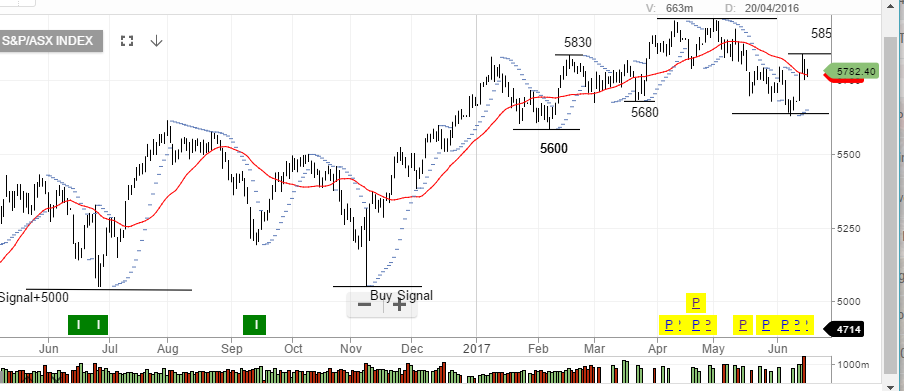
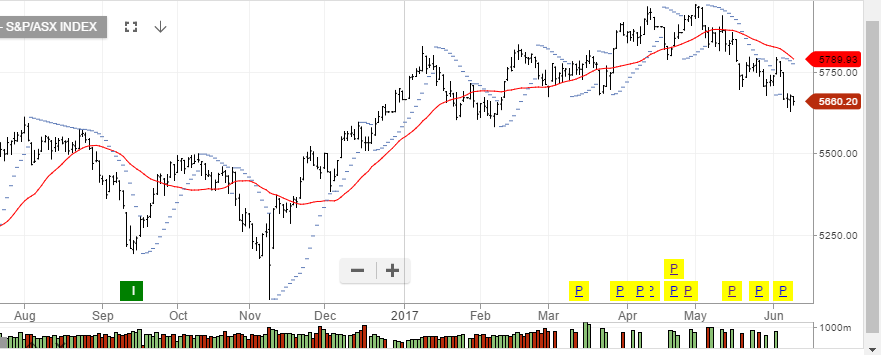
Recent price action in the local ASX market suggests we’ve entered a period of heightened volatility and potential for downside risk. Since posting the high for-the-year at 5945.00, the index for Australian shares has dropped almost 4%.

Looking across the spectrum of ASX top 100 stocks, we have found several names which can offer defensive value in a broadly sideways to lower share market.

These include: IPL, MPL, WOW, CTX, QBE, SHL, SYD, TCL, AMC, and IAG.

We consider these stocks to have the potential for moderate capital growth and, combined with a buy/write strategy, will offer 10 to 12% cash flow on an annualized basis.

ASX: XJO Index


OVERNIGHT News: FOMC and Crude Oil

The FOMC announcement to raise the target Fed Funds rate by 25 basis points to 1.25% was largely priced into the market.

However, the “hawkish” guidance  about further upward adjustments and the specific plans to reduce the FED’s $4.5 trillion balance sheet have raised concerns about current stock market valuations and the impact of tighter monetary conditions.

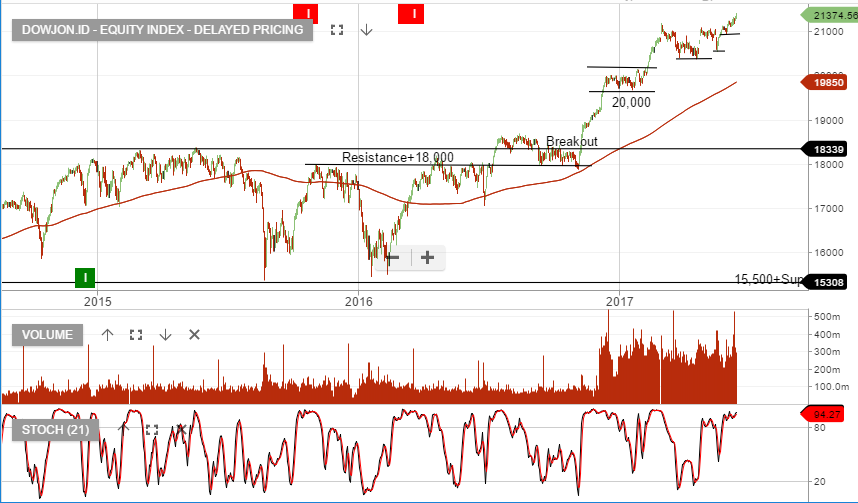
The major US indexes were mixed with the NASDAQ down .50%, THE Dow Jones 30 up .25% and the SP 500 down .10%.

US Energy stocks were all lower as Crude Oil prices slumped on a downbeat assessment from the IEA and increased production from both the US and OPEC nations.

The front month WTI Crude contract closed down over 3% to $44.65, which is the lowest closing price in over 18 months.

As a result, shares in both BHP and Oil Search have opened more than 2.5% lower.

Chart – Dow Jones


ETF Watch- NASDAQ Sell-Off

The NASDAQ stocks rebounded last night with Facebook, Google and Amazon all trading over 1% higher after the two day sell-off over the weekend.

According to several “high frequency” analytical reports, it’s too early to step back into the FANG stocks. Of the four times that a similar high volume sell-off has occurred since 1999, tech shares have needed several weeks to find a bottom.

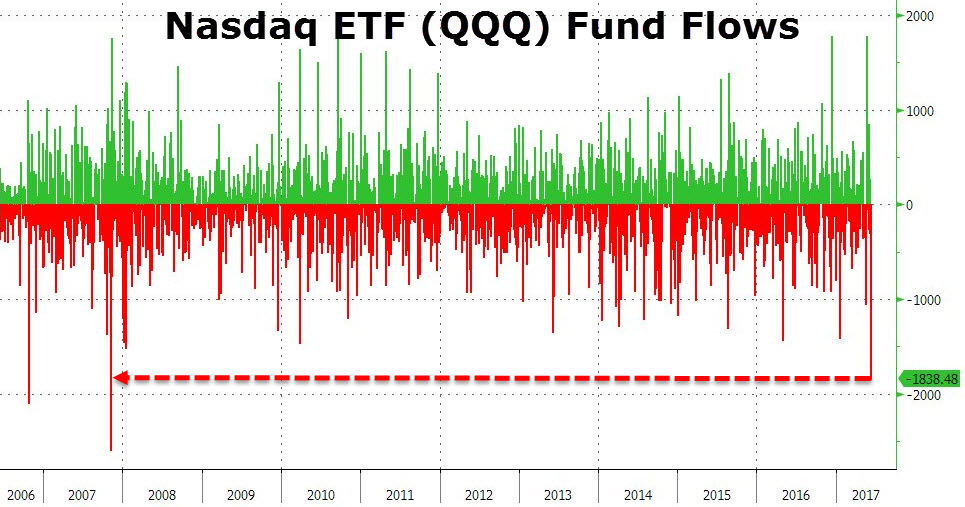
In addition, as shown in the chart below, the last few days have seen the largest capital outflow since 2007 from the QQQ: the NASDAQ based ETF.

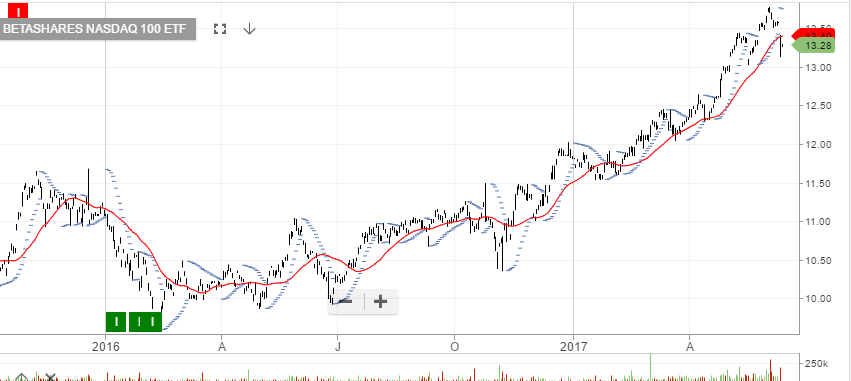
Our ALGO engine created a buy signal on the ASX BetaShare NASDAQ ETF on February 8th, 2016.

That ETF, with the symbol: NDQ has gained over 32% since then. Should the recent sell-off in the NASDAQ turn into a deeper correction, we will watch for the next ALGO buy signal.

QQQ ETF


BetaShare ETF: NDQ

ETF Update: Buy YANK Into The US FOMC Meeting

At the FOMC meeting this Thursday, the US Federal Reserve is widely expected to raise the Fed Funds target by 25 basis points to 1.25%.

This would be the third increase in the FED’s target band since November and further underscore the fact that the FED is the only G-10 central bank which has an upward interest rate trajectory.

With the RBA maintaining overnight rates at 1.50%, the spread between US and Australian benchmark rates will narrow to a 11-year low of just 25 basis points.

This further narrowing of the carry premium between the AUD and USD will likely put more downward pressure on the AUD/USD.

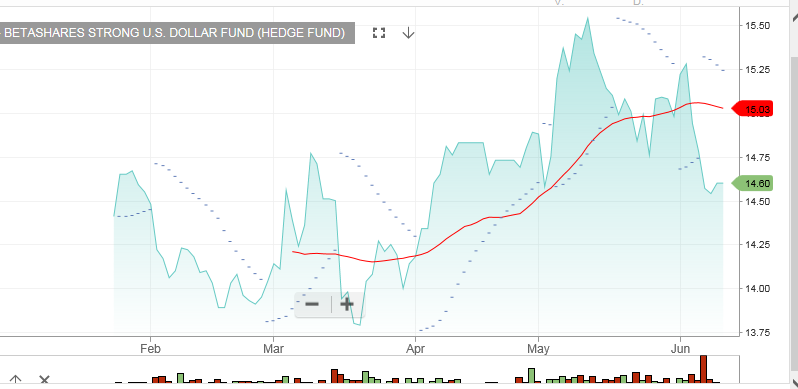
Investors looking to profit from a lower AUD/USD can buy the BetaShare ETF with the symbol: YANK.

YANK is an inverse ETF, which means the price of YANK increases as the AUD/USD trades lower. It also has a weighting of 2.5%, which means the unit price will fluctuate  by 2.5% for every 1% change in the AUD/USD exchange rate.

With a current price of $14.70, we calculate that the price of YANK will be near $16.50 as the AUD/USD returns to the January low of .7160.


BetaShare ETF: YANK

Big Reversal In The FANG Stocks

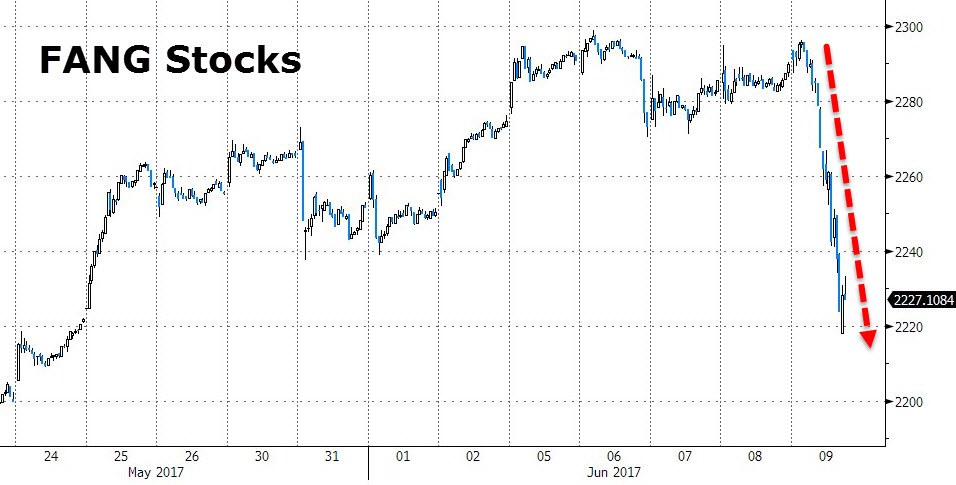
Shares of Facebook, Amazon, Netflix and Google (also known as the FANG stocks) all fell over 3% today as investors pulled money out of the overheated US Tech sector.

The FANG stocks have been market leaders all year and have accounted for over 40% of the NASDAQ gains year-to-date. On a valuation basis, these names have added over $600 billion to the S&P 500 even though they only make up 13% of the index.

Many analysts have been expecting a pullback in the tech sector as P/E ratios and forward guidance data have approached the levels last seen prior to the 2000 and 2008 market corrections.

It’s worth noting as a point of reference that Microsoft, which is not a FANG stock, fell 62% after the 2000 tech bubble burst and dropped 45.5% during the financial crisis in 2008.

Even after today’s sharp decline, the S&P tech sector is still up over 18% for the year.

Trade Update……Stay Short The XJO

As ASX market participants prepare for the Queens Birthday weekend, we would like to update some of the recent market themes suggested to investors and subscribers.

Our short bias on the XJO took a little longer to develop than had hoped but now looks to be on track to hit our 5500 target by mid-July. An integral part of the technical price breakdown in the XJO has been the sell off in the major banking names.

The major banking names are all 8 to 10% off their April highs. The Government’s Levy legislation, combined with slower loan growth and loss provision numbers, has the potential to see the banks trade back to the November 2016 lows.

Many clients who were reluctant to sell their bank shares are now calmed in the knowledge that they will be able to re-establish those positions at lower levels.

In addition, investors with a slightly higher risk profile were able to profit handsomely on the bought put options as the banks traded lower.

Like the XJO trade, the long put positions in JHX and AMP are now gaining momentum to the downside. Since both of these strategies were structured as “Put Spreads”, we are looking to scale out of these positions and replace them with outright downside directional strategies over the next few weeks.


ETF Watch: Buy OOO For Mean Reversion Trade In Crude Oil

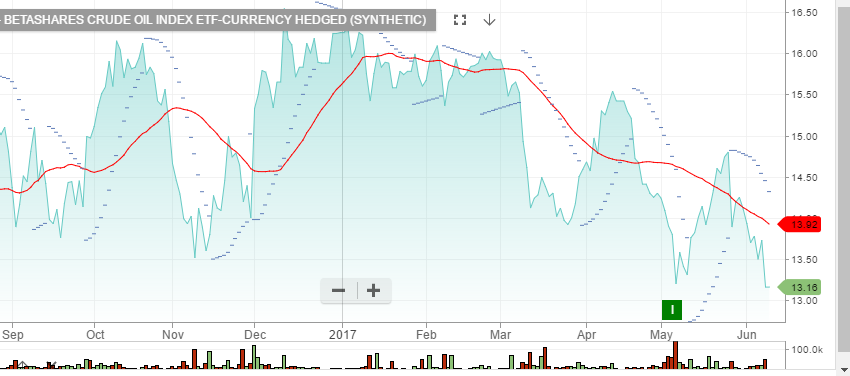
Over the last 10 trading sessions, WTI Crude Oil has dropped over 13% from $52.00 to last nights low of $45.20.

Technically, we see good support near the $43.75 area, which was the reversal low posted on May 5th.

Fundamentally, increased political tensions between OPEC members Qatar, Saudi Arabia and Iran could escalate into military engagement with some associated levels of supply disruption in the near-term.

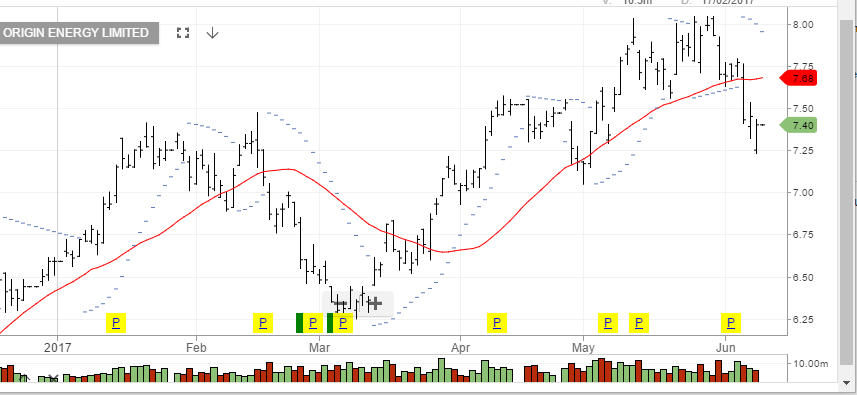
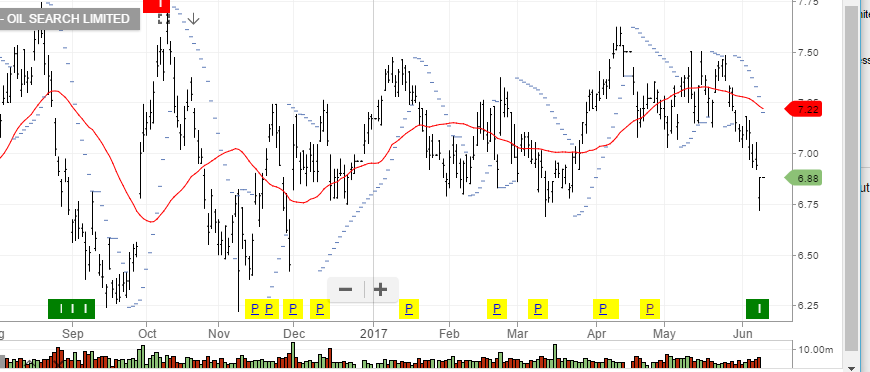
As such, we have been looking to buy the dip in some of the local energy names like Origin Energy and  Oil Search. (The ALGO engine gave a buy signal on OSH yesterday)

Further, we have also suggested that investors looking for a mean reversion higher in Crude oil prices can buy the BetaShare Oil ETF with the symbol OOO.

OOO traded as high as $8.10 just a week ago and has now in the low $7.00 area.

BetaShare Crude Oil ETF


Origin Energy

Oil Search