U.S. Retail Sales Weighing On Rates

U.S. Retail Sales fell for a third straight month in February as households cut back on purchases of motor vehicles and other big-ticket items, pointing to a slowdown in economic growth in the first quarter.

Consumer spending, which accounts for more than two-thirds of U.S. GDP, appears to have slowed at the start of the year.

The combination of weak consumer spending data and global manufacturing data has been enough to see yields run into resistance.

The peak optimism on synchronized global growth and inflation pick-up, now appears to have passed.

With yields moving lower, we’re likely to see a better environment for the yield sensitive sectors. Telecommunications, Utilities, Consumer Staples and Real-Estate.

Some of the local names in these sectors include: SYD, TCL, AGL, GPT, SCG and WFD.

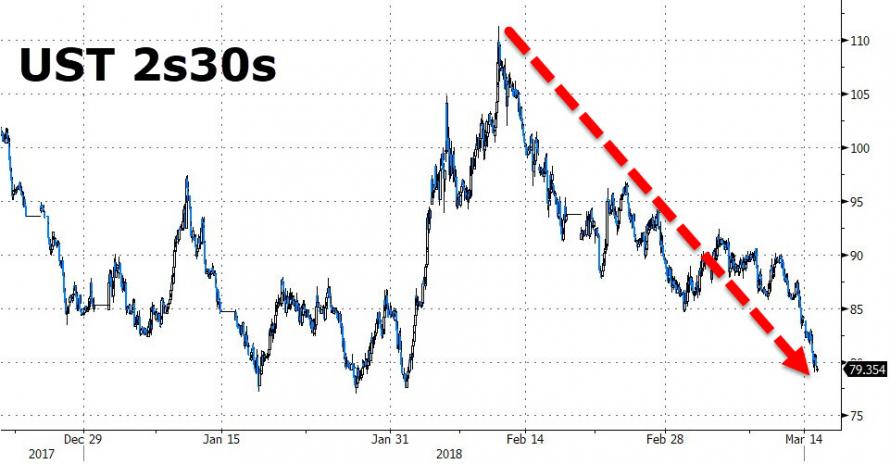
The chart below illustrates the yield on the 30-yr bonds falling relative to the shorter dated 2-yr bonds. This is typical during a period of slower economic growth.


WPL Gets A Boost From WTI

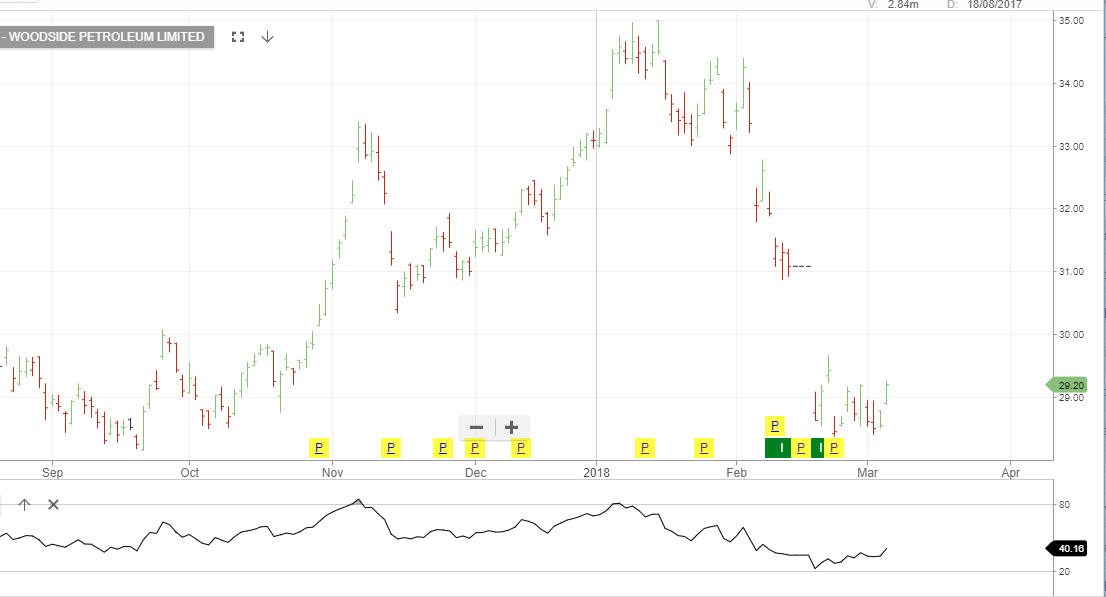
Shares of WPL reached a high of $29.25 in early trade as West Texas Intermediate (WTI)  crude oil posted its largest single session gain in over three weeks.

The front month WTI contract rose $1.30, or 2.2%, following a report that crude stocks have dropped by 600,000 barrels at the US storage hub in Cushing, Oklahoma.

WPL is part of our ASX Top 20 Model Portfolio and our ALGO engine triggered a buy signal on February 20th at $29.10.

The stock has been a tepid performer over the last few weeks after announcing a rights issue and going ex-dividend.

However, the technical picture is improving and a break back above the $29.66 level will likely extend into the gap from $30.90 from mid-February.

Woodside Petroleum


Dow Jones Breaks 16-Month Winning Streak

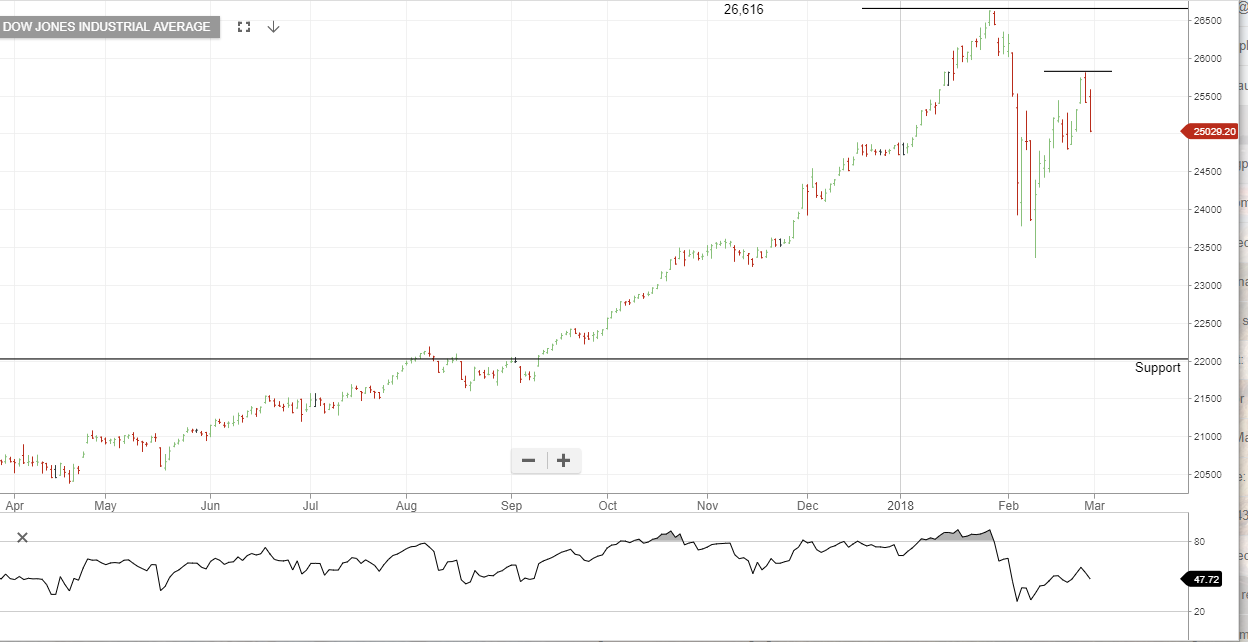
The Dow Jones 30, along with the SP 500, has posted its first monthly loss since October of 2016.

This has been the longest monthly winning streak since 1959.

However, over the last two days, the DOW has lost over 700 points, or 3%.

And while these headlines will get the attention of investors, it’s the technical significance which should have investors concerned.

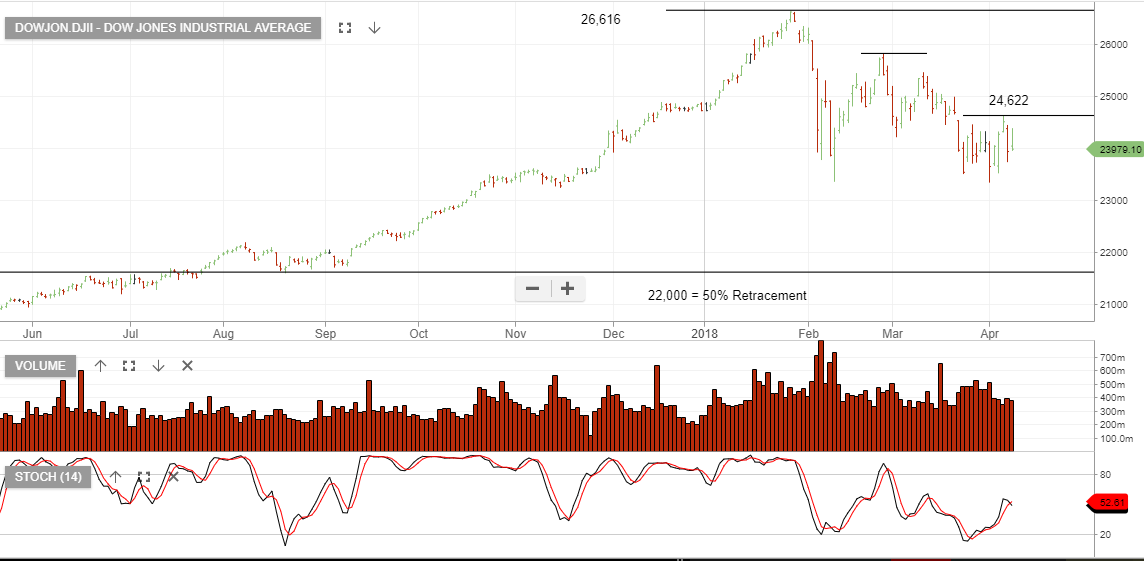
Both the DOW and SP 500 dipped below their respective 50-day moving averages, which opens up the probability of range extension to the downside.

As illustrated in the chart below, investors should be prepared to employ defensive strategies and take advantage of stock specific opportunities.

Dow Jones 30


US Payroll Data Triggers Wall Street Rout

U.S. stocks fell sharply on Friday after a stronger-than-expected Non-farm payroll report pushed interest rates higher.

The U.S. economy added 200,000 new jobs in January versus expected growth of 180,000. Weekly average earnings rose 2.9% on an annualized basis and the unemployment rate was unchanged at 4.1%.

The Dow 30 index dropped 665.75 points (2.8%) to close at 25,520, which is the index’s sixth-largest points decline ever.

The broad-based SP 500  fell 2.1% and finished at 2,762, with energy as the worst-performing sector.

The NASDAQ 100 plunged 1.96% to 7,240 as declines in Apple and Alphabet offset a strong gain in Amazon shares.

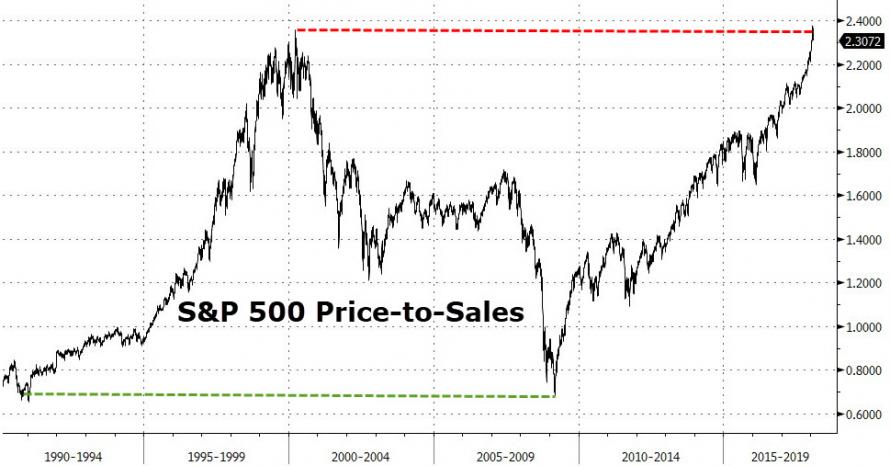
The combination of extreme valuations and increased leverage in the market could see US equities extend today’s losses into next week.

We suggest cutting high PE names from portfolios and looking for “stock specific” opportunities on the long side. SP 500 Index


Crude Oil Rally Pauses on Trump’s USD Comments

Since posting an intra-day low of $55.80 on December 6th, the price of West Texas Intermediate (WTI) crude oil has rallied almost 20% to hit a 3-year high of $66.60 in NY trade last night.

The sharp rise in WTI has had 2 primary tailwinds: a seasonal drawdown of crude oil in storage and a 4% drop in the USD Index.

However, this week’s events could diminish, or possibly reverse, those 2 market impulses.

According to the American Petroleum Institute (API), the amount of WTI in storage has dropped for 11 consecutive weeks. This week’s drawdown was 1.1 million barrels compared to an expected reduction of 2.3 million barrels.

In addition, the recent rise in WTI has seen the US rig count rise from 789 in early December to 939 this week. More production from rigs online will likely break the string of weekly drawdowns in the near-term.

With respect to the USD, Mr Trump told CNBC yesterday that the Greenback will strengthen over time and that recent remarks made by Treasury Secretary Steve Mnuchin about a weakening USD were misunderstood.

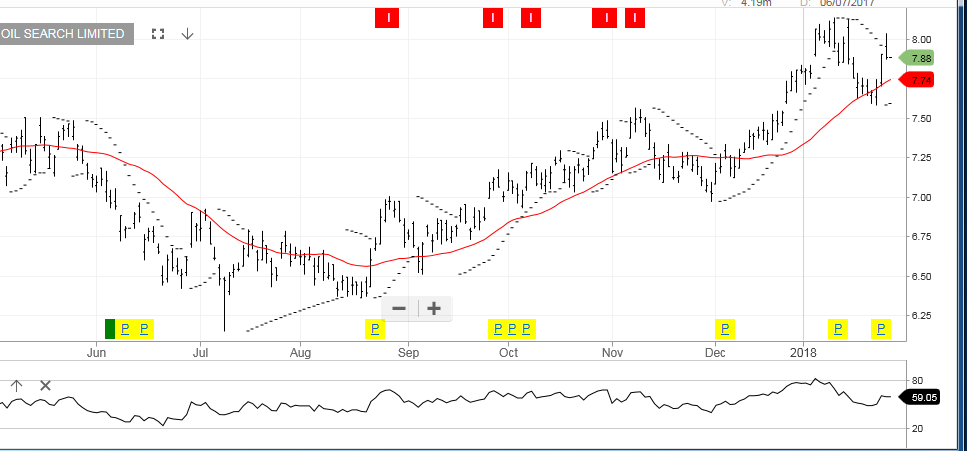
Our ALGO engine currently has a sell signal in OSH from the $7.60 area. A material correction in the WTI price could see the stock trade back to November support level near $7.00.

Oil Search


The US Government Is Back Open………….Until February 8th

The US Senate was able to agree on a short-term resolution to allow the Government to reopen until the 8th of February.

The US has not had a properly ratified budget since 2009 and these “stop-gap” agreements are now getting shorter in duration.

The DOW, S&P 500 and the NASDAQ all responded by making new all-time highs.

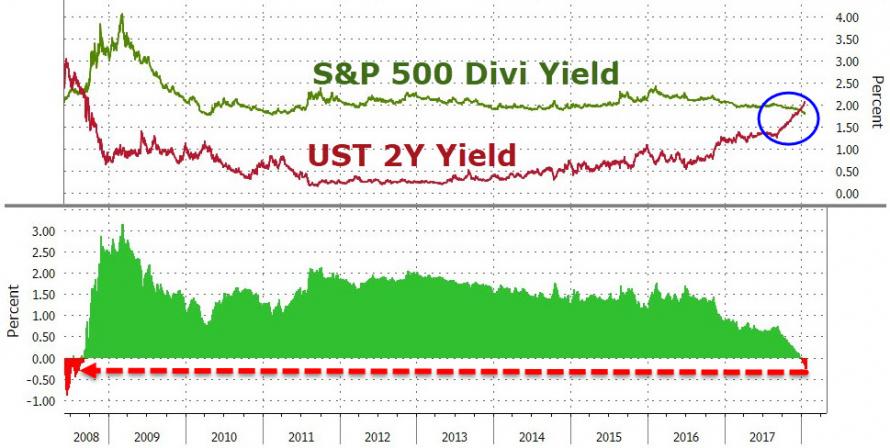
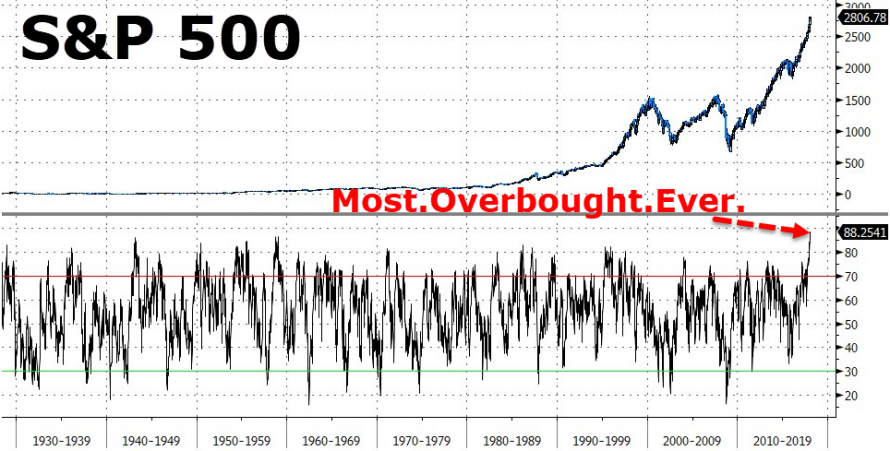
Interestingly, as illustrated in the charts below, not only are the 2-yr Treasury notes now yielding more than the SP 500 in the last 10 years, but the Index itself is the most overbought in history.

We suggest that the extreme valuations on Wall Street will soften US yields over the medium-term.

As such, we would expect to see buying interest in the ASX yield names such as TCL, SYD and WFD .

Our ALGO engine currently has flagged buy signals in TCL and SYD at $11.70 and $6.80, respectfully.

2-yr versus SP 500 yields

SP 500 Sentiment Oscillator


Goldman Sachs Slips On Lower Revenue

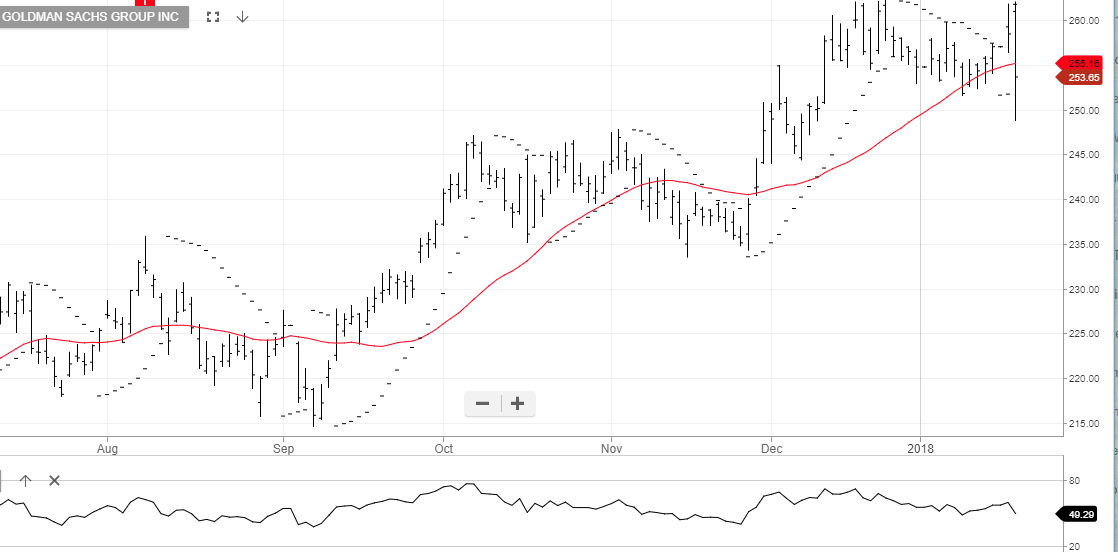
Goldman Sachs posted Q4 earnings of $5.69 per share, versus estimates of $4.98, on slightly higher revenue of $7.83 billion.

However, shares of the investment bank fell 2.5% to $252.00 as trading revenue in the fixed income, Forex and commodity division fell over 50% from a year ago.

With overall trading revenue falling 34% from a year ago, several analysts are doubtful that the GS share price will repeat the 6% gain from last year.

Daily charts suggest the next level of support in the $240.00 area, followed by the September lows of $205.

Goldman Sachs Group


JP Morgan Q4 Earnings

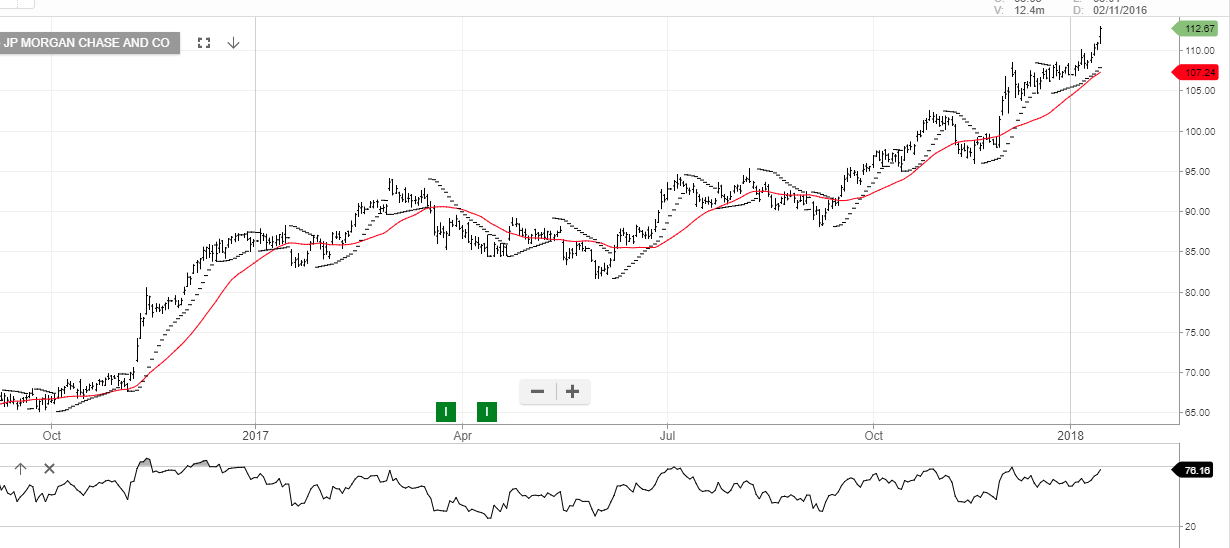
Shares of JP Morgan reached an all-time high of $112.80 as the firm announced adjusted Q4 EPS of $1.76 versus expectations of $1.69.

Revenue numbers were announced at $25.45 billion against the street’s forecast of $25.15 billion.

The small gain in revenue was tempered by a 34% decline in its fixed-interest revenue, which was a result of lower market volatility and tighter credit spreads.

The company returned $6.7 billion back to shareholders during Q4 with $4.7 in net share buy-backs.

With the major indexes at elevated levels, Q4 earnings could add some volatility to global equity markets.

Other key banking names reporting this week include CitiBank on Tuesday followed by Goldman Sachs and  BoA on Wednesday.

JP Morgan Chase


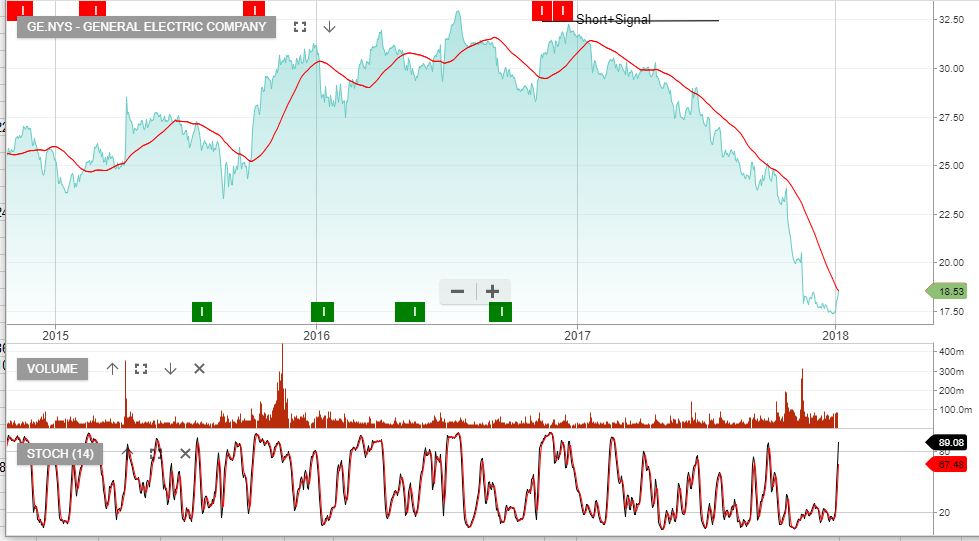
US Stock Watch – General Electric (Deep Value)

In late November we highlighted GE as a counter trend buy.

We maintain that GE offers deep value for longer term investors and highlight the recent buying interest which is starting to build.

GE has now rallied over $1.00 or 7% from the November low.

GE shares sold off following the re-statement of accounts and recognition by investors of the cash flow issues, bloated expenses and under performing  business units.

The new CEO, John Flannery,  is now in place and announced a restructuring plan last month along with a 50% cut in dividend.

Like any large organisation, these changes take time to address and implement. However, 1 – 3 years out we’ll start to see a very different GE begin to emerge.

If you’d like to add GE to your portfolio or other international shares, please contact  leon@investorsignals.com